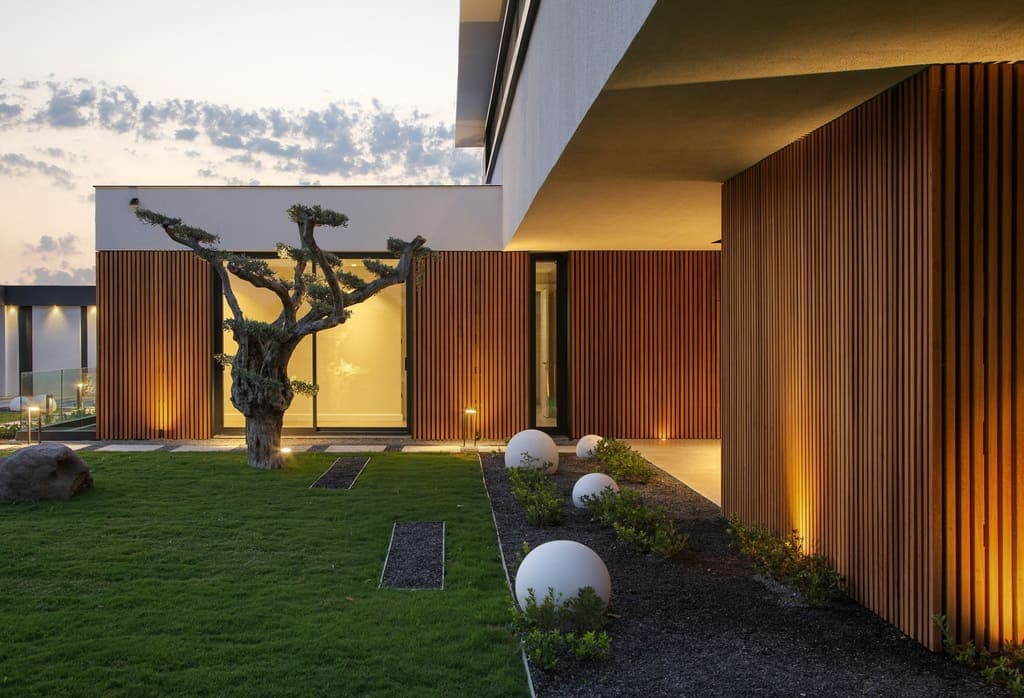
Defining the Entry Accent Area
Before selecting materials, clearly define the specific area intended for the thermally modified wood accent. This might be a wall section adjacent to the front door, an overhang, or a vertical element framing the entrance. Consider the overall architectural style of your home and how the accent will integrate. A well-defined area prevents the cladding from looking like an afterthought and ensures it acts as a deliberate design feature.
Take precise measurements of the accent area, noting any existing architectural features like windows, light fixtures, or integrated planters. These elements will influence board length, cuts, and overall layout. The goal is to create a visual anchor that draws attention to the entryway without overwhelming the rest of the facade.
Choosing Thermally Modified Wood Profiles and Species
Thermally modified wood is available in various profiles, each offering a unique shadow line and texture. Common profiles include Tongue and Groove (T&G), Shiplap, and Square Edge. Tongue and Groove provides a tight, interlocking fit, creating a smooth, continuous surface. Shiplap offers a distinctive overlapping joint that creates a subtle shadow line, adding depth. Square Edge boards can be installed with a visible gap for a more contemporary, open-joint look, requiring a rainscreen assembly and proper backing.
The species of wood, such as NORX thermally modified spruce or pine, will influence the final appearance. Thermally modified spruce often presents a uniform, lighter brown hue, while thermally modified pine can offer a slightly more varied grain pattern. Consider how the natural color variation and grain will complement your existing exterior finishes and the desired aesthetic. The choice of profile and species directly impacts the visual texture and perceived scale of your entry accent.
Coordinating with Doors, Lighting, and Other Materials
The thermally modified wood accent should harmonize with the front door, exterior lighting, and any adjacent materials. For instance, a dark-stained thermally modified wood can create a striking contrast with a lighter-colored door, or it can complement a dark door for a cohesive, sophisticated look. The finish of your door hardware and light fixtures should also be considered; black or brushed metal finishes often pair well with the natural tones of thermally modified wood.
Think about the interplay with surrounding materials like stucco, stone, or metal siding. Thermally modified wood can soften harsh lines or introduce warmth to a cooler palette. Ensure that the chosen wood tone and profile enhance, rather than clash with, these elements. For example, if your home features prominent stone elements, select a wood tone that either matches a subtle undertone in the stone or provides a clear, intentional contrast.
Planning for Weather Exposure and Drainage
An entry accent wall is often exposed to the elements, making proper installation and material selection crucial. While thermally modified wood offers enhanced dimensional stability, it still requires appropriate detailing for weather protection. Consider the direction of prevailing winds and rain. For areas with significant exposure, a rainscreen assembly behind the cladding is recommended. This system creates an air gap that allows for drainage and ventilation, preventing moisture accumulation.
Ensure that the base of the accent wall has adequate clearance from the ground to prevent moisture wicking. Proper flashing around doors, windows, and at the top of the cladding is essential to direct water away from the structure. Consult local building practices for specific recommendations regarding exterior cladding installation in your area. Even if the accent wall is partially covered, detailing for splashes and wind-driven rain remains important.
Worked Example: A Modern Entry Accent
Imagine a modern home with a flat, light grey stucco facade. The homeowner wants to create a striking entry accent around a recessed front door. The accent area is a vertical strip, 6 feet wide and 10 feet high, flanking the 3-foot wide, 8-foot high front door on one side. The goal is a warm, contemporary look.
They choose NORX Thermally Modified Spruce in a Shiplap profile, with boards measuring 5.5 inches wide by 12 feet long. The Shiplap profile provides a subtle shadow line, adding depth without being overly rustic. For the 6-foot wide (72-inch) section, they would need approximately 13 boards (72 inches / 5.5 inches per board = 13.09 boards). Since boards are 12 feet long, each 10-foot vertical section requires one full board. Therefore, for the 10-foot high section, they would need 13 boards. For cuts around the door, they will need to plan for a few extra boards to account for waste and offcuts. A typical waste factor of 10-15% is often applied, bringing the total to around 15 boards. This provides enough material for the main accent and allows for precise cuts around the door frame and any field adjustments. The dark tone of the thermally modified spruce contrasts effectively with the light stucco, and a minimalist black linear light fixture will be installed vertically on the accent wall, complementing the modern aesthetic.
This example demonstrates how specific product choices and careful measurement lead to a precise material estimate and a coherent design. Always verify board dimensions and coverage with the supplier.
Before you order
- Define the exact dimensions and boundaries of the entry accent area.
- Consider the architectural style of your home and how the accent will integrate.
- Select a thermally modified wood species and profile (Tongue & Groove, Shiplap, Square Edge) that complements your design vision.
- Coordinate the wood's tone and texture with your front door, exterior lighting, and surrounding facade materials.
- Plan for weather exposure, ensuring proper drainage, flashing, and, if necessary, a rainscreen system.
- Account for adequate clearance from the ground to prevent moisture wicking.
- Calculate the required quantity of boards, including an allowance for cuts and waste.
- Consider the long-term appearance: will the wood be allowed to weather naturally or will it be finished?
- Review local building codes and best practices for exterior cladding installation.
Confirm installation details, approved uses and warranty terms in the current instructions for the exact product and profile. Your installer should verify the substrate, structure and applicable project requirements.
Questions to help you decide
Can thermally modified wood be painted or stained?
Yes, thermally modified wood can be painted or stained. While many choose to let it weather naturally to a silver-gray patina, applying a finish can help maintain its original color longer or introduce a new hue. Always use exterior-grade paints or stains formulated for wood and follow the manufacturer's application guidelines for best results and durability.
How does thermally modified wood withstand coastal environments?
Thermally modified wood exhibits enhanced dimensional stability, which can be beneficial in environments with fluctuating humidity, such as coastal areas. However, like all exterior wood products, it is still subject to the effects of salt spray and UV radiation. Regular cleaning and maintenance, along with proper installation that allows for drainage and ventilation, are important to preserve its appearance and performance in coastal settings.
What kind of maintenance does thermally modified wood require?
The maintenance for thermally modified wood largely depends on whether it is finished or allowed to weather naturally. If left unfinished, occasional cleaning to remove dirt, mildew, or algae is typically sufficient. If a finish is applied, periodic reapplication according to the product manufacturer's recommendations will be necessary to maintain its appearance and protective qualities. Always inspect the cladding for any signs of damage or wear.
Ready to Transform Your Entry?
Request a material quote for thermally modified wood for your entry accent project. Provide your project dimensions, desired profile, and ZIP code to confirm current availability and service options. Our team can assist you in selecting the right materials for your vision.
Request a material quote →