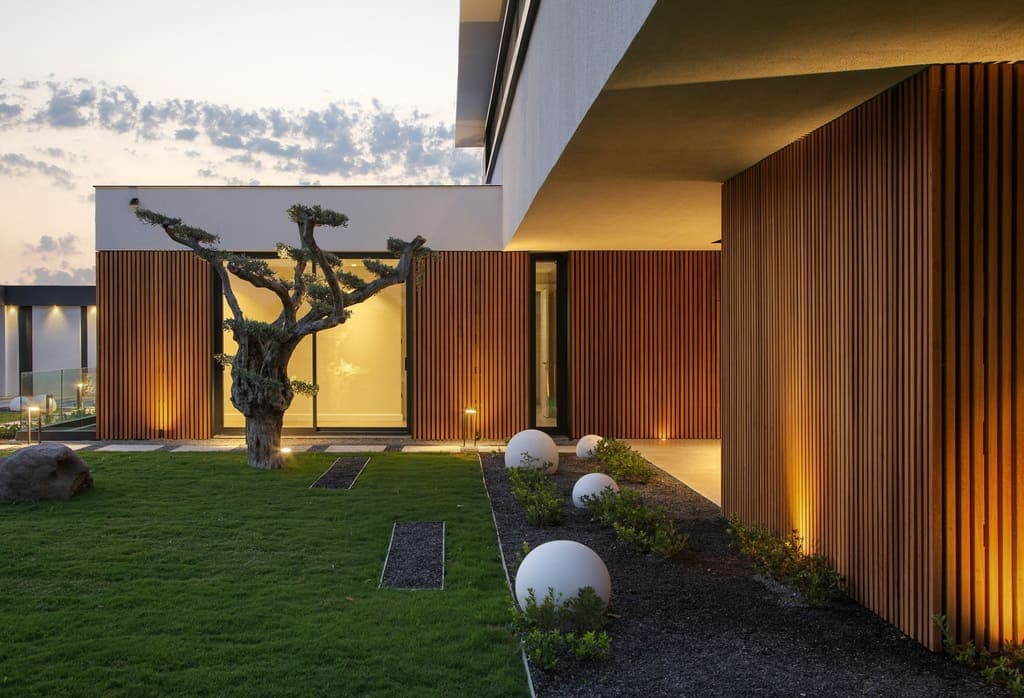
Why Thermally Modified Wood for Covered Patio Walls?
Thermally modified wood undergoes a high-heat treatment process that alters its cellular structure, enhancing several key properties. This process reduces the wood's ability to absorb moisture, which can lead to increased dimensional stability. For covered patio walls, this means less susceptibility to expansion and contraction with changes in humidity and temperature, a valuable characteristic in environments like Bozeman where seasonal shifts can be significant. The modification also improves resistance to decay, making it a robust choice for outdoor use, even in areas with some exposure to moisture.
The thermal modification process also imparts a rich, uniform color throughout the wood, typically shades of brown that can range from light honey to deep chocolate, depending on the species and treatment intensity. This consistent color means that even if the surface is scratched, the underlying wood retains a similar hue, contributing to a lasting aesthetic. For homeowners seeking a natural wood look without the more intensive maintenance associated with untreated wood, thermally modified options offer a balance of beauty and practicality.
Understanding Exposure and Protection on Covered Patios
While covered patio walls are shielded from direct rainfall and continuous sun exposure, they are not entirely protected from the elements. They will still experience ambient humidity, temperature fluctuations, and potentially indirect moisture, such as splash-back from rain or snowmelt. The level of protection depends heavily on the patio's design, including roof overhang depth, wall orientation, and surrounding landscaping.
For covered patio walls in Bozeman, consider the prevailing wind directions that might drive moisture onto the surfaces, particularly during winter snowfalls. Thermally modified wood's enhanced moisture resistance is beneficial here, but proper detailing for drainage and ventilation behind the wall cladding remains important. Even in a covered setting, ensuring air circulation can help prevent moisture accumulation and prolong the life of the material.
Selecting Profiles and Species
Thermally modified wood is available in various profiles, each offering a distinct aesthetic and installation method. Common profiles suitable for covered patio walls include tongue-and-groove, shiplap, and board-and-batten. Tongue-and-groove profiles create a tight, interlocking joint that can offer a smooth, continuous surface or a subtle shadow line, depending on the specific milling. Shiplap provides a more pronounced shadow line, adding depth and texture. Board-and-batten offers a classic, rustic look with vertical boards and battens covering the seams.
Species like Thermally Modified Ash and Thermally Modified Spruce are popular choices. Thermally Modified Ash, often seen with a richer, darker tone, offers a distinct grain pattern and good stability. Thermally Modified Spruce typically presents a lighter, more uniform appearance. When selecting a profile and species, consider the overall architectural style of your home and patio, as well as the desired visual effect. For example, a wider shiplap profile might suit a modern aesthetic, while a narrower tongue-and-groove could complement a more traditional design.
Explore options such as NORX thermally modified wood, which offers various profiles and species suitable for cladding applications. Maximo Accoya is another high-performance option known for its stability and durability, which could be considered for a covered application where exceptional performance is desired, though it typically excels in more exposed conditions.
Finishing and Maintenance for Lasting Beauty
While thermally modified wood is inherently more stable and resistant to decay, applying a finish can help maintain its original color and provide an additional layer of protection against UV degradation and surface dirt. If left unfinished, thermally modified wood will gradually weather to a silver-gray patina, similar to other wood species. This weathering process is purely aesthetic and does not compromise the material's structural integrity.
For those who prefer to retain the rich, original color, a UV-inhibiting oil-based finish is recommended. These finishes penetrate the wood, enhancing its natural tones while offering protection. Reapplication frequency will depend on the specific product and the level of indirect sun exposure, but typically ranges from every one to three years for covered applications. Regular cleaning with a mild soap and water solution can help remove dust and grime, keeping the walls looking fresh. Avoid harsh chemicals or abrasive cleaners that could damage the wood or finish.
Worked Example: Covered Patio Wall for a Bozeman Home
Consider a Bozeman homeowner planning to clad the back wall of a covered patio. The patio measures 12 feet wide by 8 feet high, creating a wall area of 96 square feet. They desire a modern aesthetic with a clean, horizontal line. They choose a Thermally Modified Ash shiplap profile, which comes in 5.5-inch (0.458 ft) face width and 12-foot lengths.
To calculate the needed quantity, first determine the number of courses: 8 feet (height) / 0.458 feet (face width) = 17.47 courses. Since partial courses are not practical, 18 courses will be needed. Each course requires one 12-foot length. Therefore, 18 pieces of 12-foot Thermally Modified Ash shiplap are required. This accounts for minor cuts and ensures full coverage. If there are openings like windows or doors, their area would be subtracted from the total, but extra material for cuts and waste should still be factored in, typically an additional 5-10%.
Before you order
- Assess the specific exposure level of your covered patio walls (e.g., direct splash, indirect sun, wind-driven moisture).
- Determine the desired aesthetic: natural weathered look or maintained original color.
- Select a thermally modified wood species and profile that complements your home's architecture.
- Plan for proper ventilation and drainage behind the cladding, even in covered areas.
- Consider the type of finish (if any) and its reapplication schedule.
- Calculate material quantities carefully, accounting for cuts and waste.
- Confirm local building practices for wall cladding attachment and detailing.
Confirm installation details, approved uses and warranty terms in the current instructions for the exact product and profile. Your installer should verify the substrate, structure and applicable project requirements.
This is a planning guide for projects in Bozeman, MT. Ask our team to confirm availability, delivery to your ZIP code and which branch can support your order.
Questions to help you decide
Does thermally modified wood require a finish for covered patio walls?
While not strictly required for durability in a covered setting, a finish can protect the wood from UV discoloration and help maintain its original color. If left unfinished, it will naturally weather to a silver-gray patina over time.
Can thermally modified wood be installed directly onto existing patio walls?
Installation typically involves creating a furring strip system or rainscreen assembly to ensure proper air circulation and drainage behind the cladding. This helps prevent moisture accumulation, even in covered areas. Direct attachment without an air gap is generally not recommended.
How does Bozeman's climate affect thermally modified wood on a covered patio?
Bozeman's climate, with its wide temperature swings and potential for snow and ice, benefits from thermally modified wood's enhanced dimensional stability and decay resistance. While covered, the material still performs well against ambient humidity and indirect moisture, reducing the risk of warping or rot.
Plan Your Covered Patio Walls with Thermally Modified Wood
Ready to enhance your Bozeman patio with durable and beautiful thermally modified wood? Request a material quote today. Provide your project dimensions, desired profile, and ZIP code to get started. Our team can also confirm current availability and service options for your area.
Request a material quote →