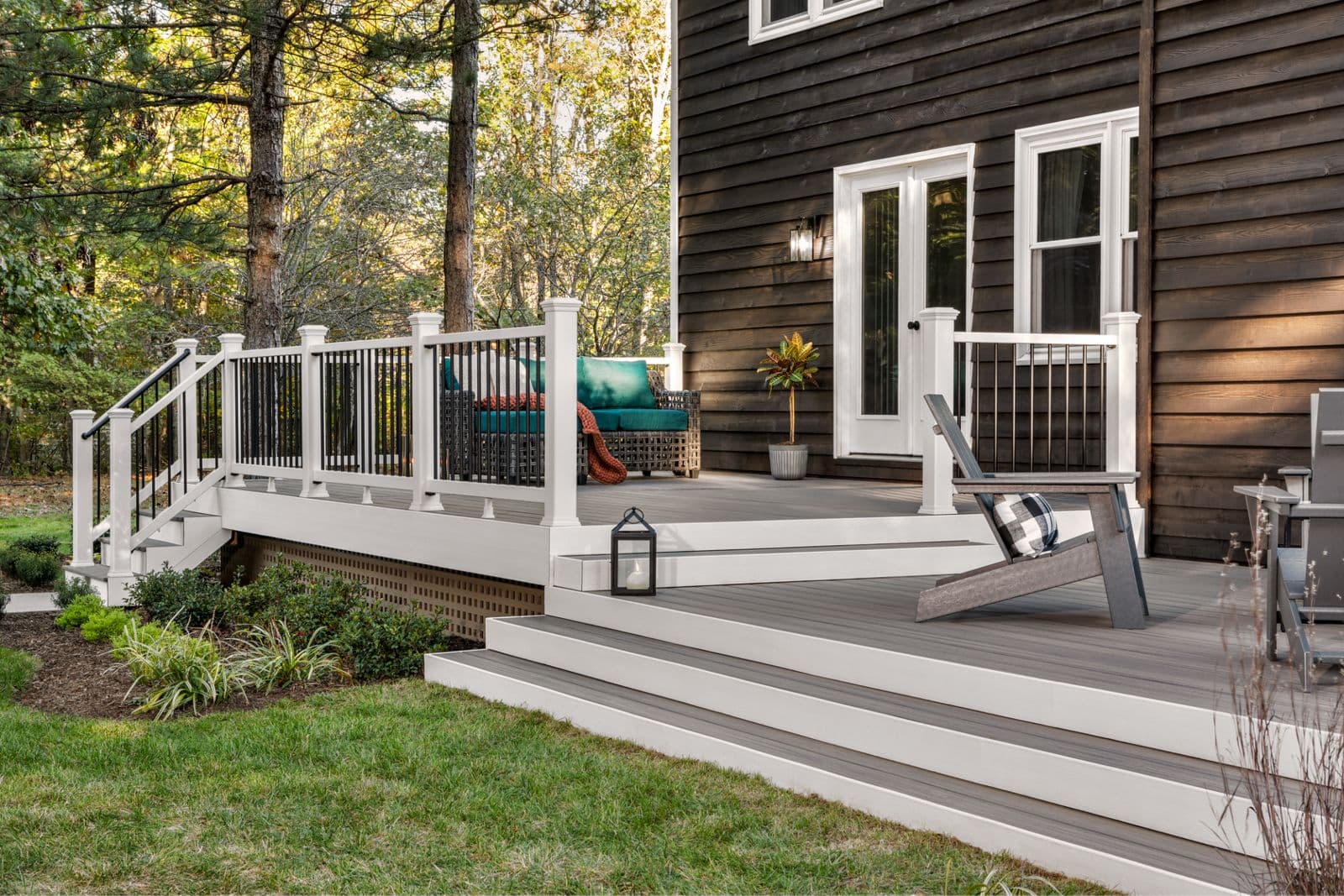
Selecting Your Trex Decking Line for Gathering Spaces
Trex offers several decking lines, each with distinct aesthetics and features. For a gathering space, factors like foot traffic, desired visual appeal, and budget often guide the choice. All Trex lines share a core of 95% recycled material and a protective shell, contributing to their low-maintenance nature.
The Trex Enhance® lines, including Enhance Basics and Enhance Naturals, offer a balance of value and performance. Enhance Basics comes in traditional colors like Clam Shell, Beach Dune, and Saddle. Enhance Naturals features multi-tonal colors such as Foggy Wharf and Rocky Harbor, inspired by natural wood grain. These lines are suitable for general use and lighter foot traffic areas.
For a more refined look and enhanced durability, consider the Trex Select® Earth Tones or Transcend® lines. Select Earth Tones offers hallmark high-performance shell technology in colors like Pebble Grey and Woodland Brown. The Transcend® lines, including Earth Tones and Tropical, represent the flagship offering with elevated aesthetics and robust protection. Transcend Tropical, with colors like Havana Gold and Island Mist, provides a luxurious finish that maintains its vibrancy. These higher-tier lines can be a good choice for decks that will see frequent use and serve as a prominent architectural feature of your gathering space.
When planning for a gathering space, the protective capping on three sides of Trex boards is a consistent feature across all lines, contributing to resistance against fading and staining. This is particularly relevant for areas where spills or heavy use are anticipated. (Source: S1)
Coordinating Dimensions and Layout for Functionality
Effective planning of your deck's dimensions and layout is crucial for a comfortable gathering space. Trex boards are typically 1 inch by 5.5 inches in profile, available in 12, 16, and 20-foot lengths. This range of lengths allows for minimizing seams and optimizing material use for various deck sizes.
Consider the flow of traffic, placement of outdoor furniture, and potential areas for grilling or a fire pit. A common approach for gathering spaces is to create distinct zones within the deck. For example, a larger open area for seating, a defined space for dining, and clear pathways. The use of different board layouts, such as a diagonal pattern in one zone or a picture-frame border, can help delineate these areas without physical barriers.
Always account for the necessary spacing between deck boards for drainage and ventilation, as specified by the manufacturer. Proper air circulation beneath the deck is important for its longevity. (Source: S1)
Fascia and Edge Finishes: The Finishing Touch
The fascia boards provide a finished edge to your deck, concealing the substructure and creating a cohesive appearance. Trex offers matching fascia boards for all its decking lines, ensuring color and texture consistency. This detail is important for a polished look, especially for decks that are elevated or visible from multiple angles.
When ordering, ensure that you specify the matching fascia for your chosen decking line and color. For example, if you choose Trex Transcend Tropical in Island Mist, you would request Island Mist fascia. The fascia is typically a square-edge board designed for vertical application around the perimeter of the deck. (Source: S1)
Fastening Systems: Hidden vs. Face Screws
Trex decking can be installed using either hidden fastening clips or face screws. For a gathering space, the choice of fastening method can impact both aesthetics and safety. Hidden fasteners create a smooth, uninterrupted deck surface, which can be desirable for barefoot traffic and a clean visual. These clips fit into the grooved edges of the deck boards and attach to the joists below, making the fasteners almost invisible.
Face screws involve fastening the boards directly through the top surface into the joists. While visible, face screws offer a robust connection and are often used for perimeter boards or specific design elements where a hidden system might not be suitable. If using face screws, ensure they are color-matched or compatible with Trex decking to minimize their visual impact. The decision between hidden clips and face screws often comes down to personal preference for aesthetics and the specific requirements of the deck design. (Source: S1)
Maintenance for Long-Term Enjoyment
One of the primary advantages of Trex decking for a gathering space is its low maintenance. Unlike traditional wood decks that require regular staining, sealing, or painting, Trex decking only needs a soap-and-water wash to maintain its warranty and appearance. This means more time enjoying your deck and less time on upkeep.
Regular cleaning helps prevent the buildup of dirt, pollen, and other debris that can accumulate in an outdoor setting. For spills or more stubborn marks, follow Trex's recommended cleaning guidelines to ensure you do not damage the surface. The protective shell on Trex boards is designed to lock in pigment, meaning the color you install should remain consistent over time. (Source: S1)
Worked Example: Designing a 16'x12' Deck for Entertaining
Let's consider a hypothetical 16-foot by 12-foot deck designed for a gathering space, using Trex Transcend Tropical decking in 'Island Mist' with a picture-frame border.
**Decking Boards:** The deck area is 192 square feet. Assuming 1-inch x 5.5-inch boards (nominal) covering approximately 0.46 square feet per linear foot, you would need around 418 linear feet of decking for the main area. Using 16-foot boards, this would be approximately 27 boards (418 / 16 = 26.125). For a cleaner look and to minimize waste, purchasing 28-30 boards is a practical approach, allowing for cuts and potential future needs. We'll plan for 16-foot boards to run the 16-foot dimension, minimizing seams.
**Picture-Frame Border:** For a 16'x12' deck, a single picture-frame border adds 16+16+12+12 = 56 linear feet. This would require four 16-foot boards for the long sides and two 12-foot boards for the short ends (cut from 16-foot stock if 12-foot specific border boards are not available or to reduce inventory types). This adds approximately 3-4 more 16-foot boards to the order.
**Fascia:** The perimeter of the deck is 16+16+12+12 = 56 linear feet. You would need to account for this length in fascia boards. Using 16-foot fascia boards, this would be 4 boards (56 / 16 = 3.5, rounded up).
With approximately 30 main deck boards, you'd need around 360 hidden clips (30 boards * 12 clips/board). Always consult the specific fastener product's coverage instructions.
This example provides a starting point; actual quantities will depend on specific layout, joist spacing, waste factors, and any additional design elements like stairs or railing. Always add a buffer for cuts and potential adjustments.
Before you order
- Determine the primary function of your gathering space (dining, lounging, mixed use).
- Select a Trex decking line and color that complements your home's exterior and desired aesthetic (Enhance, Select, or Transcend).
- Measure your project area accurately, considering traffic flow and furniture placement.
- Decide on your preferred fastening system: hidden clips for a smooth surface or face screws for visible security.
- Plan for matching fascia boards to create a finished look around the deck's perimeter.
- Consider any additional features like stairs, railings, or built-in seating.
- Confirm local building codes and structural requirements for deck construction.
- Request a detailed material quote with exact dimensions, chosen profile, and your ZIP code.
Confirm installation details, approved uses and warranty terms in the current instructions for the exact product and profile. Your installer should verify the substrate, structure and applicable project requirements.
This is a planning guide for projects in Bozeman, MT. Ask our team to confirm availability, delivery to your ZIP code and which branch can support your order.
Questions to help you decide
What is the primary difference between Trex decking lines?
The main differences between Trex decking lines are the depth of the finish, the range of available colors and multi-tonal options, and the specific aesthetic details. All lines share a 95% recycled core and a protective shell, ensuring low maintenance and durability. For instance, Enhance lines offer traditional or natural wood-grain looks, while Transcend lines provide elevated aesthetics and a wider range of tropical-inspired colors. (Source: S1)
How do I clean my Trex deck?
Trex decking is designed for low maintenance. Typically, a simple soap-and-water wash is sufficient to keep your deck clean and maintain its appearance. For specific cleaning instructions or to address tougher stains, always refer to the official Trex cleaning guide to ensure proper care and to uphold your warranty. Avoid harsh chemicals or abrasive cleaners. (Source: S1)
Can I use Trex decking in Bozeman, MT's climate?
Trex composite decking is engineered for durability and is suitable for various climates. Its protective shell helps resist fading and staining, which can be beneficial in areas with varying weather conditions like Bozeman. The low-maintenance aspect means it can withstand seasonal changes with less upkeep compared to traditional wood. Proper installation, including adequate ventilation beneath the deck, is key to its performance in any environment. (Source: S1)
Ready to Plan Your Trex Deck in Bozeman, MT?
For a material quote tailored to your backyard gathering space project, provide your project dimensions, desired Trex decking profile and color, and your ZIP code. We can confirm current availability and service options for your area. Explore our full range of decking options at /decking, including hardwood at /decking/hardwood and other composite choices at /decking/composite.
Request a material quote →