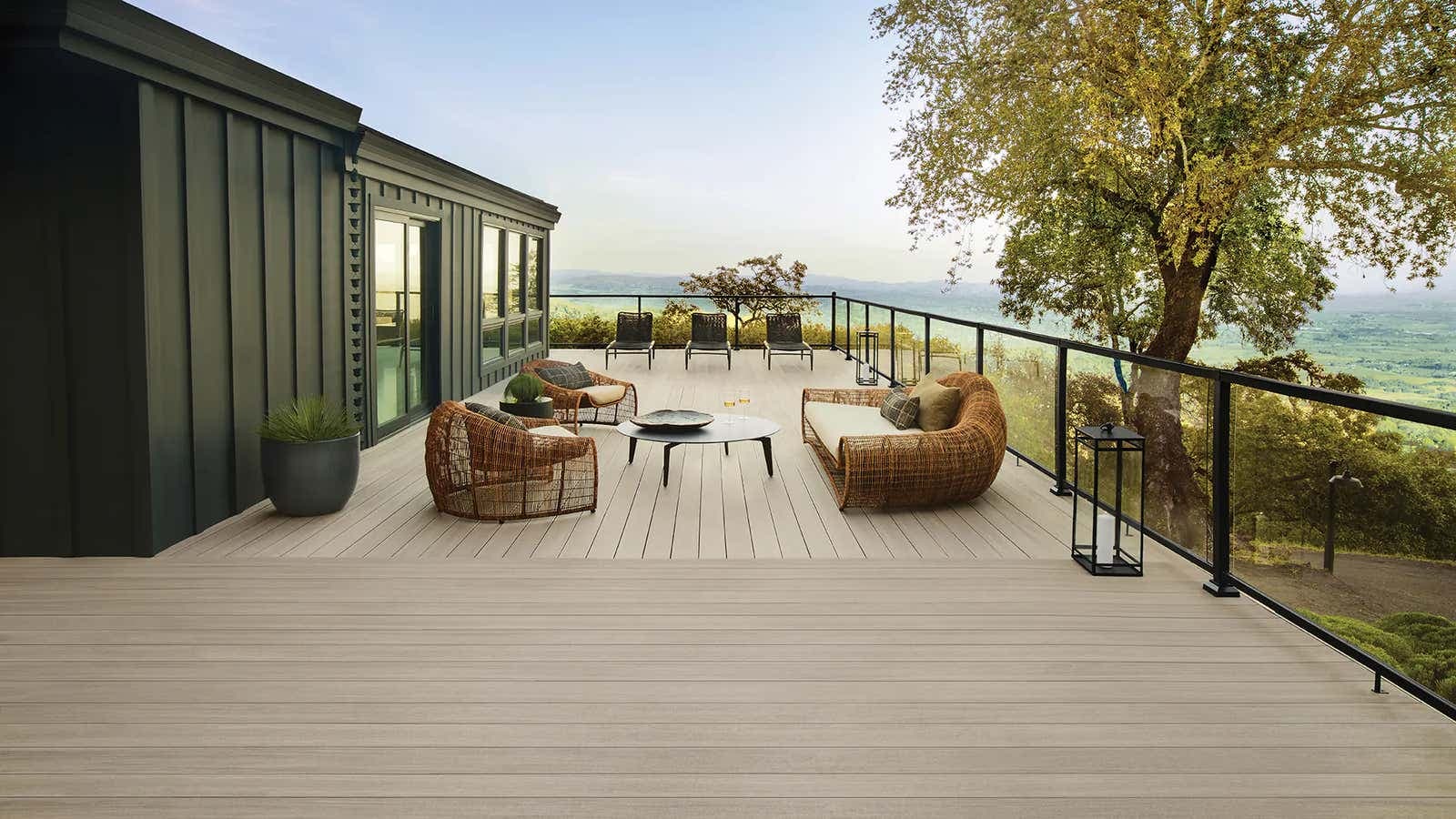
Understanding the Constraints of Compact Spaces
Compact outdoor spaces present unique design and installation challenges. These often include limited access for material delivery and construction, the need for efficient use of every square foot, and careful planning to avoid overcrowding the area. When considering composite decking, think about how board lengths, widths, and fastening methods will impact the overall visual flow and installation logistics. Larger boards might mean fewer seams but could be difficult to maneuver in tight spots, while smaller profiles might offer more design flexibility.
In Bozeman, MT, weather conditions can also influence material choice. While composite decking is engineered for durability, considering options with cooler-underfoot properties can be beneficial for sun-exposed areas, even in a compact setting. The consistent color and grain of composite boards can help create a cohesive look that visually expands a smaller area.
Selecting the Right Composite Decking Profile and Color
For compact spaces, the choice of decking profile and color can significantly impact the perceived size and ambiance. Lighter colors can make a small area feel more open and expansive, reflecting light rather than absorbing it. Consider options from manufacturers like Trex, TimberTech, or Fiberon, which offer a range of consistent colors. A solid color palette can also contribute to a sense of continuity, avoiding visual breaks that might make the space feel smaller.
Board width is another factor. While wider boards might reduce the number of visible seams, they can sometimes overwhelm a very small deck. Narrower boards may offer a more intricate pattern that adds visual interest without making the space feel cluttered. Explore different collections to see how their profiles and textures interact with light and shadow, especially in an area that might experience varying levels of sun exposure throughout the day. Some capped shell options are designed to shrug off humidity, which can be a factor in Montana's varied climate.
Planning for Efficient Layout and Material Use
Efficient material planning is crucial for compact projects, both to minimize waste and streamline installation. A straight, parallel board layout is often the most straightforward and can make a narrow space appear longer. For a small square or irregularly shaped area, a diagonal layout can add visual interest, though it typically involves more cuts and potentially more material waste. However, the unique aesthetic might be worth the extra planning for a focal point deck.
Consider the standard lengths available for composite decking. If your space is, for example, 8 feet by 10 feet, ordering 10-foot or 12-foot boards might be more efficient than using 8-foot boards and needing additional cuts for the 10-foot dimension. Always factor in end cuts and potential waste. Hidden fastener systems, while often preferred for their clean look, also require specific board spacing, which must be accounted for in your layout plan. The goal is to achieve a polished look without making the space feel overly complex.
Worked Example: A 6-foot by 8-foot Balcony Deck
Let's consider a hypothetical balcony deck in Bozeman measuring 6 feet (72 inches) by 8 feet (96 inches).
If we lay boards parallel to the 8-foot length, we need 72 / (5.5 + 0.125) = 72 / 5.625 = 12.8 boards. This means we'd purchase 13 full boards to cover the width, with the last board likely needing a rip cut. If using 8-foot long boards, we would need 13 boards. Total boards: 13 boards x 8 feet/board = 104 linear feet.
For the 8-foot length: If boards are laid parallel to the 6-foot width, we need 96 / (5.5 + 0.125) = 96 / 5.625 = 17.06 boards. We'd purchase 18 full boards. If using 6-foot long boards (or cutting longer ones), we would need 18 boards. Total boards: 18 boards x 6 feet/board = 108 linear feet.
To minimize cuts and waste, laying the boards parallel to the 8-foot dimension (using 8-foot boards) would mean 13 boards each 8 feet long, for a total of 104 linear feet. The last board would be ripped to approximately 3.375 inches wide. This calculation provides an estimate; always add a small percentage for cuts and contingencies (e.g., 5-10%). For this project, ordering 110-115 linear feet would be a reasonable starting point, preferably in 8-foot lengths if available.
Maintenance and Longevity in a Compact Setting
One of the primary advantages of composite decking for compact spaces is its low maintenance. Manufacturers like Trex, TimberTech, and Fiberon design their products to require only a soap-and-water wash, eliminating the need for regular sanding, staining, or sealing. This is particularly beneficial in tight areas where accessing all surfaces for extensive maintenance could be cumbersome. Many composite products also come with fade and stain warranties, offering peace of mind regarding their long-term appearance.
The durability of composite materials means they stand up well to the elements, which is important for any outdoor space, including those in Bozeman, MT. Reduced maintenance translates to more time enjoying your compact deck and less time working on it. This low-upkeep characteristic makes composite decking a practical choice for maximizing the utility of a small footprint.
Before you order
- Measure your compact space precisely, noting any irregularities or obstructions.
- Consider the visual impact of board width and color on the perceived size of the area.
- Choose a layout (straight, diagonal) that best suits the space and your design goals.
- Calculate linear footage needed, adding a waste factor for cuts and contingencies.
- Verify manufacturer-specific installation requirements, especially for board spacing and fasteners.
- Confirm the accessibility for material delivery and construction in your compact space.
- Review available product lines from Trex, TimberTech, and Fiberon for suitable profiles and colors.
- Factor in the low-maintenance benefits of composite decking for ongoing enjoyment.
Confirm installation details, approved uses and warranty terms in the current instructions for the exact product and profile. Your installer should verify the substrate, structure and applicable project requirements.
This is a planning guide for projects in Bozeman, MT. Ask our team to confirm availability, delivery to your ZIP code and which branch can support your order.
Questions to help you decide
Can composite decking be installed over an existing concrete patio in a compact space?
Installing composite decking over an existing concrete patio is possible, but it requires proper preparation. A crucial step is ensuring adequate drainage and ventilation beneath the deck boards to prevent moisture buildup. This typically involves using a sleeper system or adjustable pedestals to elevate the decking, creating a gap for airflow and water runoff. Always consult the specific manufacturer's installation guidelines for their recommendations on installing over concrete or other solid surfaces.
Are there specific composite decking options that are better for sun-exposed compact decks?
Yes, some composite decking lines are engineered with technology to help them stay cooler underfoot, which can be a significant advantage for sun-exposed decks, even compact ones. These often feature advanced capping materials or lighter colors that reflect more sunlight. When selecting, look for descriptions that highlight 'cooler underfoot' properties or choose lighter shades, as darker colors tend to absorb and retain more heat.
How do I account for expansion and contraction in a small composite deck project?
Composite decking expands and contracts with temperature changes. Even in a compact project, it's essential to follow the manufacturer's specific guidelines for gapping between boards and at abutments to walls or other structures. These gaps allow for natural movement without causing buckling or damage. The exact spacing can vary by product line and expected temperature fluctuations, so always refer to the installation instructions provided by the composite decking manufacturer you choose.
Ready to Plan Your Compact Composite Deck?
Request a material quote for composite decking by providing your project dimensions, desired profile, and project ZIP code. We can help you confirm current availability and service options for your Bozeman, MT project. Explore options from Trex, TimberTech, and Fiberon.
Request a material quote →