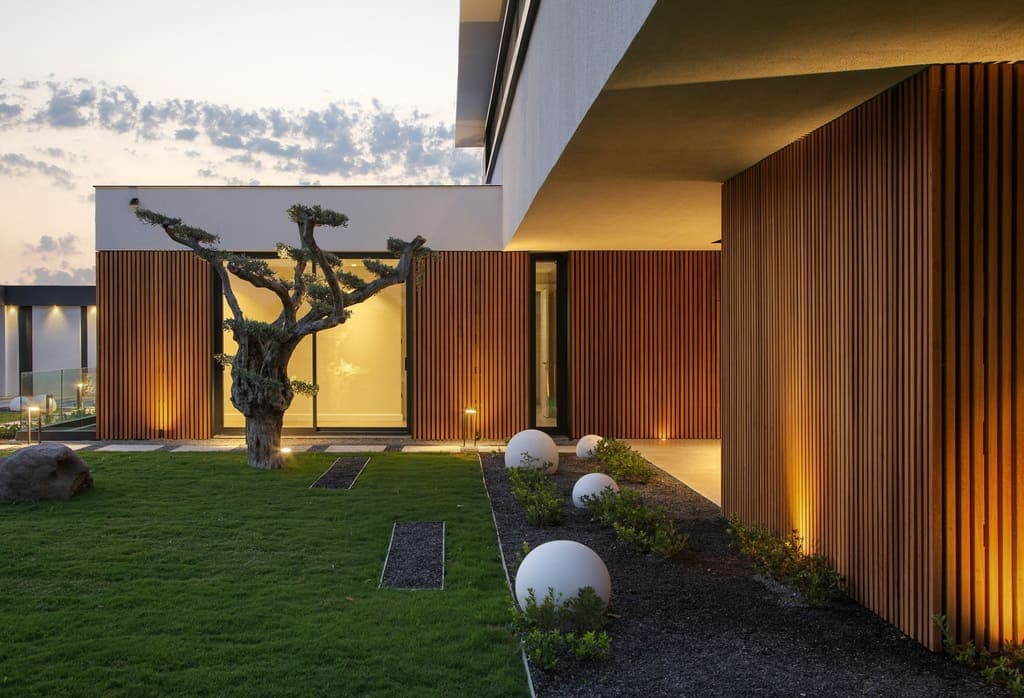
Understanding the Coastal Environment's Impact on Wood
Coastal environments present a distinct set of challenges for exterior building materials. The presence of airborne salt, often carried by sea breezes, can accelerate corrosion of certain metal fasteners and finishes. High humidity levels contribute to moisture absorption and retention in wood, potentially leading to swelling, shrinking, and biological growth if not properly managed. Strong winds can also place additional stress on siding installations.
Traditional untreated wood often struggles with these conditions, requiring frequent maintenance or exhibiting premature deterioration. Thermally modified wood, through a high-heat treatment process, alters the wood's cellular structure. This process aims to reduce the wood's hygroscopicity (tendency to absorb moisture) and improve its dimensional stability, making it less prone to warping and checking. It also enhances resistance to decay-causing fungi, a benefit in humid climates.
Product Suitability and Limitations for Coastal Exposures
While thermally modified wood offers improved stability and resistance to decay, it is not universally impervious to all coastal challenges. It is crucial to check the specific product's documentation for any stated limitations regarding direct saltwater exposure or extreme wind loads. Some thermally modified wood products may be suitable for exterior applications in humid climates but might not be recommended for direct exposure to salt spray or submersion.
For example, NORX Thermally Modified Wood, available at Lumber Plus, is designed for exterior siding and cladding applications where enhanced dimensional stability and resistance to decay are desired. Its thermal modification process aims to make it a durable option for various outdoor settings. However, specific project details, such as direct oceanfront exposure, should always be cross-referenced with the product's technical data sheet.
It is important to differentiate between general exterior use and marine-grade suitability. If your project involves direct contact with saltwater, or if it's located in an area with constant heavy salt spray, you may need to consider alternative materials or additional protective measures beyond the inherent properties of thermally modified wood. Always confirm the manufacturer's recommendations for your specific coastal conditions.
Selecting Compatible Fasteners and Hardware
Standard galvanized or uncoated steel fasteners can corrode rapidly when exposed to salt-laden air, leading to staining of the wood, weakening of the connection, and potential structural failure.
Type 316 stainless steel offers superior corrosion resistance, particularly in environments with high chloride content, making it a preferred choice for projects in direct proximity to saltwater. Ensure all clips, screws, nails, and any other metal components used in the assembly are made from corrosion-resistant materials compatible with the coastal environment.
Even with stainless steel, proper installation practices are essential. Avoid direct contact between dissimilar metals, which can lead to galvanic corrosion. Pre-drilling pilot holes for fasteners can also help prevent splitting in the wood and ensure a secure, long-lasting connection.
Designing for Drainage and Ventilation
Effective drainage and ventilation are paramount for any exterior wood application, especially in humid coastal regions. While thermally modified wood resists moisture absorption better than untreated wood, it still benefits from design strategies that minimize prolonged water contact and allow for rapid drying.
Implementing a rainscreen assembly is highly recommended for coastal siding projects. A rainscreen creates a continuous air gap behind the siding, allowing moisture to drain away and promoting airflow to dry the back of the cladding. This helps prevent moisture from getting trapped against the sheathing and reduces the risk of mold, mildew, and decay.
Ensure proper detailing around windows, doors, and at the base of the wall to prevent water intrusion. Maintain adequate clearance between the bottom edge of the siding and grade or finished surfaces to avoid splash-back and ground moisture wicking. Consider using insect screens or baffles within the rainscreen cavity to prevent pests while maintaining airflow.
Worked Example: Coastal Siding for a Small Elevation
Consider a hypothetical project: recladding a 10-foot wide by 8-foot high section of a house facade located 500 feet from the ocean, exposed to prevailing sea breezes. The existing siding is being removed, and a new rainscreen assembly with thermally modified wood siding is planned.
First, confirm the selected thermally modified wood profile, such as a 1x6 (nominal) NORX Thermally Modified Wood siding board, which has an actual coverage width of approximately 5.25 inches. For an 8-foot (96-inch) height, you would need 96 inches / 5.25 inches/board = 18.28 boards vertically. Rounding up, you would need 19 boards per 10-foot run of height. Since the boards are typically sold in specific lengths (e.g., 8, 10, 12, 14, 16 feet), you would select a length that minimizes cuts and waste for the 10-foot width.
If using 10-foot long boards for the 10-foot width, you'd need 19 boards. The total lineal footage would be 19 boards * 10 feet/board = 190 lineal feet. The total square footage coverage is approximately 190 LF * (5.25 inches / 12 inches/foot) = 83.125 square feet. This calculation accounts for the actual coverage width, not the nominal width.
All trim and flashing materials would also be corrosion-resistant. This level of detail ensures the material choice is supported by suitable installation practices for the coastal environment.
Before you order
- Confirm specific product suitability for coastal exposure (check manufacturer's documentation for salt spray, wind, and humidity guidelines).
- Plan for a rainscreen assembly with adequate ventilation and drainage behind the siding.
- Ensure proper detailing around all openings and at the base of the wall to prevent moisture intrusion.
- Consider the aesthetic impact of potential weathering and silvering in a high-UV coastal environment.
- Verify local building codes and hurricane-zone requirements if applicable.
Confirm installation details, approved uses and warranty terms in the current instructions for the exact product and profile. Your installer should verify the substrate, structure and applicable project requirements.
Questions to help you decide
Does thermally modified wood require a special finish in coastal areas?
While thermally modified wood is more dimensionally stable, applying a finish can help protect it from UV radiation and maintain its original color longer. Unfinished thermally modified wood will naturally weather to a silvery-gray patina over time. If a specific color or enhanced protection is desired, choose a high-quality exterior finish designed for wood in demanding environments, and ensure it is compatible with the thermal modification process. Regular maintenance of the finish will be necessary.
Can thermally modified wood be used for decking in coastal areas?
Thermally modified wood can be used for decking in coastal areas, benefiting from its enhanced dimensional stability and resistance to decay. However, as with siding, the choice of fasteners is critical. Stainless steel fasteners are essential. Additionally, consider the slip resistance of the decking surface, especially when wet, and ensure the substructure is also designed to withstand coastal conditions. Always refer to the specific product's decking application guidelines.
How does thermally modified wood compare to composite decking for coastal projects?
Thermally modified wood offers the natural look and feel of real wood with improved performance characteristics compared to untreated lumber. Composite decking, on the other hand, is a manufactured product often made from a blend of wood fibers and plastic, designed for low maintenance and specific performance in harsh environments. The choice depends on aesthetic preference, desired maintenance level, and budget. Thermally modified wood requires some maintenance, while many composites are designed to be very low maintenance. Both can be suitable for coastal projects, but their properties and appearance differ significantly.
Ready to Plan Your Coastal Project with Thermally Modified Wood?
Request a material quote today! Provide your project dimensions, desired profile, and ZIP code to confirm current availability and service options for your coastal elevation.
Request a material quote →