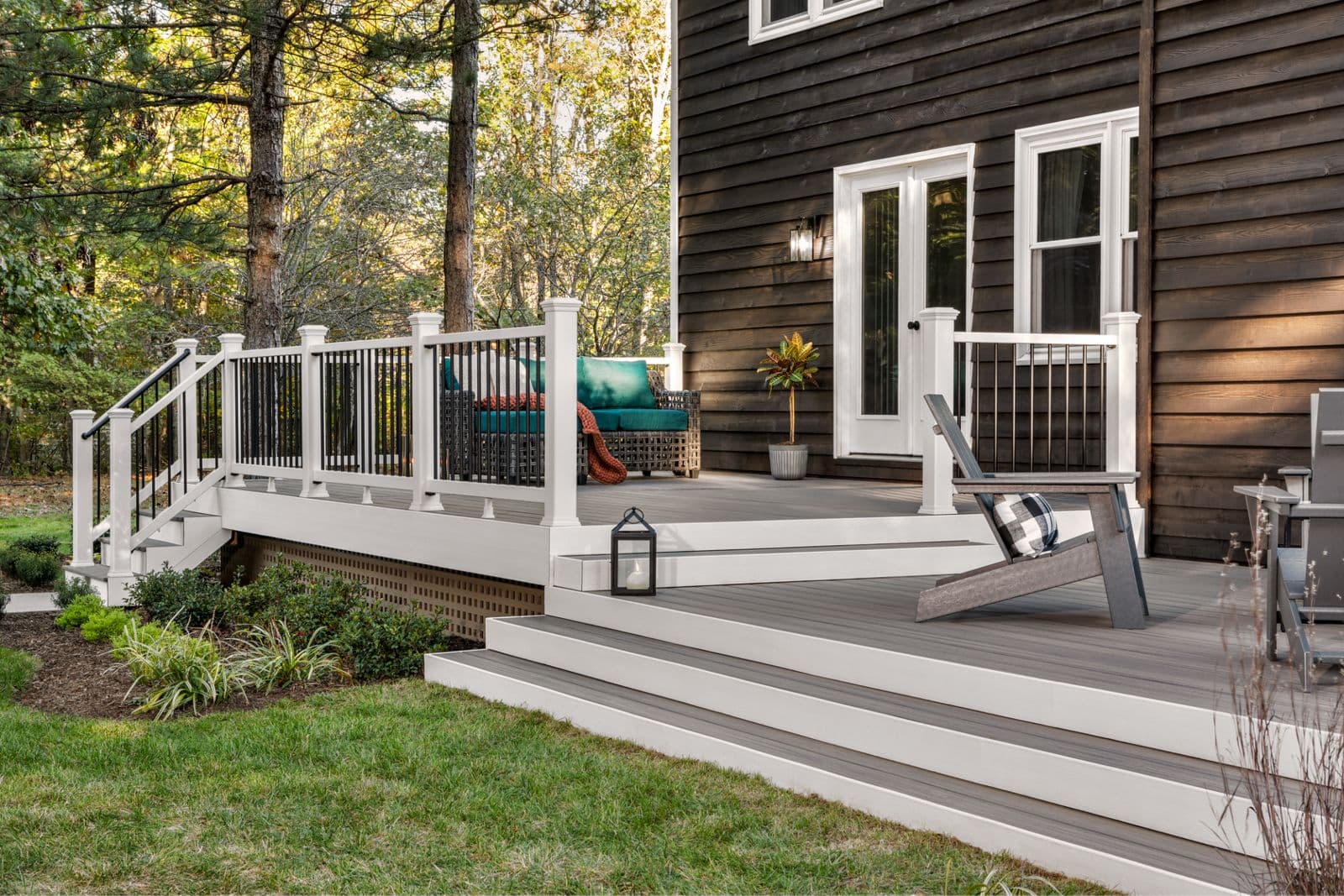
Understanding Deck Stair Components
Before selecting materials, it's helpful to understand the basic components of a deck stair system. The primary elements include stringers, treads, and risers. Stringers are the structural supports that run diagonally, carrying the weight of the stairs. Treads are the horizontal surfaces you step on, and risers are the vertical boards between treads. While stringers are typically hidden or less visible, treads and risers are often made from or faced with the same material as your deck surface for visual continuity.
The choice of material for treads is especially important due to wear and tear. Risers, while not bearing foot traffic, contribute to the stair's overall appearance and structural rigidity. Landing platforms, if part of the design, also need to be considered in material selection.
Material Options for Deck Stair Treads and Risers
Lumber Plus offers a range of decking materials suitable for various outdoor applications, many of which can be adapted for stair treads and risers:
Hardwood Decking: Species like Ipe are known for their hardness and natural resistance to rot and termites. Ipe can be used for treads and risers, offering a premium look that can age to a silver patina or be oiled to maintain its color. Its density requires specific fastening techniques.
Thermally Modified Ash: Modified with heat and steam, Thermo Ash provides enhanced stability and durability. It can be a suitable choice for selected decking applications, including stairs, provided the specific profile and installation system are confirmed. The wood grain offers a natural aesthetic.
Maximo Accoya: This acetylated wood offers durability and stability, making it suitable for long-lasting decks and precision joinery applications. Maximo Accoya can be considered for treads and risers, offering real wood enhanced through a non-thermal modification process.
Composite Decking: These materials are engineered for near-zero maintenance, resisting rot and insects. Many composite brands offer complementary stair tread and riser boards designed to match their decking lines. They provide a consistent look and often come with specialized fastening systems.
PVC Decking: As a 100% synthetic and waterproof material, PVC decking is a strong choice for areas exposed to moisture, such as docks and pool decks. PVC stair components offer similar benefits, including minimal upkeep and resistance to water absorption.
Structural Support and Code Compliance for Stairs
Unlike a flat deck surface, stairs involve dynamic loads and specific safety requirements. The structural integrity of your stair stringers is paramount. These are typically made from pressure-treated lumber or engineered wood products, designed to carry the weight of users and the stair components.
Local building codes dictate critical aspects of stair construction, including tread depth, riser height, handrail requirements, and stringer spacing. These codes are in place to ensure safety and prevent accidents. Before finalizing material choices, consult with your contractor or local building department to ensure your stair design complies with all applicable regulations. Your material choices for treads and risers must accommodate these structural and code requirements, including fastener compatibility and deflection limits.
Planning Tread and Riser Installation
The installation method for stair treads and risers will vary depending on the chosen material and the stringer design. For solid wood products like Ipe or Accoya, boards are typically cut to size and face-fastened into the stringers. For composite and PVC materials, manufacturers often provide specific installation guidelines, including recommended fasteners (hidden or face-fastened) and spacing.
Consider the appearance of fasteners. Some materials allow for hidden fastening systems, creating a clean, uninterrupted surface, while others are designed for visible face screws. Ensure any chosen fasteners are compatible with your decking material and suitable for outdoor exposure. Proper spacing between treads and risers is also crucial for drainage and to prevent water pooling.
Worked Example: Calculating Materials for a Deck Staircase
Let's consider a hypothetical deck staircase with 5 risers, leading from a deck down to grade. The total rise is 35 inches, meaning each riser is 7 inches high. We'll assume a standard tread depth of 11 inches. The stairs are 48 inches wide.
For this example, we'll use a composite decking product where each board is 5.5 inches wide and available in 12-foot lengths. The manufacturer specifies two boards per tread for an 11-inch depth.
Treads: Each tread requires two 5.5-inch wide boards. Since the stairs are 48 inches (4 feet) wide, each tread will consume 2 x 4 feet = 8 linear feet of board. With 5 treads, the total linear footage for treads is 5 treads x 8 linear feet/tread = 40 linear feet.
Since boards come in 12-foot lengths, we calculate the number of full boards needed. 40 linear feet / 12 feet/board = 3.33 boards. We must purchase 4 full 12-foot boards for the treads. This leaves some offcuts that could potentially be used for risers or other trim.
Risers: For 5 risers, each 7 inches high and 48 inches wide, we might use a single composite fascia board if available, or cut decking boards. If using standard 5.5-inch wide decking boards for risers (which would require cutting them down from 7 inches to 5.5 inches if desired for a consistent look, or using a wider fascia board), each riser would require one 4-foot section. 5 risers x 4 feet/riser = 20 linear feet. 20 linear feet / 12 feet/board = 1.66 boards. We would purchase 2 full 12-foot boards for the risers.
Total Purchase: For this staircase, we would need 4 x 12-foot boards for treads and 2 x 12-foot boards for risers, totaling 6 x 12-foot boards of the chosen composite material. This calculation assumes minimal waste and standard cuts. Always add a small percentage for waste and cutting errors.
Before you order
- Confirm local building codes for stair rise, run, handrails, and guards.
- Verify structural stringer material and spacing for load requirements.
- Choose decking material that complements the main deck surface (Hardwood, Thermo Ash, Accoya, Composite, PVC).
- Confirm the availability of matching or compatible boards for treads and risers.
- Review manufacturer installation guidelines for stair applications, including fastener types and spacing.
- Consider the desired finished appearance: visible vs. hidden fasteners, board orientation.
- Calculate linear footage for treads and risers, accounting for cuts and waste.
- Discuss ventilation and drainage considerations with your installer.
- Plan for any necessary fascia or trim pieces to finish the stair edges.
Confirm installation details, approved uses and warranty terms in the current instructions for the exact product and profile. Your installer should verify the substrate, structure and applicable project requirements.
Questions to help you decide
Can I use the same decking boards for my stair treads and risers?
Often, yes, but it depends on the specific decking product. Many composite and PVC decking lines offer boards specifically designed for treads and risers, which may be thicker or have different profiles. For hardwood or modified wood decking, standard boards can often be cut and installed as treads and risers, provided they meet structural and code requirements for thickness and support. Always check the manufacturer's recommendations and local building codes.
What is the best material for deck stair treads in a high-traffic area?
For high-traffic areas, materials known for their durability and wear resistance are typically preferred. Hardwoods like Ipe are exceptionally hard and resistant to abrasion. High-quality composite and PVC decking are also engineered for heavy use, offering consistent performance and minimal maintenance. The 'best' material will balance durability with your aesthetic preferences, budget, and local climate.
Do deck stairs require special fasteners?
Yes, deck stairs often require robust and corrosion-resistant fasteners suitable for outdoor use. For treads, fasteners must securely attach the boards to the stringers and withstand foot traffic. Some decking manufacturers offer proprietary hidden fastening systems for stairs, while others recommend specific face-fastening screws. Always follow the decking manufacturer's instructions for fastener type, size, and spacing to ensure structural integrity and warranty compliance.
Plan Your Deck Stair Project with Lumber Plus
Ready to select materials for your deck stairs? Request a material quote with your project dimensions, exact profile preferences, and ZIP code. We can help confirm current availability and service options for all your decking and stair component needs. Explore our full range of decking options: [Decking](/decking), [Hardwood Decking](/decking/hardwood), [Ipe Decking](/decking/hardwood/ipe), [Composite Decking](/decking/composite), and [PVC Decking](/decking/pvc).
Request a material quote →