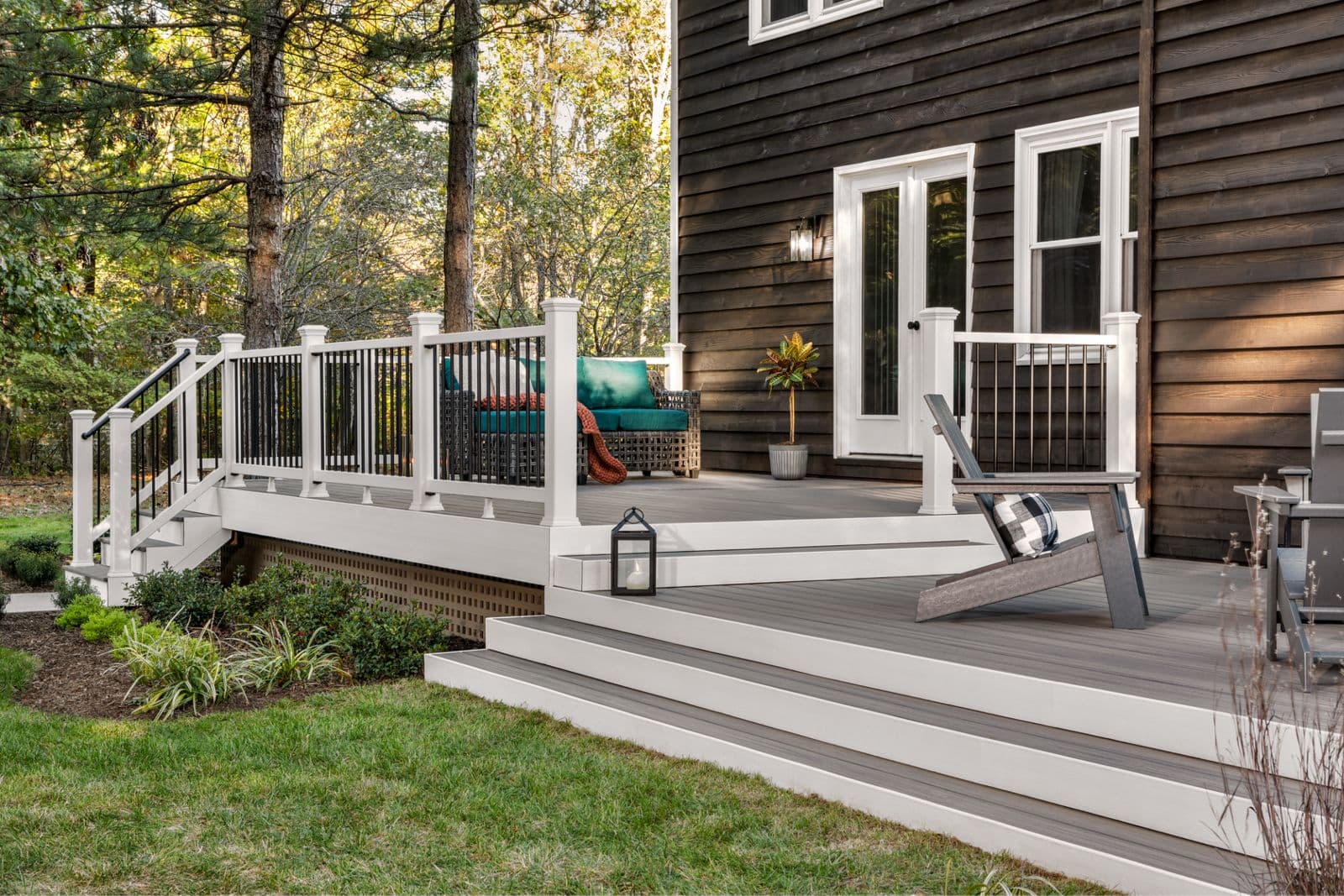
Understanding Your Decking Material Options
The choice of decking material significantly influences your budget. Lumber Plus offers a range of options, each with distinct characteristics and price points. Hardwood decking, such as Ipe, is known for its natural resistance to rot and termites, and its exceptional hardness. It can age to a silver patina or retain its color with oiling. Hardwood is a premium material choice. (S1)
Thermally modified Ash, treated with heat and steam without added preservatives, offers a different aesthetic and performance profile. Maximo Accoya, an acetylated wood, is another modified wood option, distinct from thermally modified products. It provides durability and stability for various decking applications. (S1)
For those seeking minimal upkeep, composite and PVC decking are popular choices. Composite decking often requires near-zero maintenance, eliminating the need for oiling or sanding. PVC decking is 100% synthetic and waterproof, making it a suitable choice for docks and pool decks. (S1)
Each material has specific installation requirements and long-term maintenance considerations that factor into the overall project cost.
Material Takeoff: Quantifying Your Decking Boards
Accurately calculating the quantity of decking boards needed is the first step in budgeting. This involves measuring your deck area precisely and accounting for board dimensions and any waste from cuts. For a rectangular deck, multiply the length by the width to get the total square footage. For complex shapes, break the area into simpler geometric forms.
Decking boards are typically sold in specific lengths. To calculate the number of boards, divide the total square footage by the coverage area of a single board (width in feet x length in feet). Always add an allowance for waste, typically 5-10%, especially for diagonal layouts or intricate patterns. It is always better to have a few extra boards for cuts or future repairs.
Consider the specific profile and installation system for your chosen material, as this can influence board spacing and ultimately the number of boards required. Some systems may require specific board widths or lengths for optimal installation. (S1)
Accessories and Fasteners: Don't Overlook the Details
Beyond the decking boards themselves, a comprehensive budget must include all necessary accessories. This category typically includes fasteners (hidden clips or screws), joist tape, flashing, and any specialized connectors required by your chosen decking system. For example, hidden fasteners are popular for a clean look but may have a different cost profile than face-screws.
Other accessories might include support posts, beams, joists, and concrete footings if you are building a new frame. Railing systems, stair components, and fascia boards to finish the deck edges also add to the material cost. For Maximo Accoya and thermally modified Ash, confirming the specific decking profile and installation system is essential to ensure compatibility and account for all required components. (S1)
Consider any waterproofing membranes for under-deck areas or specialized drainage systems, particularly for second-story decks or those over living spaces. These items, while not always visible, are critical for the deck's longevity and performance.
Labor Costs: Professional Installation or DIY Savings?
Labor costs can represent a significant portion of your decking budget. If you plan to hire a professional contractor, obtain multiple detailed quotes that clearly outline the scope of work, timeline, and associated costs. Ensure these quotes include site preparation, demolition of an existing structure (if applicable), framing, decking installation, railing installation, and cleanup.
For DIY enthusiasts, performing the installation yourself can save on labor costs. However, accurately assess your skill level, available time, and access to necessary tools. Factor in potential tool rental costs and the value of your own time. Mistakes during DIY installation can lead to material waste or require professional intervention, potentially negating initial savings.
Always confirm that your chosen decking material and installation system are suitable for DIY if you are not hiring a professional. Some specialized materials or fastening systems may benefit from experienced installers.
Worked Example: Budgeting for a 12x16 Foot Deck
Let's outline a hypothetical budget for a 12-foot by 16-foot rectangular deck using a standard decking board profile.
**Assumptions:**
Deck Dimensions: 12 ft x 16 ft = 192 sq ft
Decking Board Width: 5.5 inches (0.458 ft)
Waste Factor: 7% for straight lay
Fascia: 1x12 boards for perimeter (56 linear feet)
Railing: Standard post-and-rail system (40 linear feet, excluding house side)
Substructure: Assume existing or separately budgeted.
**1. Decking Boards:**
Total area: 192 sq ft
Board coverage per linear foot (5.5 inches wide): 0.458 sq ft/linear ft
Linear feet of decking needed (before waste): 192 sq ft / 0.458 sq ft/linear ft = 419.2 linear feet
With 7% waste: 419.2 x 1.07 = 448.54 linear feet
If boards are sold in 16-foot lengths: 448.54 / 16 = 28.03 boards. Round up to 29 boards. Each 16-foot board covers 0.458 ft * 16 ft = 7.328 sq ft. So 29 boards * 7.328 sq ft/board = 212.51 sq ft purchased.
**2. Fasteners:**
Total linear feet of decking: 448.54 linear feet (including waste for cuts, assuming clips are used on all purchased material)
Clips needed: (448.54 linear feet * 12 inches/foot) / 16 inches/clip = 336.4 clips. Round up to 337 clips.
**3. Fascia Boards:**
Perimeter: (12 ft + 16 ft) * 2 = 56 linear feet
If fascia boards are 12 ft long: 56 / 12 = 4.67 boards. Round up to 5 boards.
**4. Railing System:**
Assume 40 linear feet of railing (three sides), including posts and balusters. This would be specified as a unit cost per linear foot or as individual components.
**5. Contingency:**
Build this part of the estimate from the current supplier quote. Record the exact product, quoted unit, quantity, compatible accessories and delivery costs separately so assumptions do not become advertised prices.
Contingency and Hidden Costs
A contingency fund is a critical, often overlooked, part of any project budget. Allocate at least 10-15% of your total estimated costs for unexpected expenses. These can include minor material shortages, damaged boards, changes in local regulations requiring additional permits, or unforeseen site conditions.
Beyond materials and labor, consider other potential costs: permit fees, delivery charges for materials, disposal fees for old decking, or the cost of renting specialized equipment. If your project involves significant ground disturbance, you might need to factor in landscaping restoration costs around the new deck.
Also, think about future maintenance. While some decking materials are low-maintenance, others may require periodic cleaning, sealing, or oiling. Factor these ongoing costs into your long-term ownership budget, particularly for materials like hardwood (S1).
Before you order
- Have I accurately measured my deck area, accounting for all dimensions and angles?
- Have I selected a decking material and confirmed its specific board dimensions and installation system?
- Have I calculated the linear footage or square footage of decking boards required, including a waste factor?
- Have I identified all necessary fasteners, clips, and accessory components (e.g., joist tape, fascia, railings, stairs)?
- Have I obtained multiple quotes from contractors, or thoroughly assessed my own DIY capabilities and associated costs?
- Have I accounted for potential permit fees, delivery charges, and waste disposal costs?
- Have I included a contingency fund of at least 10-15% of the total estimated project cost?
- Have I considered the long-term maintenance implications and costs associated with my chosen decking material?
- Have I checked for any specific requirements or recommendations for my chosen decking material, such as ventilation or specific substructure needs?
- Have I planned for any tools or equipment rentals that might be necessary for the project?
Confirm installation details, approved uses and warranty terms in the current instructions for the exact product and profile. Your installer should verify the substrate, structure and applicable project requirements.
Questions to help you decide
How much waste should I budget for when ordering decking?
For a simple, straight decking layout, budgeting 5-7% extra for waste is generally advisable. For more complex designs, such as diagonal patterns or intricate borders, increasing this to 10-15% can help ensure you have enough material for cuts and unforeseen issues. It's always better to have a few extra boards than to halt a project waiting for a small reorder.
Do different decking materials require different types of fasteners?
Yes, fastener requirements can vary significantly by decking material and manufacturer. Some materials, like certain composite and PVC brands, are designed for specific hidden fastening systems. Hardwood decking may use specialized clips or be face-fastened with specific screws. Always consult the manufacturer's installation guidelines for your chosen decking product to ensure compatibility and structural integrity. Using the incorrect fasteners can compromise the deck's performance and appearance.
What is the difference between thermally modified wood and Maximo Accoya?
Thermally modified wood, such as thermally modified Ash, is enhanced using a heat and steam process without added preservatives. This process aims to improve the wood's stability and resistance to decay. Maximo Accoya, on the other hand, is acetylated wood. This is a separate chemical modification process that alters the wood's cell structure to enhance its durability and stability. Maximo Accoya is not a thermally modified product, but both fall under the category of modified woods offering enhanced performance compared to traditional untreated timber. (S1)
Ready to Plan Your Decking Project Budget?
Request a material quote today. Provide your project dimensions, desired decking profile, and ZIP code to receive an accurate estimate for your chosen materials. We can also confirm current availability and service options to help you get started.
Request a material quote →