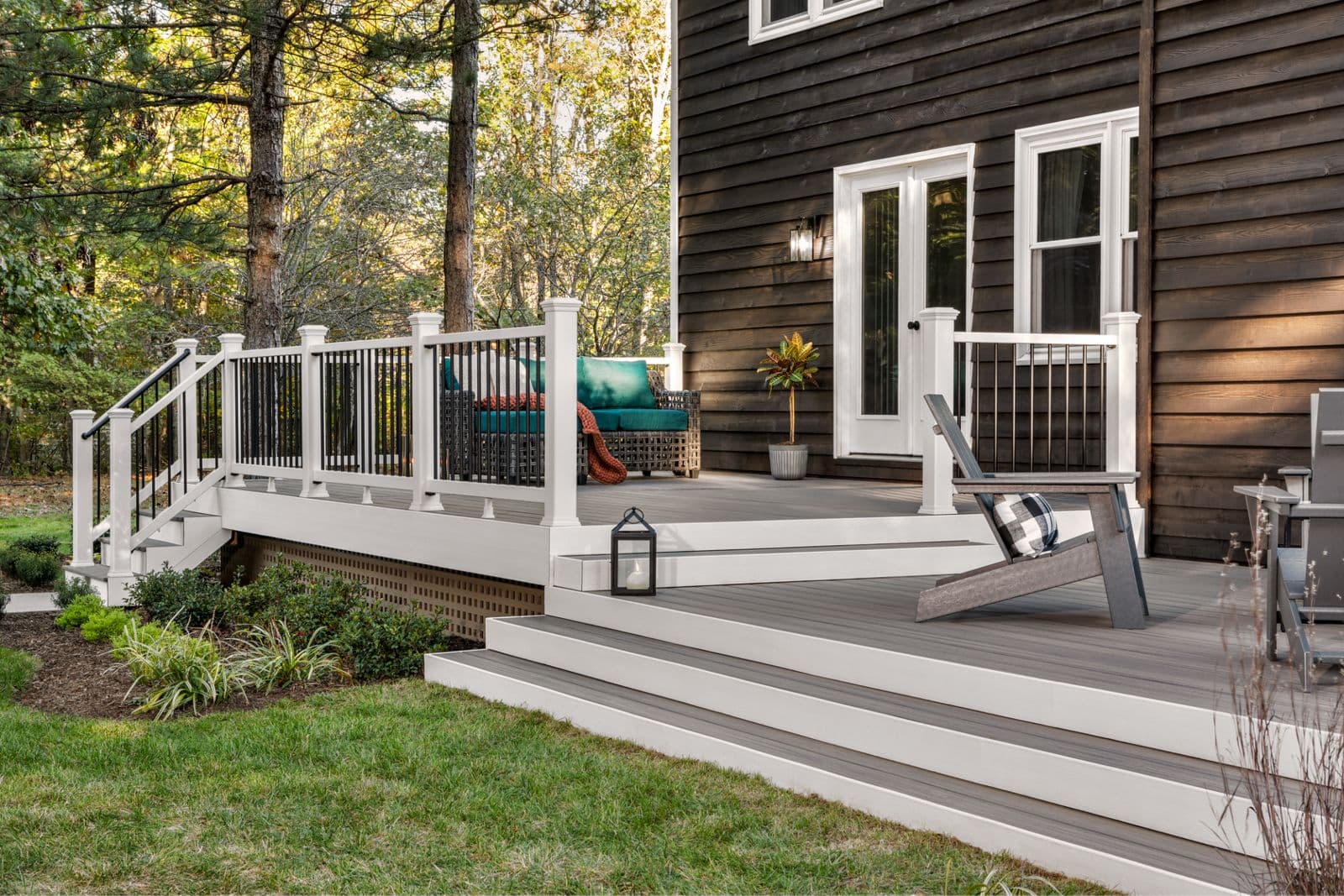
Understanding Your Decking Material Options
Lumber Plus offers a range of decking materials, each with distinct characteristics that affect appearance, performance, and maintenance. Before evaluating samples, it's helpful to understand the basic categories:
Hardwood decking, such as Ipe, is known for its natural beauty and durability. Ipe, for example, is noted for its hardness and natural resistance to rot, termites, and salt air. It can be allowed to age to a silver patina or maintained with oil to preserve its original color. Hardwoods offer a classic, organic aesthetic.
Thermally modified wood, like Thermo Ash, is real wood enhanced through a heat and steam process without added preservatives. This modification aims to support selected decking applications. The wood grain offers a natural look while benefiting from the modification.
Acetylated wood, such as Maximo Accoya, is another category of modified real wood, enhanced through acetylation rather than heat treatment. It offers durability and stability for long-lasting decks and can be used for modern siding and precision joinery applications. It requires minimal upkeep and can accommodate custom profiles.
Composite decking combines wood fibers with plastic, aiming for near-zero maintenance without the need for oiling or sanding. These products are engineered for consistency and often mimic the appearance of wood while offering different performance characteristics.
PVC decking is 100% synthetic and waterproof to the core, making it a suitable choice for applications like docks and pool decks. It offers high resistance to moisture and is designed for minimal upkeep.
The Impact of Natural Light on Samples
The most significant factor in how a decking sample appears is the natural light it receives. Sunlight changes throughout the day, and a material that looks perfect at noon might seem entirely different in the soft light of dawn or dusk. Take your samples outside and observe them at various times.
Place the samples in the exact location where your deck will be built. Notice how direct sunlight brightens colors and highlights grain patterns, while shaded areas might make the same material appear darker or less vibrant. Consider any existing structures, trees, or future plans that will cast shadows on your deck at different times of the day or year.
Texture and Profile: More Than Just Color
Decking isn't just a flat surface; its texture and profile contribute significantly to its overall feel and appearance. Run your hand over the samples. Do you prefer a smooth finish, a subtle wood grain, or a more pronounced texture? These tactile qualities will affect how comfortable the deck is underfoot, especially if it's a barefoot area.
Also, consider the board profile. Some decking materials come with specific edge details or grooving for hidden fastener systems. While a sample may just be a small cut, try to visualize how these profiles will repeat across a larger area. The way light catches these edges can create subtle lines and patterns that impact the deck's visual flow.
For example, a smooth-sanded Ipe board will have a different light reflection than a composite board with an embossed wood grain pattern. Even within the same material type, different manufacturers may offer varying textures.
Coordinating with Adjacent Finishes
Your new deck will not exist in isolation. It will be next to your home's siding, landscaping, existing patio furniture, and potentially a pool or other outdoor features. Bring your decking samples into proximity with these elements.
Hold samples against your house's exterior to see if the colors and tones complement or clash. Consider the color of your trim, windows, and any stone or brickwork. If you have outdoor furniture, place the samples near it to ensure a cohesive look. For pool surrounds, evaluate how the decking color interacts with the water and coping materials. The goal is to create a harmonious outdoor living space where all elements work together.
Sample Labeling and Documentation
When collecting multiple samples, it's crucial to keep them organized and clearly labeled. Each sample should ideally come with documentation specifying the material type (e.g., Ipe hardwood, Thermo Ash, Maximo Accoya, composite, PVC), the specific color or finish name, and the manufacturer.
This information is vital for accurate ordering and for recalling your preferences later. Take notes on each sample, recording your observations about its appearance in different lighting conditions, its texture, and how it pairs with other elements of your home. This documentation will be invaluable when you're ready to make your final decision and place an order.
Worked Example: Selecting Decking for a 12x16 Foot Patio
Imagine you are planning a new 12-foot by 16-foot deck (192 square feet) adjacent to a light gray stucco house with dark bronze window frames. You have narrowed down your choices to three samples:
Sample A: Ipe Hardwood, natural finish, 5.5-inch wide boards.
Sample B: Composite Decking, 'Coastal Gray' color, embossed wood grain, 5.25-inch wide boards.
Sample C: Maximo Accoya, 'Natural Timber' finish, smooth surface, 5.5-inch wide boards.
Day 1: Place all three samples on the ground where the deck will be. Observe them at 9 AM (morning sun), 1 PM (midday sun), and 6 PM (evening light). Note that the Ipe (Sample A) shows rich browns in morning light but takes on a slightly reddish hue in the evening. The 'Coastal Gray' composite (Sample B) appears lighter and more uniform in midday sun, but a bit stark in the shade. The Maximo Accoya (Sample C) maintains a consistent warm, light brown tone throughout the day, with its smooth surface reflecting light evenly.
Day 2: Hold each sample against the light gray stucco of the house. Sample A (Ipe) provides a strong, warm contrast. Sample B (Composite) blends well with the stucco but might be too monochromatic. Sample C (Maximo Accoya) offers a softer, more subtle contrast that complements the stucco without overpowering it. Next, place samples near a dark bronze patio chair. Sample A and C both complement the bronze well, while Sample B feels a bit cool.
Day 3: Consider the texture. The embossed grain of Sample B (Composite) feels pleasant underfoot but might trap more dust. Sample A (Ipe) is smooth but very dense. Sample C (Maximo Accoya) is also smooth and feels less dense than Ipe, which might be preferred for a barefoot area.
After this three-day evaluation, you might lean towards Sample C, the Maximo Accoya, for its consistent appearance in varying light, its complementary tone with the house and furniture, and its comfortable smooth texture. This systematic evaluation using physical samples helps ensure the final choice fits the specific project context.
Before you order
- Obtain physical samples of all prospective decking materials.
- Observe samples in the actual project location at different times of day (morning, midday, evening).
- Evaluate samples under various lighting conditions (direct sun, partial shade, full shade).
- Feel the texture of each sample underfoot and by hand.
- Place samples next to existing house siding, trim, and other permanent outdoor features.
- Compare samples against outdoor furniture and landscaping elements.
- Verify the specific material, color, and manufacturer details on each sample's label.
- Document your observations and preferences for each sample.
Confirm installation details, approved uses and warranty terms in the current instructions for the exact product and profile. Your installer should verify the substrate, structure and applicable project requirements.
Questions to help you decide
How many samples should I request?
It is generally recommended to request at least two to three samples of your top choices. This allows you to compare them side-by-side in your space and observe how they interact with each other and your home's existing elements.
Should I wet the samples to see how they look when wet?
Yes, if your deck will be exposed to rain, sprinklers, or a pool, it's a good idea to lightly wet a portion of your samples. Some materials may darken or change in appearance when wet, and this can be an important factor in your decision, especially for pool surrounds or uncovered decks.
How long should I keep the samples for evaluation?
Ideally, you should keep the samples for at least 2-3 days to observe them in different lighting conditions and weather. This extended viewing period provides a more comprehensive understanding of how the decking will look and feel over time in your specific environment.
Ready to Select Your Decking?
Request a material quote with your project dimensions, exact profile, and ZIP code to confirm current availability and service options. Our team can help you find the right decking for your needs. Explore our range of hardwood, thermally modified, acetylated, composite, and PVC decking options.
Request a material quote →