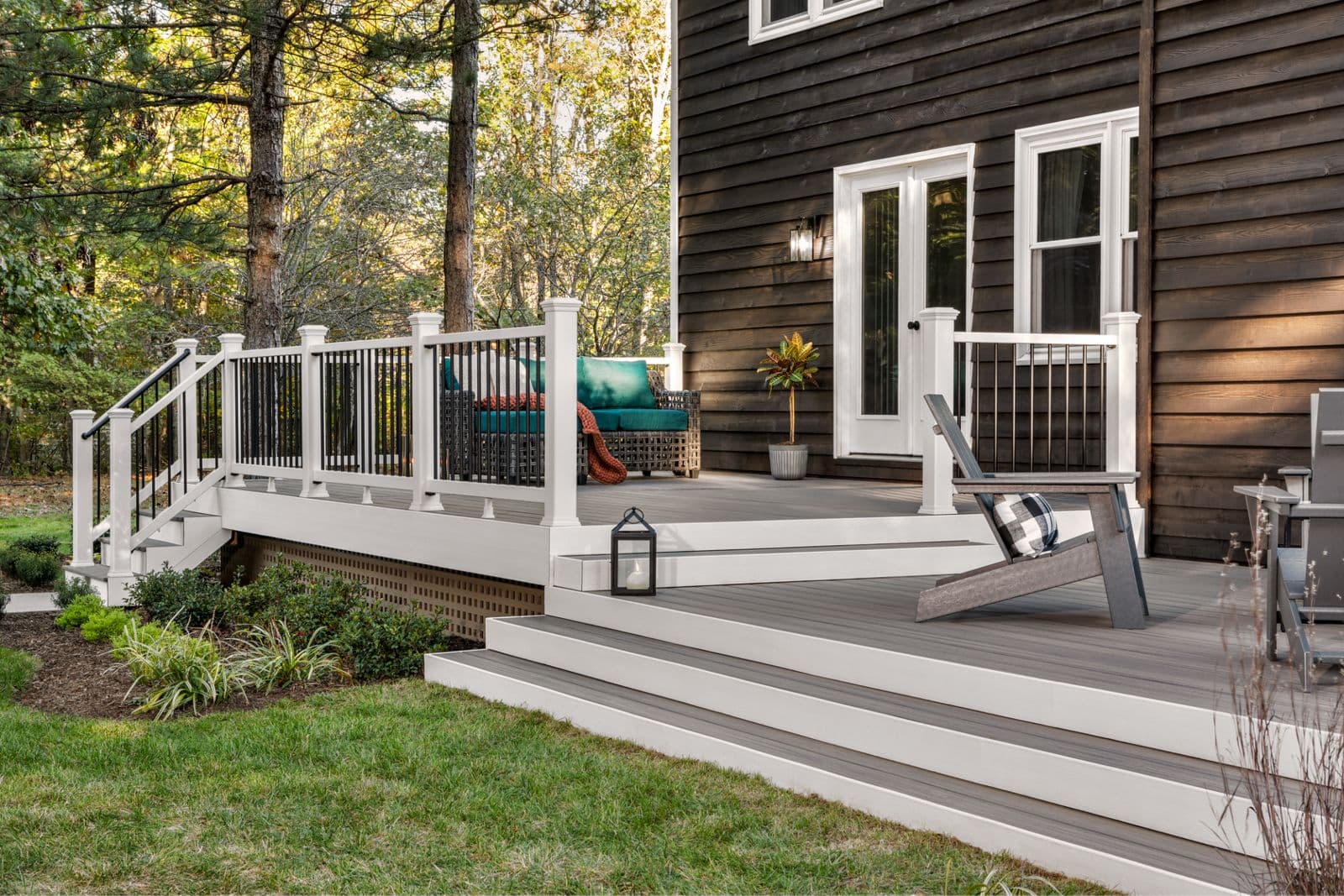
Material Type and Composition
The first specification to consider is the material type and its composition. This fundamental detail dictates many of the product's inherent properties, including its natural resistance to environmental factors, maintenance requirements, and overall appearance.
For instance, natural hardwoods like Ipe are known for their density and natural resistance to rot and termites. They can age to a silver patina or maintain their color with regular oiling. Thermally modified Ash, on the other hand, is wood treated with heat and steam to enhance stability and durability without added preservatives. Acetylated Maximo Accoya is real wood enhanced through a process that improves durability and stability. Composite decking combines wood fibers with plastic, aiming for low maintenance and resistance to wear. PVC decking is 100% synthetic, making it waterproof and often recommended for areas like docks and pool decks.
Each material category comes with specific considerations. Understanding the core composition helps you align the decking with your project's demands, whether it's for a sun-drenched deck, a pool surround, or a low-maintenance patio.
Dimensions and Profiles: Board Widths, Lengths, and Edge Details
Decking boards come in various dimensions and profiles, which are crucial for both the aesthetic and structural aspects of your deck. Standard widths and lengths vary by material and manufacturer. For example, hardwood decking may be available in consistent widths and lengths, while composite or PVC options might offer different profiles designed for specific fastening systems.
The profile refers to the shape of the board, especially its edges. Common profiles include square edge, grooved edge (for hidden fasteners), and tongue-and-groove. Square edge boards are typically face-fastened, while grooved boards are designed to work with compatible hidden fastening systems, creating a cleaner, fastener-free surface appearance. Some materials, like Maximo Accoya, may offer custom profiles depending on the project. Always confirm the exact profile and installation system required for your chosen product.
When planning, consider how board widths will lay out across your deck and how board lengths will minimize seams or waste. A consistent profile is essential for a uniform look and proper installation.
Intended Applications and Limitations
Product specifications often detail the intended applications for which the decking is suitable and, equally important, any limitations. For example, some materials are explicitly recommended for specific environments or uses. PVC decking is often highlighted as a prime choice for docks and pool decks due to its waterproof nature. Maximo Accoya is noted for durability and stability in long-lasting decks, as well as modern siding and precision joinery.
Conversely, some thermally modified woods support selected decking applications, meaning their suitability might depend on the specific product line and installation method. It's important to look for explicit statements regarding exposure to moisture, direct sunlight, heavy foot traffic, or proximity to water features. These details ensure the decking will perform as expected in your specific project environment.
Never assume a decking material is universally suitable for all outdoor applications. Always verify that the chosen product is approved for your specific project type and environmental conditions.
Hardness and Durability Ratings
For natural wood decking, hardness ratings provide an indication of the material's resistance to indentation and wear. The Janka hardness scale is a common measure, with higher numbers indicating greater hardness. This makes it highly resistant to dents and scratches, suitable for high-traffic areas.
For composite and PVC decking, durability is often described through terms like 'near-zero maintenance' or resistance to rot, termites, and salt air. While these materials don't have a Janka rating, their specifications will detail their resistance to fading, staining, and impact. Understanding these ratings and descriptions helps you match the decking's resilience to the expected demands of your project.
Consider the level of activity your deck will see. A deck around a pool or a frequently used outdoor dining area will benefit from materials with higher durability ratings or proven resistance to specific stressors.
Worked Example: Selecting Decking for a 12x10-Foot Deck
Let's consider a hypothetical 12-foot by 10-foot deck project. The homeowner desires a low-maintenance deck around a small above-ground pool and is evaluating two options: Ipe hardwood and a PVC decking product.
It ages to a silver patina if not oiled. Standard Ipe boards are often available in 5.5-inch widths and various lengths, such as 8, 10, or 12 feet. For a 12x10 deck, using 12-foot length boards would minimize end-to-end seams on the 12-foot dimension. To cover the 10-foot width, approximately 22 boards (10 feet / 5.5 inches per board = 21.8 boards, rounded up) would be needed, plus any waste for cuts or a picture frame border. The Ipe would require periodic oiling to maintain its original color.
For the PVC decking, specifications state it is 100% synthetic, waterproof, and recommended as the 'best choice for docks and pool decks.' It boasts 'near-zero maintenance' with no oiling or sanding required. PVC boards often come in similar widths, say 5.5 inches, and lengths of 12 or 16 feet. For this project, 12-foot lengths would be efficient. The same calculation for board quantity applies. The key difference here is the material's inherent waterproof nature and minimal upkeep, which directly addresses the pool surround requirement.
In this example, while Ipe offers natural beauty and extreme hardness, the PVC decking's specific recommendation for pool areas and its low-maintenance profile might make it the more suitable choice given the homeowner's desire for minimal upkeep around a pool. This decision is driven directly by interpreting the application and maintenance specifications.
Before you order
- Identify the primary use of your deck (e.g., dining, lounging, pool surround, high traffic).
- Determine the climate conditions your deck will face (e.g., sun exposure, moisture, salt air, winter conditions).
- Review the material composition: Is it natural wood, modified wood, composite, or PVC?
- Check board dimensions: What are the available widths and lengths? How do they fit your project layout?
- Examine the profile: Are the edges square, grooved, or tongue-and-groove? Is it compatible with your chosen fastening system?
- Confirm intended applications: Does the manufacturer explicitly approve the material for your specific project type?
- Note any limitations: Are there conditions where the material is not recommended?
- Evaluate durability and hardness ratings: How resistant is it to wear, dents, rot, and insects?
- Understand maintenance requirements: What ongoing tasks are needed to preserve its appearance and integrity?
- Verify product-specific installation guidelines: Are there unique spacing or support requirements?
- Cross-reference with local building codes (where applicable): Does the material meet local regulations?
Confirm installation details, approved uses and warranty terms in the current instructions for the exact product and profile. Your installer should verify the substrate, structure and applicable project requirements.
Questions to help you decide
Why are board dimensions so important in decking specifications?
Board dimensions, including width, length, and thickness, are critical because they directly impact your project's material quantity, installation time, and final appearance. Knowing the exact dimensions helps you calculate how many boards you'll need, minimize waste from cuts, and plan for a consistent layout. Different board thicknesses also relate to structural support requirements, such as joist spacing.
What is the difference between thermally modified wood and acetylated wood?
Thermally modified wood, like Thermo Ash, is treated with heat and steam to enhance its stability and durability, making it suitable for selected outdoor applications without added preservatives. Acetylated wood, such as Maximo Accoya, undergoes a different chemical modification process (acetylation) that enhances the wood's durability and stability. Maximo Accoya is not a thermally modified product; it's a separate category of enhanced real wood.
How do I know if a decking product is suitable for a pool deck?
To determine suitability for a pool deck, look for specifications that explicitly state the product is waterproof, highly resistant to moisture, or specifically recommended for pool surrounds or docks. PVC decking, for example, is often highlighted as a 'best choice for docks and pool decks' due to its 100% synthetic, waterproof composition. Other materials might require specific installation methods or increased maintenance in such environments. Always check the manufacturer's guidance for water exposure.
Ready to Plan Your Decking Project?
Request a material quote with your project dimensions, exact profile preferences, and ZIP code to confirm current availability and service options. Our team can help you review specifications and select the ideal decking for your needs.
Request a material quote →