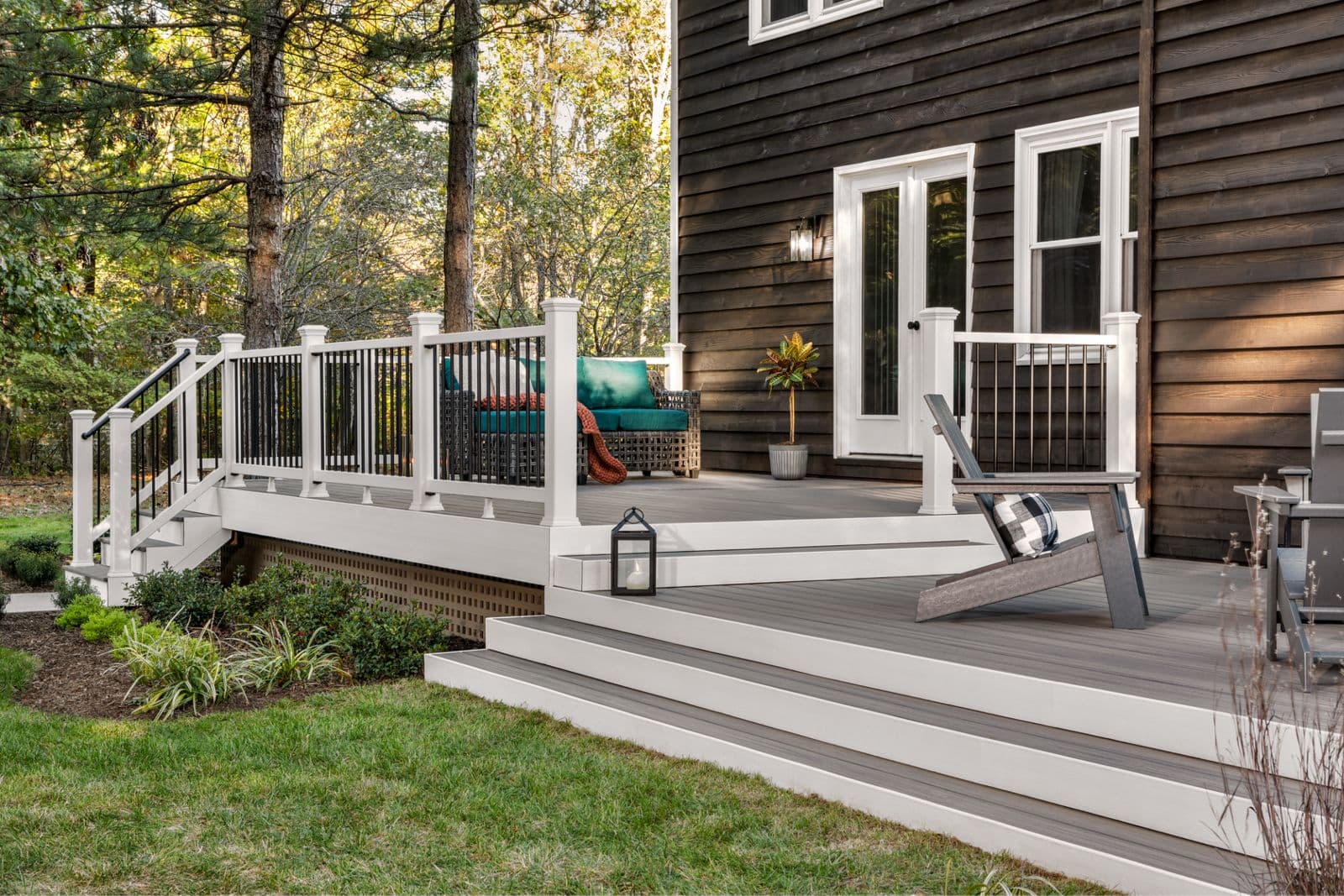
Why Deck Board Spacing Matters
The primary purpose of spacing between deck boards is to allow for drainage and ventilation. Without adequate gaps, water can pool on the deck surface, increasing the risk of rot, mildew, and insect infestation, especially with wood decking. Proper spacing also ensures air circulation underneath the deck, which helps prevent moisture buildup and keeps the deck structure dry.
Beyond practical considerations, spacing impacts the aesthetics of your deck. Consistent gaps create a uniform, professional look. Inconsistent spacing, on the other hand, can make the deck appear poorly constructed and detract from its overall appeal. It also accommodates the natural expansion and contraction of decking materials due to temperature and humidity changes, preventing buckling or excessive gapping.
Material-Specific Spacing Requirements
Different decking materials react differently to environmental factors, necessitating varied spacing guidelines. Hardwood decking, such as Ipe, is known for its density and natural resistance to rot and insects. However, like all natural wood, it will expand and contract with changes in moisture and temperature. Manufacturers typically specify a narrow gap to allow for slight movement while maintaining a tight, elegant appearance.
Composite and PVC decking are engineered materials with different thermal expansion properties. While they are less prone to moisture absorption than natural wood, they can expand and contract more significantly with temperature fluctuations. PVC decking, being 100% synthetic, is particularly stable and waterproof. Always consult the specific product's installation guide for precise recommendations, as these can vary even between brands and profiles.
Thermally modified Ash, a heat and steam-treated wood, offers enhanced stability but still requires specific spacing. Maximo Accoya, an acetylated wood product, also boasts increased durability and stability, but its unique properties mean its spacing guidance will differ from traditional hardwoods or composites. These specialized materials are designed for long-lasting decks, but their performance relies on correct installation practices, including appropriate gapping.
Never assume a single spacing rule applies across all materials. The manufacturer's instructions are developed based on the material's specific characteristics and intended performance.
Fastener Systems and Their Influence on Spacing
The type of fastener system you choose also plays a significant role in determining board spacing. Hidden fastener systems, which create a clean, screw-free surface, often incorporate built-in spacers or clips that automatically set the correct gap. These systems are designed to ensure consistent spacing across the entire deck.
When face-fastening, where screws are driven through the top of the board, installers must manually maintain the correct gap. This typically involves using spacers or shims during installation. The choice of fastener, whether it's a hidden clip or a face screw, must always align with the manufacturer's recommended installation method for your specific decking product.
Environmental Factors and Adjustments
Local climate and installation conditions can influence spacing requirements. For instance, decking installed in consistently humid environments may require slightly wider gaps to accommodate greater moisture-induced expansion. Conversely, decking installed during a very dry period might need narrower initial gaps to account for subsequent expansion when humidity increases.
If installing decking in cold weather, boards may be at their most contracted state. Installing them with the final recommended gap could result in wider-than-desired gaps when the weather warms and the boards expand. Some manufacturers provide specific cold-weather installation guidelines that may suggest a slightly narrower initial gap. Always check your product's documentation for any climate-specific adjustments.
Worked Example: Calculating Spacing for Ipe Decking
Let's consider a hypothetical deck project using Ipe hardwood decking boards with nominal dimensions of 5.5 inches wide and 1 inch thick.
To determine how many boards you'll need and the total lineal footage of gapping, follow these steps:
3. **Calculate the space taken by boards:** 26 boards * 5.5 inches/board = 143 inches.
This is slightly over the 144-inch target, indicating that the last board will need to be ripped down to fit perfectly, or the overall width needs slight adjustment. This example highlights the importance of precise measurements and potentially cutting the final board to maintain consistent spacing.
This calculation helps ensure you order the correct number of boards and understand how the gaps will affect your overall layout. Always round up for board quantities to account for cuts and potential waste.
Before you order
- Identify your specific decking material (Hardwood, Thermally Modified, Accoya, Composite, PVC).
- Locate the manufacturer's installation guide for your chosen product.
- Find the recommended board spacing in the guide (often in inches or millimeters).
- Note any climate-specific or installation temperature adjustments for spacing.
- Confirm if your chosen fastening system dictates the gap size (e.g., hidden clips).
- Plan your layout to account for board width plus gap, especially for fixed dimensions.
- Ensure consistent spacing during installation using appropriate tools (spacers, shims).
- Review the manufacturer's guidance on edge spacing and expansion gaps against fixed structures.
Confirm installation details, approved uses and warranty terms in the current instructions for the exact product and profile. Your installer should verify the substrate, structure and applicable project requirements.
Questions to help you decide
What happens if I don't leave enough space between deck boards?
Insufficient spacing can lead to several problems. Water may pool on the deck surface, increasing the risk of rot, mold, and mildew, especially for wood decking. Boards can buckle, cup, or warp as they expand due to moisture absorption or temperature changes, causing an uneven surface and potential structural issues. Poor ventilation can also trap moisture underneath the deck, compromising the sub-structure.
Can I use a universal spacer for all decking materials?
No, a universal spacer is not recommended. Decking materials have varying expansion and contraction rates. Hardwoods, thermally modified woods, acetylated woods, composites, and PVC all react differently to changes in temperature and humidity. Always refer to the specific manufacturer's installation instructions for your chosen decking product to determine the correct spacing. Using an incorrect spacer can lead to the issues mentioned above.
Does my climate affect the recommended deck board spacing?
Yes, climate can influence spacing. In regions with high humidity or significant temperature swings, decking materials may expand and contract more. Some manufacturers provide specific guidelines or adjustments for installation in different climates or during certain seasons (e.g., installing in cold weather vs. warm weather). It is always best to consult your product's installation guide for any climate-specific recommendations.
Request a Material Quote for Your Decking Project
Ready to start planning your deck? Provide your project dimensions, desired decking profile, and ZIP code to request a material quote. We can help you confirm current availability and service options for all your decking needs.
Request a material quote →