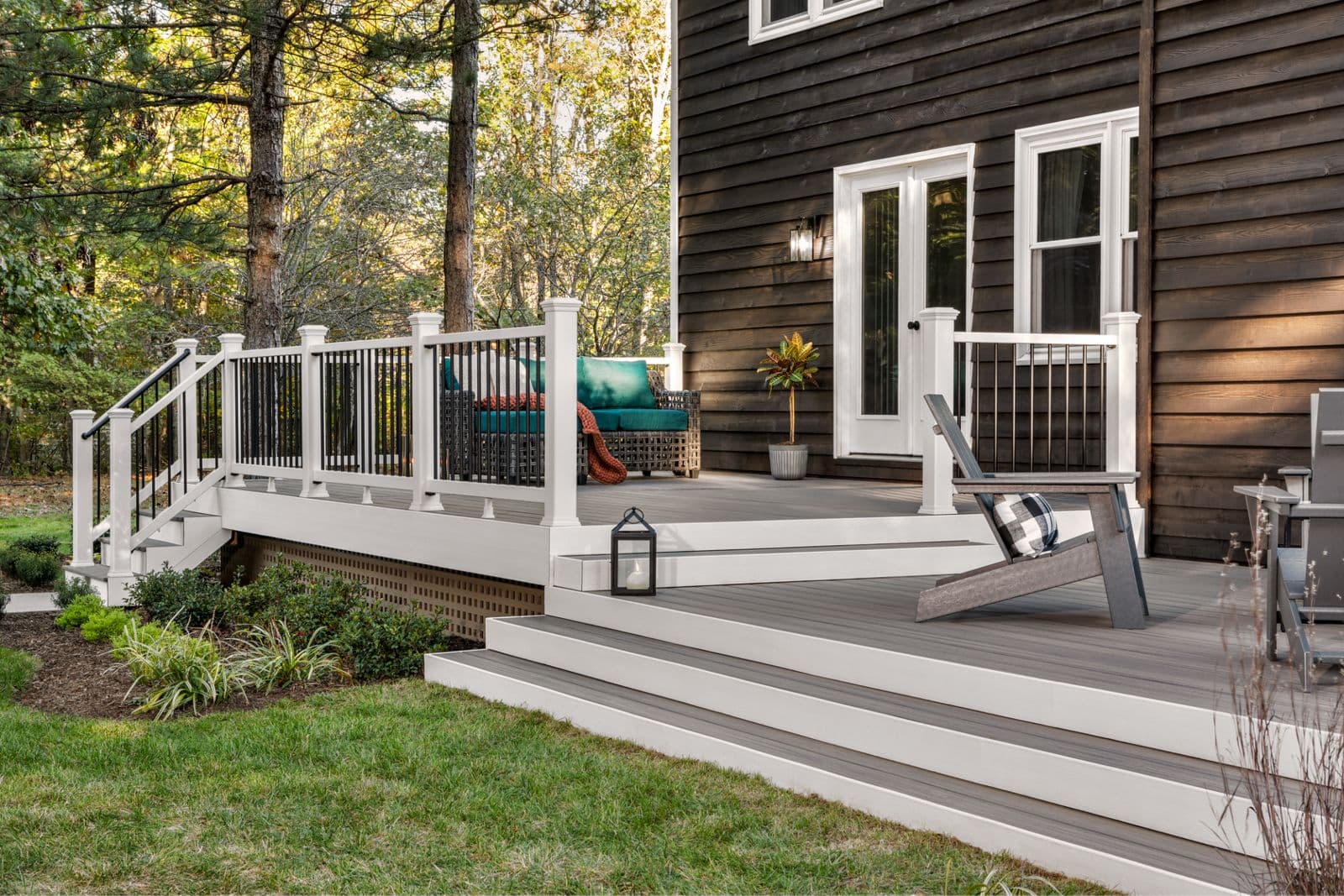
Understanding the Unique Challenges of Shaded Decks
Shaded decks are often cooler and more protected from harsh UV rays, which can be an advantage for comfort. However, the lack of consistent sunlight means that moisture from rain, dew, or even morning fog can take significantly longer to evaporate. This prolonged dampness creates an environment where mold, mildew, and algae are more likely to thrive, potentially leading to surface discoloration and, for some materials, accelerated degradation.
Good ventilation is paramount for shaded decks. Without it, the trapped moisture and stagnant air can exacerbate these issues. The choice of decking material, its installation, and ongoing maintenance practices must all address these specific environmental conditions to ensure longevity and appearance.
Decking Material Options for Shaded Areas
When planning a deck in a shaded location, certain decking materials offer better performance due to their inherent properties.
PVC decking is a strong contender for shaded, moisture-prone areas. It is a 100% synthetic material that is waterproof to the core. This makes it highly resistant to mold, mildew, and moisture absorption, which are common issues in shaded environments. PVC decking is often recommended for docks and pool decks, where constant moisture exposure is a given. You can explore options like PVC decking at our product page: [https://lumberplus.com/decking/pvc](https://lumberplus.com/decking/pvc).
Composite decking can also be a suitable choice, particularly high-quality capped composites. These products combine wood fibers with plastic, and the outer cap provides a layer of protection against moisture and stains. While not entirely waterproof like PVC, many composite brands are engineered to resist moisture absorption and are less prone to mold and mildew compared to traditional wood. They typically require near-zero maintenance, such as no oiling or sanding. You can find more about composite options here: [https://lumberplus.com/decking/composite](https://lumberplus.com/decking/composite).
Hardwood decking, such as Ipe, offers natural resistance to rot and termites. Ipe is known for its exceptional hardness and natural resistance to salt air. While it can age to a silver patina, it can also be oiled to maintain its color. For shaded areas, hardwoods like Ipe will still require attention to ventilation and cleaning to prevent surface growth, but their natural density provides a robust core. Learn more about hardwood decking, including Ipe, here: [https://lumberplus.com/decking/hardwood](https://lumberplus.com/decking/hardwood) and [https://lumberplus.com/decking/hardwood/ipe](https://lumberplus.com/decking/hardwood/ipe).
Thermally modified Ash is real wood enhanced through a heat and steam process without added preservatives. This modification improves stability and can support selected decking applications. Similar to other wood options, proper ventilation and maintenance are key in shaded settings. Maximo Accoya is another modified wood option, enhanced through acetylation rather than heat treatment. It offers durability and stability for long-lasting decks and minimal upkeep. For shaded decks, both thermally modified Ash and Maximo Accoya will benefit from careful planning regarding drainage and airflow to mitigate moisture accumulation.
Enhancing Ventilation and Drainage
Regardless of the material chosen, optimizing ventilation and drainage is critical for a shaded deck. Good airflow beneath the deck helps dry out moisture quickly, reducing the risk of mold and mildew. Consider the following:
Adequate Spacing: Ensure proper spacing between decking boards according to manufacturer specifications. This allows water to drain through and air to circulate. Do not assume universal spacing; always verify the exact assembly instructions for your chosen product.
Clear Under-Deck Space: Avoid obstructing the space beneath the deck with lattice that is too dense or by storing items that block airflow. If using lattice, choose an open pattern or incorporate vents.
Ground Preparation: Ensure the ground beneath the deck slopes away from the house and is clear of debris. Consider a gravel base or a weed barrier to prevent vegetation growth, which can trap moisture.
Guttering and Downspouts: If your deck is beneath an overhang or roof, ensure that gutters and downspouts effectively direct rainwater away from and around the deck structure.
Maintenance for Shaded Decks
Maintenance for a shaded deck will differ slightly from one in full sun. While UV exposure is reduced, the increased moisture necessitates regular cleaning.
Routine Cleaning: Regularly sweep or blow off leaves, dirt, and other organic debris. This prevents moisture from being trapped against the decking surface, which can lead to staining and growth. For wood decking, this also helps prevent the accumulation of organic matter that can contribute to decay.
Mold and Mildew Treatment: Inspect your deck periodically for signs of mold or mildew, especially in damp corners or areas with persistent shade. Use a manufacturer-approved deck cleaner specifically formulated for your decking material. Always test the cleaner on an inconspicuous area first to ensure compatibility and avoid discoloration.
Pressure Washing: If using a pressure washer, consult the decking manufacturer's guidelines for appropriate pressure settings and nozzle types. Incorrect use can damage the decking surface, especially with wood or certain composite materials. A gentle wash with a soft brush and appropriate cleaner is often sufficient and safer.
Worked Example: Selecting Decking for a North-Facing Backyard Deck
Imagine a homeowner, Sarah, is planning a new deck for her north-facing backyard. The area is largely shaded by a mature oak tree and the house itself, receiving only indirect sunlight for most of the day. The deck dimensions are 12 feet by 15 feet.
Sarah's primary concerns are durability against moisture, ease of maintenance, and resistance to mold and mildew. She initially considered traditional pressure-treated wood, but after reviewing the challenges of shaded decks, she decided to explore other options.
Option 1: PVC Decking. Sarah researches PVC decking and notes its waterproof nature. She likes the idea of minimal moisture absorption and easy cleaning. The initial cost might be higher, but the promise of reduced long-term maintenance in a damp, shaded environment is appealing. She selects a specific PVC profile that is 5.5 inches wide. For a 12-foot width, she would need approximately 26 boards (12 feet * 12 inches/foot / 5.5 inches/board = 26.18 boards, rounded up). For the 15-foot length, she would need 15-foot boards, or two shorter boards joined if longer lengths aren't available. Total area: 180 square feet. Purchase quantity would be based on available board lengths and a cutting plan to minimize waste, likely requiring more than the exact area equivalent.
Option 2: High-Quality Capped Composite Decking. Sarah also considers a premium capped composite. She confirms with the manufacturer's specifications that the specific composite product has a robust cap layer designed for moisture resistance and mold inhibition. She appreciates the wood-like aesthetic it offers, which she feels blends well with her natural backyard. Similar to PVC, she would plan for proper board spacing and regular cleaning, but expects less susceptibility to moisture-related issues than uncapped composites or traditional wood.
Decision: After weighing the pros and cons, Sarah decides on PVC decking due to its superior moisture resistance, which directly addresses the primary challenge of her shaded location. She plans for a small gap between boards (as per manufacturer instructions) to facilitate drainage and will ensure the under-deck area remains clear for optimal airflow. She also commits to a routine cleaning schedule, knowing that even waterproof materials benefit from removing organic debris.
Before you order
- Assess the degree and duration of shade: How many hours of direct sun does the area receive?
- Evaluate existing drainage: Does water pool near the deck site?
- Consider ventilation: Is there adequate airflow beneath and around the proposed deck?
- Research material properties: Which decking options (PVC, composite, hardwood) offer the best moisture resistance and durability in shade?
- Review manufacturer guidelines: What are the specific installation and maintenance recommendations for shaded applications?
- Plan for cleaning: How will you regularly remove debris and address potential mold/mildew?
- Budget for long-term maintenance: Factor in the cost and effort of cleaning and treatments.
- Verify board spacing: Ensure the chosen product allows for adequate drainage between boards.
- Address under-deck conditions: Plan for proper ground preparation and clear airflow beneath the structure.
Confirm installation details, approved uses and warranty terms in the current instructions for the exact product and profile. Your installer should verify the substrate, structure and applicable project requirements.
Questions to help you decide
Does shade make a deck colder or hotter?
Shade generally makes a deck feel cooler by blocking direct sunlight. While this can be a comfort benefit, it also means the deck surface will retain moisture longer, as the sun's warmth isn't there to aid evaporation. This extended dampness is the primary challenge for material selection and maintenance.
Can I use any wood decking in a shaded area?
While many wood decking options can be used, some are better suited than others. Hardwoods like Ipe, or modified woods like thermally modified Ash or Maximo Accoya, offer enhanced natural durability or stability. However, all wood decking in shaded areas will require diligent maintenance, including regular cleaning and ensuring excellent ventilation, to mitigate the risks of mold, mildew, and rot that prolonged moisture exposure can cause.
How often should I clean a shaded deck?
The frequency of cleaning for a shaded deck depends on several factors, including the amount of organic debris (leaves, pollen) and the humidity levels in your environment. As a general guideline, a shaded deck will likely benefit from more frequent cleaning than a sun-exposed one. Plan for at least quarterly cleaning with a manufacturer-approved cleaner, and more often if you notice significant debris accumulation or the onset of mold and mildew. Regular sweeping to remove leaves is always beneficial.
Ready to Plan Your Shaded Deck Project?
Request a material quote with your project dimensions, exact profile preferences, and ZIP code. We can help confirm current availability and service options for your shaded deck material needs.
Request a material quote →