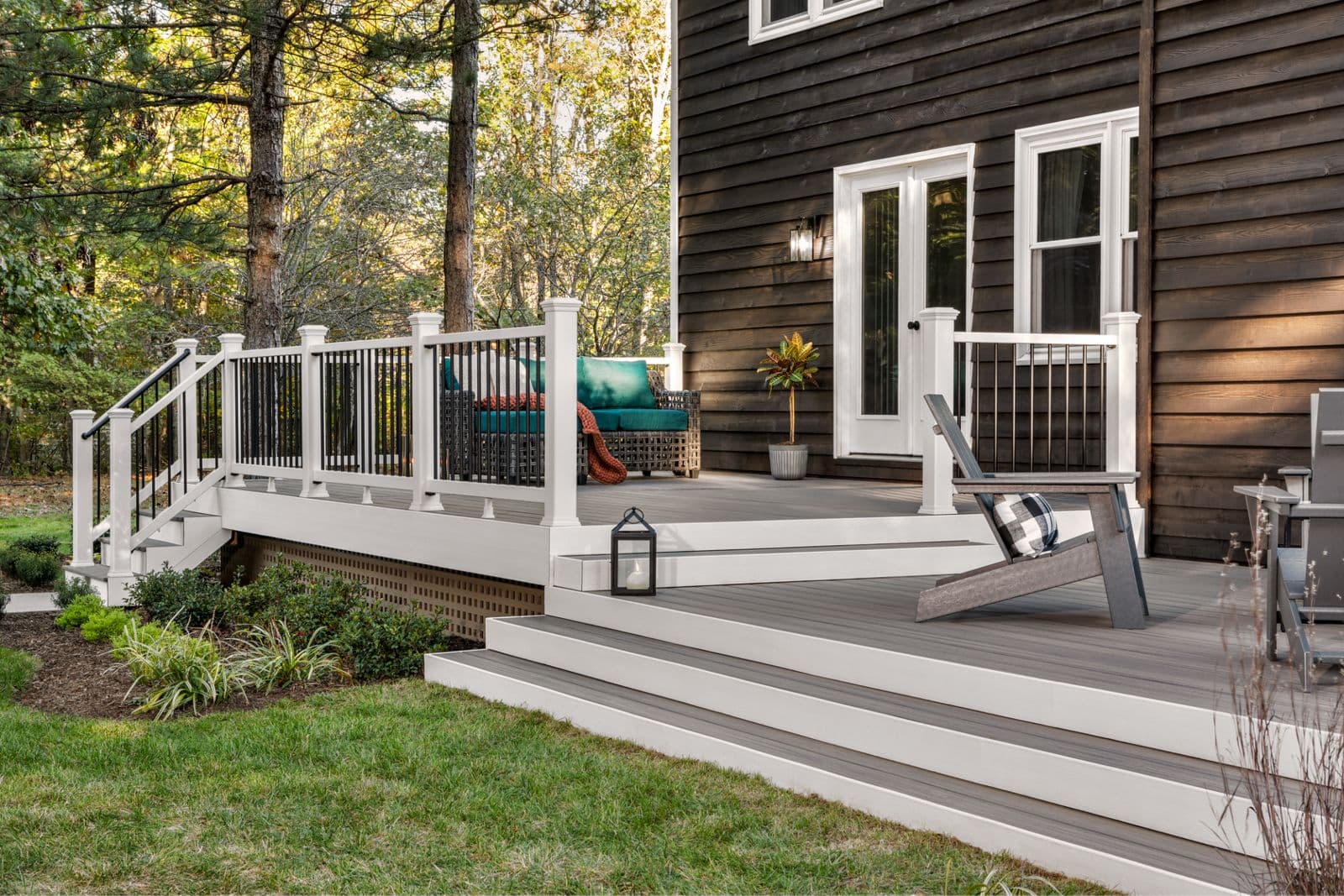
Step 1: Determine Your Decking Material
The first step in any decking repair is to identify the base material of your existing boards. Decking materials fall into several broad categories, each with distinct characteristics and repair considerations. Common materials include natural hardwood, thermally modified wood, acetylated wood, composite, and PVC.
Hardwood decking, such as Ipe, is known for its natural grain, density, and often a rich color that patinas to silver over time if left untreated. Thermally modified Ash features a consistent, darker tone and enhanced stability due to heat and steam treatment. Acetylated wood, like Maximo Accoya, is real wood enhanced through a non-toxic acetylation process, offering durability and stability. Composite decking typically blends wood fibers and plastic, often featuring a consistent color and embossed grain. PVC decking is 100% synthetic, known for its waterproof properties and consistent appearance.
Visually inspect your deck boards. Do they show natural wood grain variations, or a more uniform, manufactured pattern? Do they feel like solid wood, or have a slightly softer, more consistent texture? Observing these details can help narrow down the material type.
Step 2: Identify Wood Species or Product Series (If Applicable)
If your decking is natural wood (hardwood, thermally modified, or acetylated), identifying the specific species is crucial. Different wood species have unique grain patterns, colors, and densities. For example, Ipe hardwood is exceptionally dense with a fine grain, while thermally modified Ash will have a distinct grain and consistent color from its modification process. Maximo Accoya wood has a natural wood appearance but is enhanced for durability.
For composite or PVC decking, you'll need to determine the specific product series or brand. Manufacturers often produce multiple lines with varying colors, capstock types, and surface textures. Look for any branding on the underside of the boards or consult original purchase records. Even within the same brand, different series can have subtle variations that make a significant visual difference when replacing boards. If no branding is visible, comparing physical samples is the next best approach.
Step 3: Match the Deck Board Profile and Dimensions
The profile refers to the shape and size of the decking board. This includes its width, thickness, and any specific edge details (e.g., grooved for hidden fasteners, or square edge for face fastening). Even a slight difference in width or thickness can create an uneven surface or unsightly gaps. Use a measuring tape and calipers to accurately record the dimensions of an existing board.
Pay close attention to the fastening system. If your existing deck uses hidden fasteners, the replacement board will need to have the corresponding grooved edges. If it's face-fastened, a square-edge board is likely appropriate. Ensure the new board's profile allows for the same fastening method to maintain structural integrity and a uniform appearance.
Consider the age of your existing deck. Over time, wood decking can naturally expand, contract, or wear. Composite and PVC decking can also experience slight fading or surface changes. A brand-new board, even if the correct material and profile, might initially stand out due to these age-related differences. Sometimes, a full cleaning and re-oiling of the entire deck after replacement can help blend the new board in, especially for natural wood.
Worked Example: Replacing a Damaged Ipe Deck Board
Imagine you have a 10-foot long, 5.5-inch wide (nominal 6-inch) Ipe deck board that has split. Your deck was installed approximately five years ago.
1. **Material Identification:** The boards have a very dense feel, a fine, tight grain, and have silvered slightly on the surface where exposed to sun. This strongly suggests Ipe hardwood.
2. **Species/Series Confirmation:** You recall purchasing Ipe. You measure the board dimensions precisely: 5.5 inches wide and 0.75 inches thick. The edges are square, indicating face fastening.
3. **Profile Match:** You need a replacement Ipe board that is 1x6 (actual 0.75" x 5.5") with square edges. You will need a 10-foot length, or potentially two 5-foot sections if cuts are planned carefully to minimize waste and visible seams.
4. **Quantity Calculation:** You need one 10-foot board. If the supplier sells in standard lengths like 8, 10, 12, 14, 16, 18, and 20 feet, a 10-foot board is suitable. If your repair is near the end of a run, you might consider if a shorter board could be used with a staggered seam for a less noticeable repair, but for a single board replacement, matching the original length is often best.
5. **Appearance Consideration:** The new Ipe board will initially be a fresh brown, contrasting with the silvered existing deck. You can choose to let it naturally patina to match, or clean and re-oil the entire deck to restore a more uniform brown appearance across all boards, including the new one. Ensure any oiling product is compatible with Ipe.
Sourcing and Ordering Replacement Decking
Once you have a clear identification of your decking material, species/series, and profile, you are ready to source replacement boards. It is highly recommended to bring a small, undamaged sample piece of your existing decking (if safely removable) when you inquire about replacement materials. This allows for direct comparison and helps ensure an accurate match.
Be prepared to provide the exact dimensions, material type, and any specific features (like grooved edges) to your supplier. For natural wood, ask about available lengths. For composite or PVC, confirm the exact product line and color. Even with careful identification, there can be slight batch variations, so ordering a little extra material beyond your immediate needs can be a prudent decision for future minor repairs.
For natural wood, consider that the new boards will be 'fresh' and may differ in color from your aged deck. This difference will diminish over time as the new wood weathers. For composite or PVC, confirm if the manufacturer has made any subtle changes to the product line over the years that might affect the match.
Before you order
- Identify the core decking material (hardwood, thermally modified, acetylated, composite, PVC).
- Determine the wood species (e.g., Ipe, Thermally Modified Ash, Maximo Accoya) or product series/brand for manufactured decking.
- Measure the exact width and thickness of an existing board.
- Note the edge profile (square edge, grooved, etc.) and fastening method.
- Consider the current age and weathering of your existing deck.
- Bring a physical sample of your existing decking to your supplier for comparison.
- Request specific lengths or confirm available options.
- Inquire about any known product line changes for manufactured decking.
Confirm installation details, approved uses and warranty terms in the current instructions for the exact product and profile. Your installer should verify the substrate, structure and applicable project requirements.
Questions to help you decide
Can I mix different decking materials for repairs?
Mixing different decking materials is generally not recommended for repair. Even if they are the same color, different materials have distinct physical properties, expansion rates, and maintenance requirements. This can lead to an uneven appearance, potential structural issues over time, and complicate future maintenance. Always strive to match the original material.
What if my decking is very old and the exact product is no longer available?
If your decking is very old and the exact product is discontinued, you have a few options. You can try to find the closest possible match in terms of material, profile, and color. Sometimes, a slightly different species of natural wood can be stained or treated to blend in. For manufactured decking, you might need to consider replacing a larger section or an entire area to create a deliberate transition, rather than just a single board. Consulting with a decking professional can provide tailored advice for such situations.
How do I account for color differences between new and old wood decking?
New natural wood decking will almost always appear different from aged wood. For hardwoods like Ipe, new boards are rich brown and will gradually patina to silver over time. To minimize the contrast, you can either allow the new board to weather naturally until it blends, or you can clean and re-oil your entire deck after the repair. This process can help restore a more uniform color across all boards, including the new one. Always use products compatible with your specific wood species.
Ready to Source Your Decking Replacement Boards?
Provide your project dimensions, desired profile, and ZIP code to request a material quote. We can help confirm current availability and service options for your decking repair needs. Visit our decking product pages: Decking, Hardwood Decking, Ipe Hardwood Decking, Composite Decking, PVC Decking.
Request a material quote →