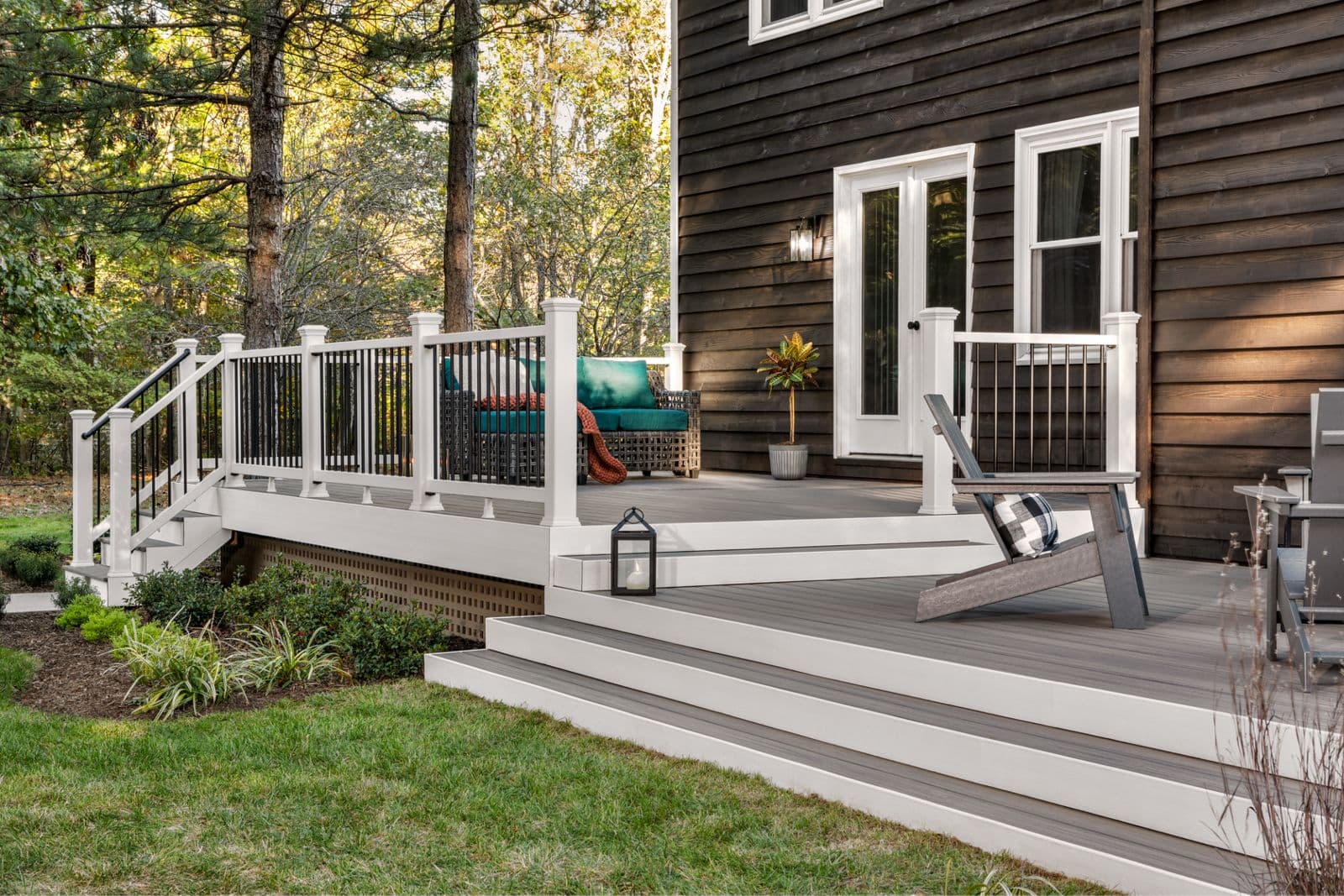
Understanding the Picture-Frame Concept
A picture-frame border in decking refers to the perimeter boards that are installed perpendicular to the main field of decking. Instead of having the ends of the field boards exposed, they terminate against the inside edge of the picture-frame boards, creating a neat, framed appearance. This design can be implemented with a single border board or multiple boards for a wider, more pronounced frame.
This approach is often chosen for its visual appeal, as it provides a distinct break in the board direction and can highlight the deck's shape. It also offers a clean termination point for the field boards, which can be particularly useful when using grooved-edge boards with hidden fastening systems, as it eliminates the need for unsightly face fasteners at the perimeter.
Sub-Structure Planning: Essential Blocking
The most critical aspect of a successful picture-frame border is the underlying sub-structure. Since the picture-frame boards run perpendicular to the main deck joists, they require continuous support along their entire length. This is achieved by installing additional blocking between the joists.
For a single picture-frame board, you will need to install blocking parallel to the rim joist, set back by the width of the picture-frame board. If you plan for multiple picture-frame boards, additional rows of blocking will be necessary, spaced according to the width of each board. These blocks provide the necessary fastening surface for the picture-frame boards and ensure they are adequately supported. Proper blocking also helps maintain consistent spacing and prevents sagging or movement of the border boards over time.
Consider the specific fastening system you intend to use. Hidden fasteners may require specific blocking dimensions or additional supports compared to face-fastened applications. Always refer to the manufacturer's installation guidelines for your chosen decking material and fastening system.
Material Selection for Borders and Field
While you can use the same material for both the picture frame and the main deck field, exploring different materials or colors can enhance the design. For example, using a contrasting color of composite or PVC decking for the border can create a striking visual effect.
If using hardwood decking like Ipe (https://lumberplus.com/decking/hardwood/ipe), you might choose a different species or a board from a distinct color range for the border. Alternatively, thermally modified Ash (https://lumberplus.com/decking/hardwood) or acetylated Maximo Accoya wood can offer unique grain patterns and tones.
Ensure that all chosen materials are compatible in terms of expansion and contraction characteristics, especially if they are from different manufacturers or material types. Always check the specific product documentation for recommended applications and installation tolerances. Lumber Plus offers a range of decking options including hardwood, thermally modified wood, acetylated Accoya, composite, and PVC decking (https://lumberplus.com/decking).
For a seamless look, consider using the same material for your fascia boards as your picture frame. This creates a cohesive edge treatment around the entire deck.
Worked Example: A Single Picture Frame Border
Let's consider a hypothetical 12-foot by 16-foot deck where you want a single picture-frame border using 5.5-inch wide decking boards.
1. **Determine Border Board Width:** You've chosen a 5.5-inch wide board for the picture frame.
This blocking will support the ends of the field boards and the inner edge of the picture frame board.
You'll need blocking between the joists to support these boards. These blocks will support the inner edge of the end picture-frame boards.
4. **Field Board Termination:** The main field boards, running 16 feet, will be cut to terminate against the inside edge of the 5.5-inch border boards along the 16-foot sides. Remember to account for proper board spacing at all junctions.
The fascia material should complement or match your picture-frame material for a unified appearance.
Integrating with Fascia and Other Trim
The picture-frame border works in conjunction with fascia boards to create a complete and polished deck edge. Fascia boards are typically installed vertically on the outside of the deck frame, covering the rim joists and the exposed edges of the decking.
When planning a picture-frame border, consider the thickness and depth of your fascia. Ideally, the fascia should align flush with or slightly proud of the top surface of your decking. This often means selecting fascia boards that are deep enough to cover the combined thickness of your rim joist and the edge of your picture-frame board.
Ensure consistent material and color choices between your picture frame and fascia for a harmonious look. Many decking manufacturers offer matching fascia boards for their decking lines, such as those available for composite and PVC decking (https://lumberplus.com/decking/composite, https://lumberplus.com/decking/pvc). For hardwood decks, consider using the same species or a complementary wood for your fascia.
Expansion, Contraction, and Spacing
All decking materials, whether wood or synthetic, will experience some degree of expansion and contraction due to changes in temperature and humidity. This is particularly important to consider with picture-frame borders, where boards meet at perpendicular angles.
Maintain the manufacturer's recommended spacing between all decking boards, including between the field boards and the picture-frame boards, and at mitered corners if applicable. This spacing allows for natural movement and helps prevent buckling or warping. Hardwood decking like Ipe or thermally modified Ash will have different expansion characteristics than composite or PVC decking, so always consult the specific product's installation guide for precise spacing requirements.
Proper ventilation beneath the deck is also crucial, especially for wood decking, to help manage moisture and minimize movement.
For Maximo Accoya (https://lumberplus.com/decking/hardwood/ipe), known for its stability, precise joinery is often possible. However, even with stable materials, adhering to recommended gaps is important.
Before you order
- Have I determined the desired width of my picture-frame border (single or multiple boards)?
- Have I planned for continuous blocking under all picture-frame boards?
- Are the blocking dimensions compatible with my chosen fastening system?
- Will I use the same decking material/color for the border and field, or a contrasting one?
- Have I selected fascia boards that will cover the deck frame and align properly with the picture frame?
- Have I accounted for manufacturer-recommended spacing for all decking boards, including at corners and junctions?
- Is my sub-structure adequately ventilated to support the chosen decking material?
- Do I have a detailed cut plan for the field boards to terminate cleanly against the border?
Confirm installation details, approved uses and warranty terms in the current instructions for the exact product and profile. Your installer should verify the substrate, structure and applicable project requirements.
Questions to help you decide
Can I add a picture frame to an existing deck?
Adding a picture frame to an existing deck is possible, but it often requires modifying the sub-structure. You will need to remove the existing perimeter boards and install new blocking to support the picture-frame boards. This can be a more involved process than planning it during initial construction, but it can be a worthwhile upgrade for aesthetic reasons. A structural review of the existing frame is recommended.
Do picture-frame borders require special fasteners?
The fastening system for picture-frame borders is generally the same as for the rest of your deck, but careful planning is key. If using hidden fasteners, ensure that the blocking provides adequate material for the clips to engage properly. For face-fastened applications, pre-drilling and countersinking are often recommended, especially with dense hardwoods like Ipe, to prevent splitting and ensure a clean finish. Always follow the specific fastener manufacturer's instructions.
What is the best material for a picture-frame border?
The 'best' material depends on your overall deck material and design goals. Hardwoods like Ipe or thermally modified Ash offer natural beauty and durability, while composite and PVC decking provide low maintenance and a wide range of colors. Using the same material as your main deck field ensures consistency, while a contrasting material can create visual interest. Maximo Accoya offers enhanced stability for precision applications. Ensure the chosen material is suitable for exterior use and compatible with the rest of your deck.
Ready to Plan Your Picture-Frame Deck?
Request a material quote with your project dimensions, exact profile, and ZIP code. We can help confirm current availability and service options for all your decking needs.
Request a material quote →