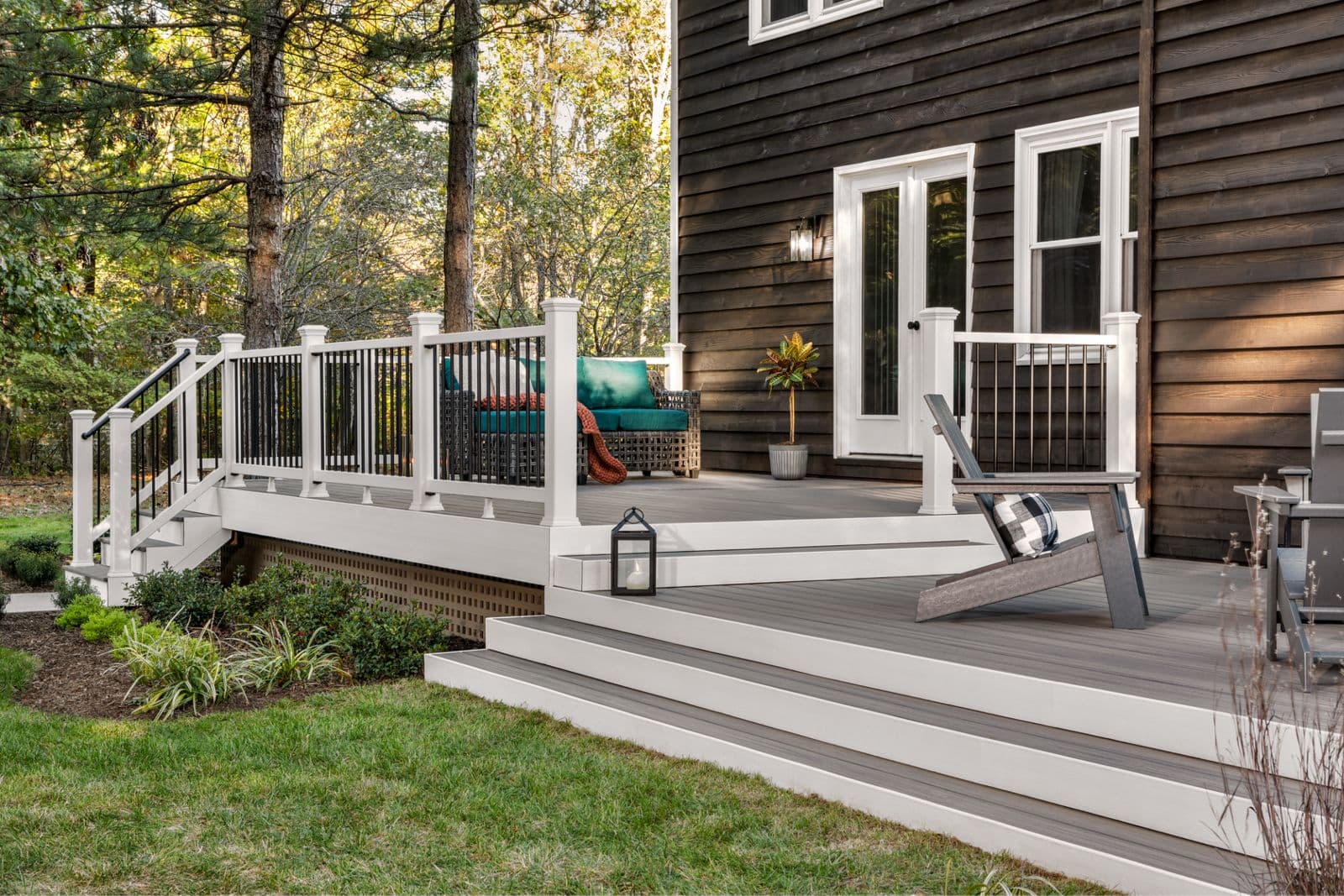
Hardwood Decking: The Beauty of Natural Wood
Hardwood decking, such as Ipe, offers a rich, natural aesthetic and notable density. It can age to a silver-gray patina or retain its original color with regular oiling.
The primary ownership tasks for hardwood decking typically involve cleaning and, if desired, applying a UV-protective oil finish annually or bi-annually. This oiling helps preserve the wood's color and can offer additional protection against moisture. Skipping this step will allow the wood to naturally weather to a silver-gray. Periodic cleaning to remove dirt, mildew, or algae is also important. While hardwoods are resilient, any significant damage might require sanding and refinishing of individual boards, or replacement.
Consider the cost of purchasing suitable wood cleaner and UV-protective oil. If you hire professional services for cleaning and oiling, factor in labor costs. Over a decade, these recurring expenses can add up.
Composite Decking: Engineered for Reduced Maintenance
Composite decking is engineered from a blend of wood fibers and plastic, designed to offer a balance between the look of wood and lower maintenance. Brands like Trex offer a near-zero maintenance experience, often requiring no oiling or sanding.
Ownership tasks for composite decking primarily involve routine cleaning. This typically means washing the deck with soap and water or a manufacturer-recommended cleaner to remove dirt, pollen, and surface stains. While composite materials resist rot and insects, they can still be susceptible to mold or mildew in damp, shaded areas if not cleaned regularly. Repairing significant damage to a composite board usually involves replacing the entire board, as sanding or refinishing is generally not recommended.
The main ownership costs are for cleaning supplies and potentially a pressure washer. Compared to hardwood, the recurring material costs for maintenance are often lower, though the initial purchase price might be higher.
PVC Decking: Fully Synthetic Durability
PVC (polyvinyl chloride) decking is 100% synthetic and waterproof to the core, making it a suitable choice for applications like docks and pool surrounds. Products from brands like TimberTech offer advanced PVC options.
Similar to composite decking, PVC decking requires minimal upkeep. Regular cleaning with soap and water is generally sufficient to maintain its appearance and prevent the buildup of dirt or mildew. Due to its synthetic nature, PVC is highly resistant to moisture, insects, and rot, and does not require sealing, staining, or painting.
The ownership costs for PVC decking are primarily limited to cleaning supplies. Its inherent durability and resistance to environmental factors often result in lower long-term maintenance expenses compared to natural wood options, and potentially even some composites. Replacement of damaged boards would be the primary repair method.
Thermally Modified Wood Decking: Enhanced Natural Wood
Thermally modified wood, such as Thermo Ash, is real wood that has been treated with heat and steam, without added preservatives, to enhance its durability and stability. This process changes the wood's cellular structure, making it more resistant to moisture, decay, and insects.
Ownership of thermally modified wood decking involves tasks similar to traditional hardwood, but potentially with reduced frequency for certain treatments. While it can still be oiled to maintain its color, the thermal modification process means it may have improved dimensional stability compared to untreated wood. Regular cleaning is essential to prevent dirt and mildew buildup. The specific decking profile and installation system must be confirmed, as this can influence maintenance requirements.
Costs include cleaners and, if desired, oil finishes. The enhanced properties of thermally modified wood might lead to fewer issues requiring intensive repairs over time, but it still benefits from attentive care.
Acetylated Wood Decking: Maximo Accoya for Stability
Maximo Accoya is an acetylated wood, a distinct modified-wood category from thermally modified products. This process enhances real wood through acetylation, providing durability and stability for long-lasting decks, siding, and precision joinery.
Accoya decking offers minimal upkeep. Like other wood products, regular cleaning is recommended to maintain its appearance. Its enhanced stability and durability mean it is less prone to common wood issues like swelling, shrinking, and rot. While it can be finished or painted, it also performs well if left to weather naturally. Custom profiles may influence specific care instructions.
Ongoing costs are typically for cleaning products. The advanced modification aims to reduce the need for frequent protective treatments, potentially lowering long-term material and labor costs associated with maintenance compared to untreated hardwoods.
Hypothetical Project: Comparing Ownership Tasks Over 10 Years
Let's consider a hypothetical 200 square foot deck (e.g., 10 ft x 20 ft) over a 10-year period. This example assumes DIY maintenance, with costs for materials only.
Build this part of the estimate from the current supplier quote. Record the exact product, quoted unit, quantity, compatible accessories and delivery costs separately so assumptions do not become advertised prices.
Build this part of the estimate from the current supplier quote. Record the exact product, quoted unit, quantity, compatible accessories and delivery costs separately so assumptions do not become advertised prices.
Build this part of the estimate from the current supplier quote. Record the exact product, quoted unit, quantity, compatible accessories and delivery costs separately so assumptions do not become advertised prices.
This example highlights that while initial costs vary, the ongoing material and time investments for maintenance significantly impact the total cost of ownership. Your specific project dimensions and local labor rates will affect actual figures.
Before you order
- What is your budget for initial material purchase?
- How much time are you willing to dedicate to annual deck maintenance (cleaning, oiling, sanding)?
- Are you comfortable with the natural weathering process (silver patina) or do you prefer to maintain the original color?
- What are the specific environmental conditions your deck will face (e.g., direct sun, shade, proximity to water, salt air)?
- Do you plan to DIY maintenance or hire professionals?
- How important is resistance to rot, insects, and moisture for your project?
- What is your preference for the aesthetic — natural wood grain versus a more uniform, engineered look?
- What are the long-term material costs for cleaning products, sealers, or oils?
- Consider the availability and cost of replacement boards for your chosen material.
Confirm installation details, approved uses and warranty terms in the current instructions for the exact product and profile. Your installer should verify the substrate, structure and applicable project requirements.
Questions to help you decide
Does "low maintenance" mean "no maintenance" for decking?
No, "low maintenance" typically means reduced maintenance compared to traditional wood, but not "no maintenance." Even composite and PVC decks require regular cleaning to remove dirt, pollen, and prevent mildew buildup. The key difference is often the elimination of tasks like sanding, staining, or sealing.
How much does professional deck maintenance cost?
Professional deck maintenance costs can vary significantly based on your location, the size of your deck, the material, and the specific services required (e.g., power washing, cleaning, oiling, sealing). It's advisable to get multiple quotes from local service providers for an accurate estimate for your project.
Can I switch from one decking material to another on an existing frame?
Potentially, but it requires careful assessment. You must confirm that the existing deck frame can structurally support the weight of the new decking material and that the joist spacing is appropriate for the new board type. Different materials have different weight properties and require specific support structures. It is essential to consult with a professional and review the manufacturer's installation guidelines for the new material.
Ready to Plan Your Decking Project?
Request a material quote with your project dimensions, desired profile, and ZIP code. We can confirm current availability and service options for hardwood, thermally modified, acetylated, composite, and PVC decking materials. Explore our product pages for more details: Hardwood Decking, Ipe Decking, Composite Decking, PVC Decking.
Request a material quote →