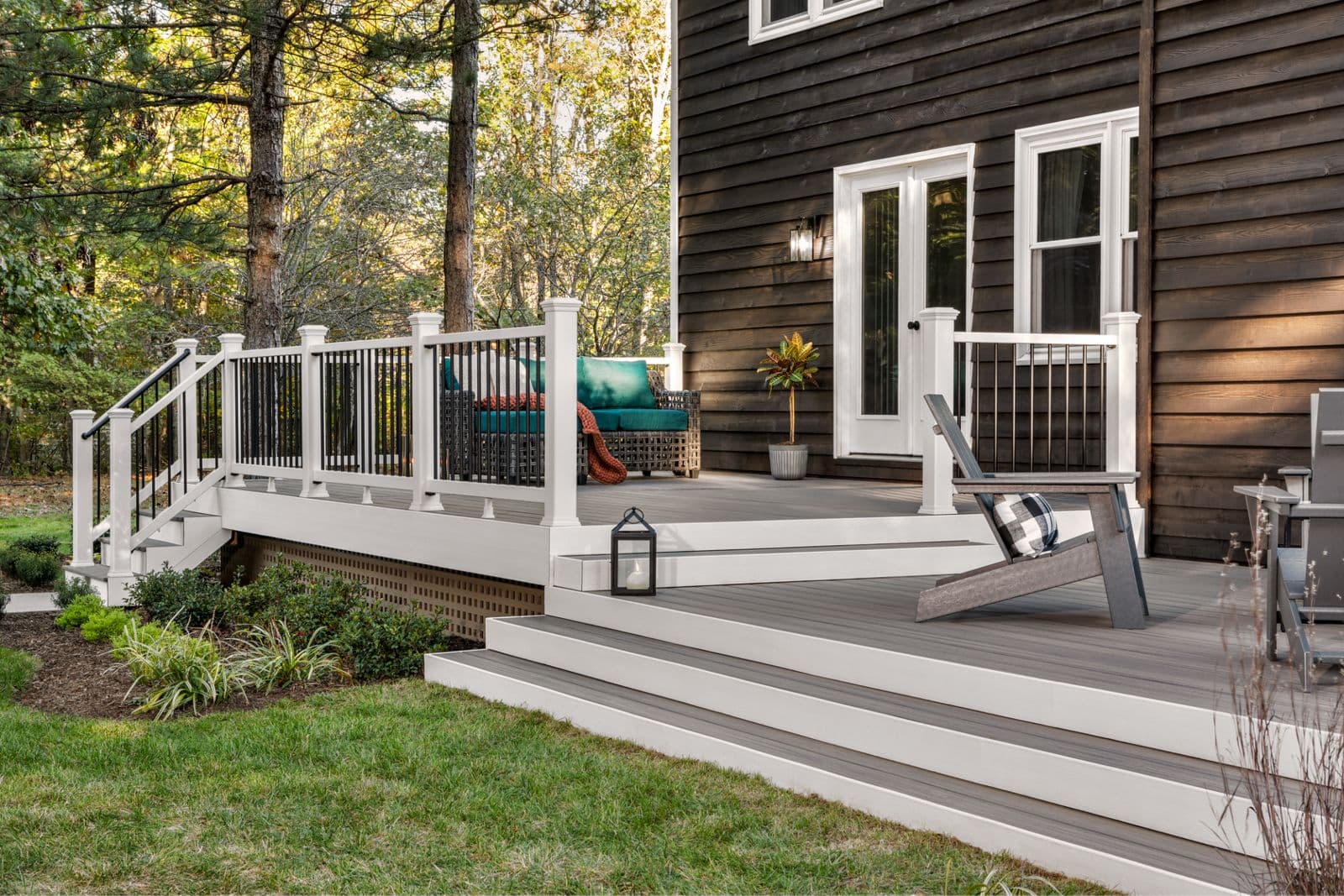
Understanding Your Site and Existing Conditions
Before any material selection, a thorough assessment of your project site is essential. This includes understanding the existing topography, soil drainage, and the condition of any adjacent structures or paved areas. Slight variations in ground level can significantly impact how your deck connects to other elements.
Consider how water currently flows across your property. Will adding a deck alter this flow? Proper drainage is crucial to prevent water pooling against your deck structure, which can lead to moisture damage over time. Identify any existing irrigation systems, utility lines, or mature plantings that might influence your design.
Planning Levels and Elevations
One of the primary challenges in connecting decking to other surfaces is managing different elevations. Decks are typically built on a frame, raising their surface above ground level. Patios, pathways, and garden beds may be at, above, or below this finished deck height.
For a smooth transition, aim to minimize steps or create intentional, well-defined changes in level. A common approach is to have the deck surface finish slightly above an adjacent patio, allowing for a small lip or a single, low step. When connecting to a lawn or garden, consider a gradual slope away from the deck for drainage, or use retaining elements like low walls or edgers.
When planning levels, remember to account for the thickness of your chosen decking material and any sub-structure. For example, Ipe hardwood decking or thermally modified Ash decking will have different thicknesses than a composite or PVC option, impacting the final finished height. Maximo Accoya also offers durability and stability for long-lasting decks, with custom profiles by project.
Defining Edges and Borders
The edge where your deck meets another surface is a key design detail. A well-defined edge can enhance the overall aesthetic and provide a clean transition.
For paved areas like concrete or stone patios, you might use a picture-frame border around your deck, where the decking boards run perpendicular to the main deck boards. This creates a distinct visual separation. Another option is a flush transition, where the deck boards align directly with the patio surface, though this requires precise construction.
When transitioning to soft landscaping like grass or garden beds, consider using a durable edge material such as stone pavers, metal edging, or even a low timber border. This helps prevent soil and mulch from encroaching on the deck and provides a clear boundary. Ensure any edging material is installed to allow for proper water run-off away from the deck.
Managing Drainage at Transition Points
Effective drainage is paramount, especially at the interface between different materials. Water should always be directed away from the deck structure and any adjacent buildings.
If your deck is elevated, ensure that water can drain freely underneath and away from the footings. For transitions to paved areas, consider installing a linear drain or a slight slope away from the deck. When connecting to a lawn or garden, grade the soil away from the deck at a minimum slope of 2% (a drop of 2 feet over 100 feet) for at least 6-10 feet.
The choice of decking material can also influence drainage considerations. PVC decking, being 100% synthetic and waterproof to the core, is an excellent choice for areas prone to moisture, such as docks and pool decks. Composite decking also offers near-zero maintenance, making it a good option where water management is a concern.
Worked Example: Deck-to-Paver Patio Transition
Let's consider a hypothetical scenario: You are building a new 10-foot by 12-foot deck that will connect to an existing 8-foot by 10-foot paver patio. The finished surface of the existing patio is 6 inches above the surrounding grade. You want a subtle step down from the deck to the patio.
First, determine your desired finished deck height. If the patio surface is 6 inches above grade, and you want a 2-inch step down from the deck to the patio, your finished deck surface will be 8 inches above the surrounding grade. This means your deck frame and decking material combined must reach this 8-inch height.
Next, plan the edge. If using 1x6 Ipe decking boards (approximately 5.5 inches wide and 0.75 inches thick), you might opt for a picture-frame border. This would involve running one or two Ipe boards perpendicular to the main deck boards along the edge connecting to the patio. This creates a clean visual break and a sturdy edge.
For drainage, ensure the patio itself has a slight slope away from the deck. If not, consider regrading a small section of the patio or installing a narrow trench drain along the deck-patio interface. Underneath the deck, ensure the ground is graded to direct water away from the deck footings and into the surrounding landscape, possibly towards a designated drainage area.
Before you order
- Assess existing site conditions: topography, soil, drainage, utilities.
- Determine desired finished heights for deck, patio, and landscape areas.
- Plan for minimal and intentional steps or level changes.
- Select appropriate decking material (e.g., Ipe, Thermally Modified Ash, Maximo Accoya, Composite, PVC) based on durability and moisture exposure.
- Choose edge treatments (e.g., picture frame, flush, metal edging) for each transition.
- Design a comprehensive drainage plan for all transition points.
- Consider the aesthetic impact of material changes and how they complement each other.
- Verify local building codes for deck height, railing requirements, and drainage.
Confirm installation details, approved uses and warranty terms in the current instructions for the exact product and profile. Your installer should verify the substrate, structure and applicable project requirements.
Questions to help you decide
Can I connect a deck directly to a concrete slab without a step?
While it's possible to create a flush transition, it requires very precise planning. You must ensure that the deck framing and decking material bring the finished deck surface to the exact height of the concrete. Crucially, you need to manage drainage effectively to prevent water from pooling at the joint, which can lead to moisture issues for the deck structure. Often, a small step or a linear drain is recommended for better long-term performance.
What are the best decking materials for areas with high moisture at transition points?
For areas where moisture is a significant concern, such as transitions near pools, hot tubs, or areas prone to standing water, PVC decking is often considered the best choice. It is 100% synthetic and waterproof to the core. Composite decking also performs well in moist conditions due to its low-maintenance properties and resistance to rot. While hardwood options like Ipe offer natural resistance to rot and salt air, and Maximo Accoya provides enhanced durability, ensuring proper ventilation and drainage remains critical for any wood-based product in high-moisture environments.
How do I prevent weeds or grass from growing between my deck and an adjacent garden bed?
To prevent plant encroachment, consider installing a physical barrier at the transition point. This could be a sturdy landscape fabric underneath a layer of gravel or mulch, a low retaining wall made of stone or timber, or a metal edging strip. Ensure the barrier extends deep enough into the soil to deter root growth and is positioned to prevent soil and debris from washing onto your deck surface.
Plan Your Decking Project Transition
Ready to connect your deck to your outdoor living space? Request a material quote with your project dimensions, desired profile, and ZIP code to confirm current availability and service options for your decking materials.
Request a material quote →