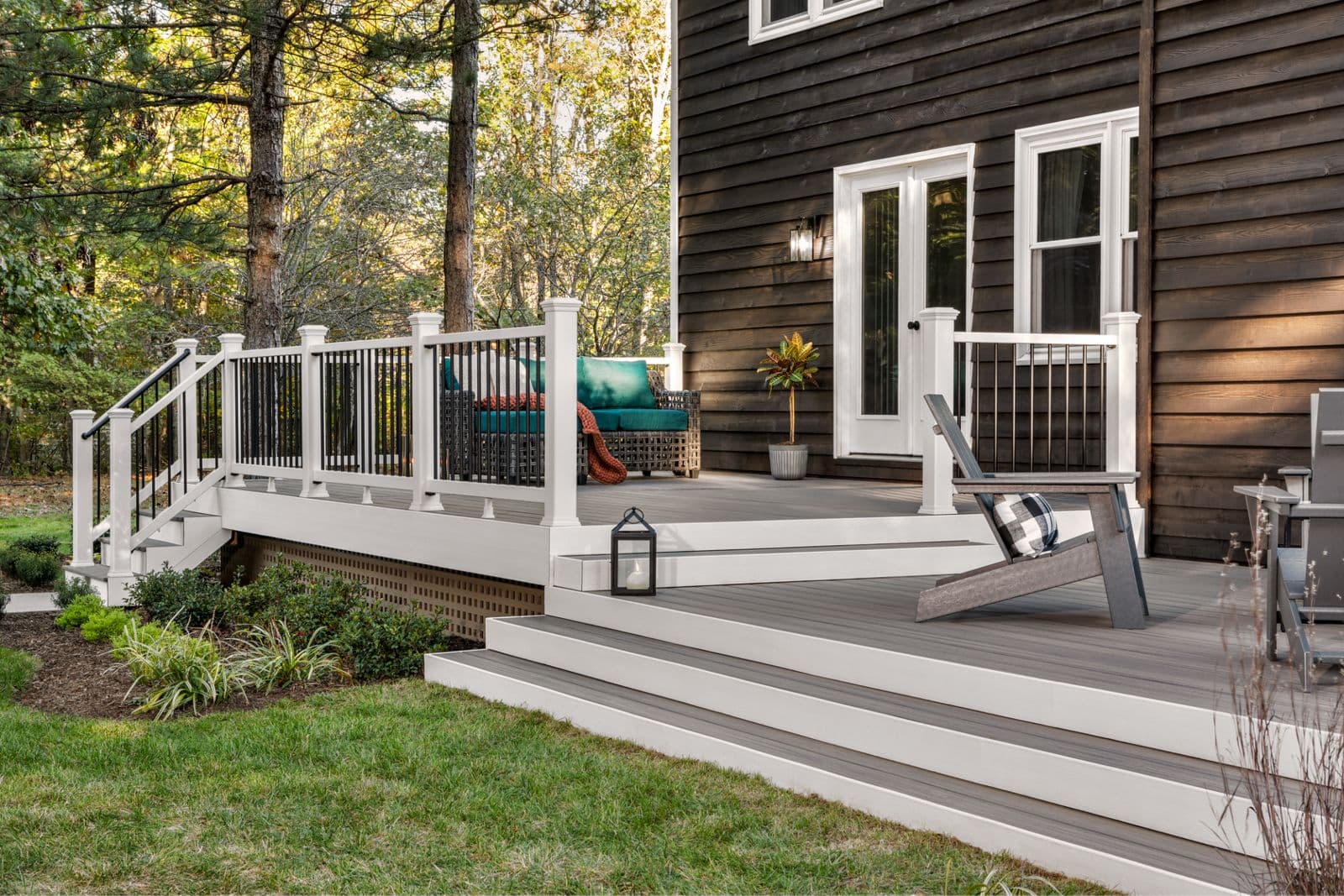
Understanding the Impact of Full Sun on Decking Materials
Full sun exposure subjects decking to several environmental stressors. Ultraviolet (UV) radiation can break down material components, leading to fading, discoloration, and surface degradation over time. Intense solar radiation also significantly increases surface temperatures, which can affect comfort underfoot and, in some materials, lead to expansion and contraction. High temperatures can also impact the long-term stability and appearance of certain finishes.
When planning for a sun-exposed deck, consider not just the initial look but how the material will perform and age under these conditions. Some materials are inherently more resilient to UV and heat, while others may require specific maintenance or design considerations to mitigate these effects.
Hardwood Decking: Natural Resilience and Patina
Hardwood decking, particularly dense tropical species like Ipe, offers natural resilience to the elements. Ipe, known for its hardness, can withstand significant UV exposure and naturally resists rot and termites. It also handles salt air well, making it suitable for coastal applications.
One characteristic of hardwood decking in full sun is its natural aging process. Hardwoods like Ipe will gradually weather to a silver-gray patina if left untreated. If maintaining the original color is desired, regular oiling is typically required. The dense nature of hardwood means it can absorb and retain heat, so surface temperatures might be a consideration, especially for bare feet.
Other hardwood options may include thermally modified Ash, which is wood modified with heat and steam without added preservatives. This process enhances stability and durability for selected decking applications. Maximo Accoya is another modified wood option, enhanced through acetylation, which is not a heat treatment. It offers durability and stability for long-lasting decks and minimal upkeep. For any modified wood product, the specific decking profile and installation system must be confirmed with the manufacturer.
Explore hardwood options: [Hardwood Decking](/decking/hardwood) [Ipe Decking](/decking/hardwood/ipe)
Composite Decking: Engineered for Consistency
Composite decking is engineered from a blend of wood fibers and plastic, designed for consistency in appearance and performance. Many composite products are formulated to resist fading and staining, making them a practical choice for sun-exposed areas. They are often promoted as near-zero maintenance, typically requiring no oiling or sanding.
While composite decking offers stability and color retention, different brands and product lines will have varying levels of heat absorption. Darker colors, regardless of material, tend to absorb more solar radiation and can become hotter to the touch. It is advisable to review specific product data sheets for heat performance and consider lighter color options for full-sun applications where comfort underfoot is a priority.
Learn more about composite decking: [Composite Decking](/decking/composite)
PVC Decking: Low Heat Absorption and Waterproof Core
PVC (polyvinyl chloride) decking is a 100% synthetic material, often touted for its waterproof core and low maintenance. It is a suitable choice for docks and pool decks due to its moisture resistance. For full-sun applications, many PVC decking products are designed to mitigate heat absorption, making them a cooler option underfoot compared to some other materials, especially in lighter colors.
PVC decking is highly resistant to fading, staining, and mold, contributing to its long-term aesthetic appeal in bright, sunny conditions. Like composite, specific heat performance can vary between manufacturers and product lines, so checking product specifications and selecting lighter shades can enhance comfort on a sun-drenched deck.
Discover PVC decking options: [PVC Decking](/decking/pvc)
Shade Planning and Deck Design for Sun-Exposed Areas
Even with the most sun-resistant decking material, integrating shade into your deck design can significantly enhance comfort and usability. Consider incorporating pergolas, retractable awnings, or strategically placed large umbrellas. These additions can provide relief from direct sun during peak hours, making the deck more enjoyable for longer periods.
Material color plays a crucial role in surface temperature. Lighter colors reflect more sunlight and absorb less heat, resulting in a cooler surface. Darker colors, while potentially offering a dramatic aesthetic, will inevitably get hotter. If your deck will be used frequently barefoot, especially by children or pets, prioritizing lighter colors or incorporating shade structures is recommended.
For areas with consistent, intense sun, proper ventilation beneath the deck is also important. Good airflow can help dissipate heat and prevent moisture buildup, contributing to the overall longevity of the deck structure and decking material.
Worked Example: Selecting Decking for a South-Facing Deck
Consider a hypothetical 12-foot by 16-foot south-facing deck in a region with strong summer sun. The homeowners prioritize comfort underfoot and minimal maintenance, but also desire a natural wood aesthetic. They plan to install a pergola over half of the deck for partial shade during midday.
**Option 1: Ipe Hardwood.** While Ipe offers exceptional durability and natural beauty, the homeowners are concerned about the potential for high surface temperatures and the maintenance required to retain its original color. They decide that the silver patina is acceptable, but will budget for an outdoor rug in the unshaded area.
**Option 2: Light Gray PVC Decking.** Given the desire for minimal maintenance and cooler surface temperatures, a light gray PVC decking is a strong contender. The 100% synthetic nature and low heat absorption are attractive for the full-sun exposure. For a 12x16 foot deck (192 sq ft), if using 12-foot long boards, this would require approximately 16 boards for the 16-foot width, assuming standard board widths and minimal waste. The homeowners appreciate that PVC typically stays cooler.
**Option 3: Capped Composite Decking (Light Tan).** A high-performance capped composite in a light tan color is also considered. This option offers a wood-like appearance with reduced maintenance compared to natural wood. The light tan color helps mitigate heat absorption, and the pergola will provide additional relief. For purchase, if boards are 16 feet long and 5.5 inches wide, each board covers approximately 7.33 square feet. For 192 square feet, this would mean purchasing around 27 boards to account for cuts and waste.
Ultimately, the homeowners decide on the light gray PVC decking for the unshaded half and the light tan capped composite for the shaded pergola area, blending materials for optimal performance and aesthetics.
Before you order
- Assess the deck's orientation and hours of direct sun exposure.
- Prioritize material properties: UV resistance, heat absorption, and dimensional stability.
- Consider color choice: Lighter colors generally stay cooler.
- Evaluate maintenance expectations for color retention and cleaning.
- Factor in comfort underfoot, especially if used barefoot frequently.
- Plan for shade structures (pergolas, awnings) to enhance usability.
- Review manufacturer specifications for heat performance and warranty details.
- Obtain physical samples to observe color and texture in natural light.
Confirm installation details, approved uses and warranty terms in the current instructions for the exact product and profile. Your installer should verify the substrate, structure and applicable project requirements.
Questions to help you decide
Which decking material is coolest in full sun?
Generally, PVC decking, especially in lighter colors, tends to be among the coolest options underfoot in full sun due to its synthetic composition and reflective properties. Some composite decking products are also engineered for reduced heat absorption, but performance varies by brand and color. Hardwoods can absorb and retain heat, with darker colors becoming hotter.
Does decking fade in direct sunlight?
Yes, all decking materials can experience some degree of fading or color change when exposed to direct sunlight over time. Natural hardwoods like Ipe will typically weather to a silver-gray patina. Composite and PVC decking are manufactured with UV inhibitors to resist fading, but even these can show subtle changes over years. Lighter colors tend to show fading less prominently than darker shades.
How can I protect my deck from intense sun?
Beyond choosing a UV-resistant decking material, you can protect your deck by incorporating shade structures like pergolas, awnings, or large umbrellas. Regular cleaning and maintenance, as recommended by the manufacturer, can also help preserve the deck's appearance and integrity. For hardwoods, applying a UV-protective oil can help maintain the original color and nourish the wood.
Ready to Plan Your Sun-Exposed Deck?
Request a material quote with your project dimensions, exact profile, and ZIP code to confirm current availability and service options. Our team can help you select the best decking for your sunny outdoor space.
Request a material quote →