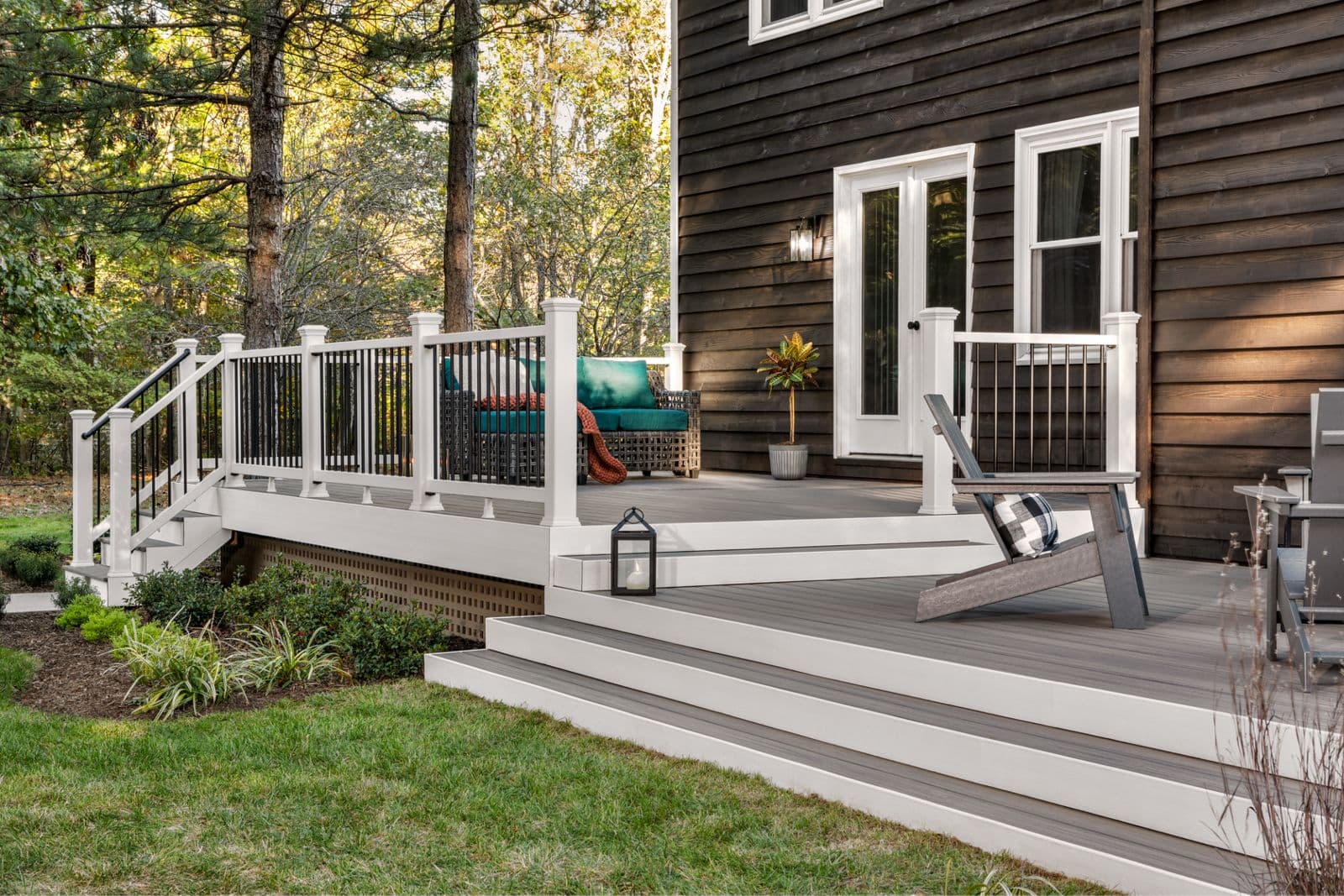
Understanding Decking Board Profiles for Hidden Fasteners
Hidden fastening systems typically require decking boards with specific profiles. The most common profile designed for hidden fasteners is a grooved edge, where a channel is milled into the side of the board. This groove allows clips or fasteners to slide in and securely hold the board to the joist without visible screws from the top surface.
Not all decking boards are grooved. Traditional square-edge boards are primarily designed for face-fastening, where screws are driven through the top surface of the board. While some aftermarket solutions exist to create grooves in square-edge boards, it is generally recommended to select boards that are manufactured with the intended grooved profile for optimal performance and warranty compliance.
It's also important to distinguish between different types of grooved profiles. Some systems use a continuous groove along the entire length, while others might have a more specific, proprietary groove design. Always confirm that the fastener system you choose is explicitly stated as compatible with the specific groove profile of your decking boards.
Material Compatibility: Hardwood, Composite, and PVC
The material of your decking boards—whether hardwood, composite, or PVC—plays a significant role in hidden fastener selection. Each material reacts differently to fastening methods and environmental conditions, influencing the design and material of the fasteners themselves.
For hardwood decking, such as Ipe, thermally modified Ash, or Maximo Accoya, hidden fastener systems are engineered to accommodate the wood's natural expansion and contraction. Many hardwood-specific clips are made from durable plastics or metals, designed to allow for slight movement while maintaining a secure connection. Some hardwood systems use side-mounted screws that are driven into the edge of the board, offering a strong hold without surface penetration. Always verify that the chosen fastener system is approved for the specific hardwood species, as different densities and movement characteristics may require specialized clips.
Composite and PVC decking materials, being more dimensionally stable than natural wood, often have their own proprietary hidden fastening systems. Manufacturers like Trex and TimberTech design clips that integrate seamlessly with their specific board profiles, ensuring proper spacing and secure attachment. These systems are typically engineered to resist moisture and UV degradation, aligning with the low-maintenance characteristics of composite and PVC decks. Using a non-approved fastener system with composite or PVC decking can void warranties and compromise the deck's stability and appearance.
Substructure Requirements and Fastener Types
The type of substructure—whether it's traditional wood joists or a metal framing system—also dictates which hidden fasteners are suitable. Most hidden clips are designed to screw directly into the top of wood joists. These clips often feature a base that sits flat on the joist, with a wing or tab that engages the groove of the decking board.
When working with metal framing, specialized hidden fasteners are often required. These fasteners are designed with self-tapping screws or specific attachment mechanisms that securely fasten to metal joists without damaging the framing or compromising the connection. It is crucial to use fasteners explicitly rated for metal substructures to ensure a safe and durable installation.
Some hidden fastening systems are designed for specific joist spacing. Confirming the joist spacing requirements of your chosen hidden fastener system is an essential step in project planning.
Worked Example: Selecting Hidden Fasteners for an Ipe Deck
The goal is a fastener-free surface.
First, we confirm the Ipe boards are indeed manufactured with a grooved edge, specifically designed for hidden clips. If they were square-edge, we would either need to face-fasten or consider a different board profile. For this example, we assume grooved Ipe.
Next, we research hidden fastening systems explicitly approved by Ipe decking manufacturers or reputable third-party fastener brands known for hardwood applications. We would look for systems designed to accommodate the density and movement of Ipe, often featuring stainless steel screws for corrosion resistance and UV-stabilized plastic or metal clips.
A common type of clip for grooved Ipe is a T-clip or a winged clip that slides into the groove and is screwed into the top of the joist. These clips often include a built-in spacer to ensure consistent gaps between boards. For a 12-foot width, using 5.5-inch face width Ipe boards (actual width minus groove), we would need around 26 boards (144 inches / 5.5 inches per board ≈ 26.18 boards). Therefore, we'd need roughly 26 boards * 11 clips/board = 286 clips, plus a buffer for cuts or errors, perhaps 300-320 clips. We would also need the corresponding stainless steel screws.
This example highlights the need to match the board's profile, material, and the substructure with a manufacturer-approved fastening system to ensure a durable and aesthetically pleasing result.
Limitations and Tradeoffs of Hidden Fasteners
While hidden fasteners offer a clean look, they come with certain limitations and tradeoffs compared to face-fastening. One key consideration is access for repairs. If a single board needs replacement in the middle of a deck, it can be more challenging with hidden fasteners, potentially requiring the removal of multiple adjacent boards to access the clips.
Cost can also be a factor. Hidden fastening systems generally have a higher material cost per square foot compared to traditional face screws. The installation process can also be more time-consuming, as each clip must be precisely positioned and screwed in, which can increase labor costs.
Furthermore, not all hidden fastener systems provide the same level of uplift resistance as face-fastening, which drives screws directly through the board. For decks in high-wind areas or applications requiring maximum structural integrity, it is crucial to verify the uplift ratings of the chosen hidden fastener system. Some building codes may require supplementary face-fastening at specific points, such as perimeter boards or stairs, even when hidden fasteners are used elsewhere.
Finally, ensure the manufacturer's installation guidelines for board spacing are strictly followed. Hidden clips often incorporate specific gapping, and deviating from these instructions can lead to issues with drainage, expansion, and contraction.
Before you order
- Confirm your decking boards have a grooved profile (or are compatible with a specific edge fastening system).
- Identify the exact decking material (hardwood species, composite, or PVC) and its manufacturer.
- Verify the hidden fastener system is explicitly approved by the decking manufacturer for your specific product.
- Check if the chosen hidden fastener system is compatible with your substructure and spacing.
- Review the fastener system's installation instructions for board gapping, screw type, and any special requirements.
- Consider the ease of future board replacement or repair with the chosen system.
- Account for the total cost: material cost of fasteners plus potential labor impact.
- Confirm any local building code requirements regarding fastening methods, especially for uplift resistance.
Confirm installation details, approved uses and warranty terms in the current instructions for the exact product and profile. Your installer should verify the substrate, structure and applicable project requirements.
Questions to help you decide
Can I use hidden fasteners with any decking board?
No, hidden fasteners are specifically designed for decking boards with certain profiles, most commonly grooved edges. Square-edge boards are typically not compatible without special modification or specific edge-fastening systems. Always verify that your decking boards are designed for the hidden fastener system you intend to use.
Do hidden fasteners provide the same hold as face screws?
The holding power of hidden fasteners can vary by system and application. While many provide excellent lateral stability and resistance to board cupping, some may offer different uplift resistance compared to face-fastening. It is important to check the manufacturer's specifications for the chosen hidden fastener system and consider your deck's exposure to wind or other forces.
Are hidden fasteners more expensive than traditional screws?
Generally, the material cost for hidden fastening systems tends to be higher per square foot than for standard deck screws used in face-fastening. Additionally, the installation of hidden fasteners can sometimes be more labor-intensive, potentially increasing overall project costs. However, many find the aesthetic benefit of a fastener-free deck surface to outweigh these additional expenses.
Ready to Plan Your Decking Project?
Request a material quote with your project dimensions, desired decking profile, and ZIP code. Our team can help you confirm current availability and service options for both decking and compatible hidden fastener systems.
Request a material quote →