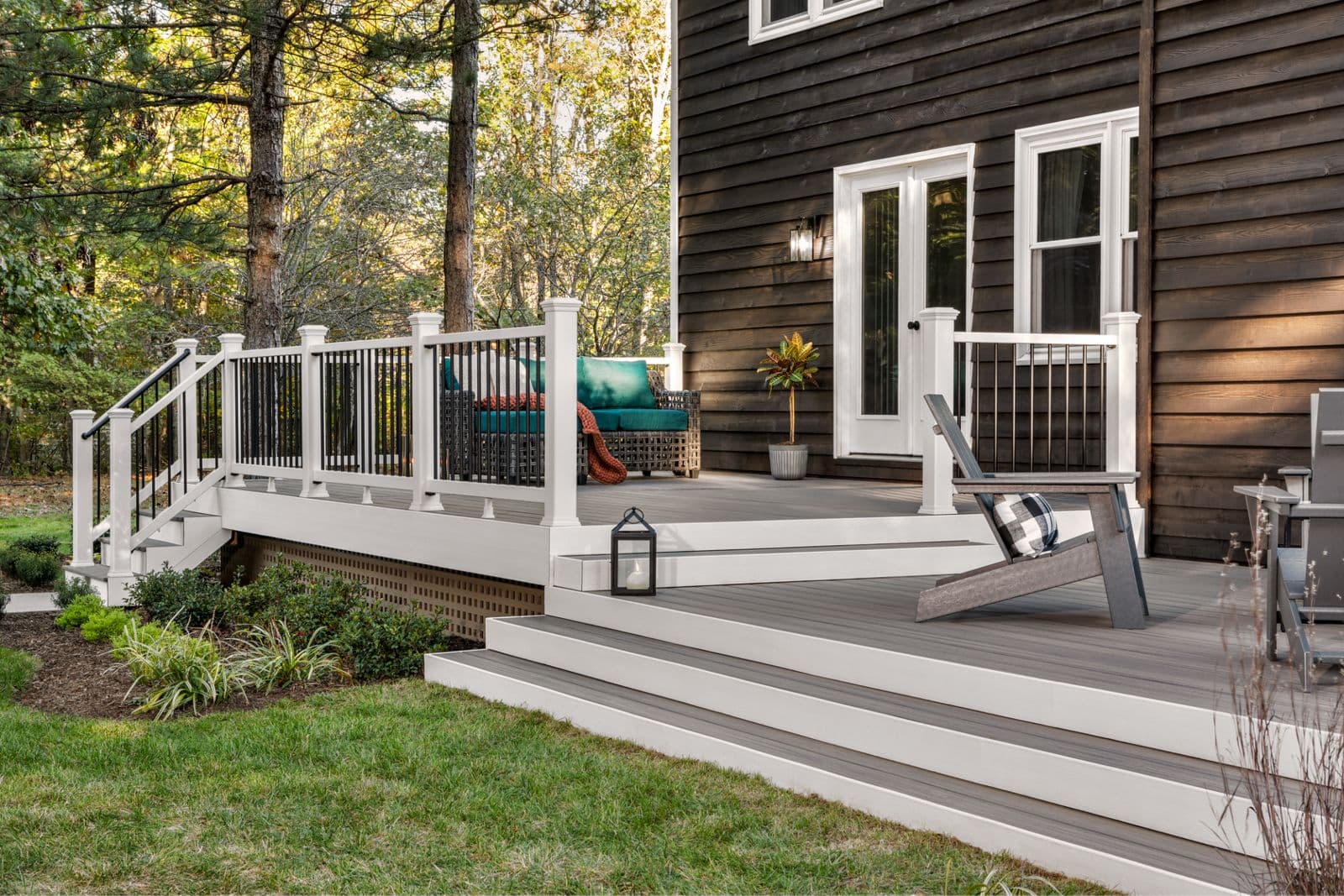
Hardwood Decking: The Patina of Time or Maintained Color
Hardwood decking, such as Ipe, offers a distinctive natural beauty that evolves over time. Initially, many hardwoods present rich, deep tones. Ipe, for example, is known for its deep brown hues when new. However, when exposed to sunlight and weather without treatment, these hardwoods will gradually transition to a soft silver-gray patina. This natural weathering process is often a desired aesthetic for those seeking a low-maintenance, organic look that blends with natural surroundings.
If you prefer to preserve the original color of hardwood decking, periodic oiling is necessary. Applying a suitable deck oil with UV inhibitors helps protect the wood from the elements and can enhance its natural tones. The frequency of reapplication depends on local climate, sun exposure, and the specific product used, but typically ranges from annually to every few years. This approach requires ongoing maintenance but allows you to retain the wood's initial warmth and depth.
It's important to understand that even with oiling, some color change is inevitable over many years, and the intensity of the original color may subtly shift. The choice between allowing a natural patina or maintaining color through oiling is a key aesthetic and maintenance decision for hardwood decks.
Thermally Modified Ash: Enhanced Stability with Finishing Options
Thermally modified Ash is real wood that has undergone a heat and steam treatment process to enhance its stability and durability. This modification gives the wood a consistent, rich brown tone throughout its depth. Unlike some hardwoods, the thermal modification itself contributes to the initial color.
Similar to traditional hardwoods, thermally modified Ash will also develop a silver-gray patina if left unfinished and exposed to UV light and weather. This transformation is a natural process for all wood products when exposed to the elements without protective coatings. For those who prefer to maintain the inherent warm brown color, applying a penetrating oil finish is recommended. This not only helps preserve the color but also offers additional protection against moisture and UV degradation. Confirm the specific finish compatibility with the product manufacturer.
The uniform color achieved through thermal modification means that even if the surface wears or scratches, the underlying wood generally retains a similar hue, which can be advantageous for long-term appearance.
Maximo Accoya: Acetylated Wood's Consistent Look
Maximo Accoya is an acetylated wood product, meaning it undergoes a chemical modification process, not a heat treatment, to improve its performance. This process enhances the wood's durability and dimensional stability, making it resistant to rot and swelling. Accoya typically presents a light, consistent color when new.
As with other wood products, Maximo Accoya will naturally weather to a soft gray if left unfinished and exposed to the elements. Its enhanced stability means this weathering occurs uniformly, contributing to a consistent silver-gray appearance over time. If the original light color is preferred, a suitable clear or lightly pigmented finish can be applied. For specific color retention, consult the manufacturer's recommendations for compatible coatings.
The acetylation process ensures that the wood's performance characteristics are maintained regardless of whether a finish is applied or if it's allowed to weather naturally. This provides flexibility in aesthetic choices without compromising the material's core benefits.
Composite Decking: Factory Finish and Minimal Change
Composite decking is engineered from a blend of wood fibers and recycled plastics, offering a different approach to finished appearance. These boards are manufactured with a consistent color and texture from the factory, often designed to mimic the look of natural wood. The primary appeal of composite decking is its ability to retain its initial appearance with minimal change over time.
Unlike wood, composite decking does not typically require staining or sealing to maintain its color. Modern composite boards are formulated with UV inhibitors to resist fading from sun exposure. While some slight, uniform lightening may occur over many years, it is generally much less pronounced than the weathering of natural wood. This makes composite decking a strong choice for those seeking a low-maintenance deck that maintains a consistent aesthetic.
It's important to note that composite decking cannot be sanded or refinished in the same way as wood. Any significant damage to the surface finish would typically require board replacement. Always refer to manufacturer guidelines for cleaning to avoid damaging the factory finish.
PVC Decking: Waterproof Performance and Lasting Color
PVC decking is a 100% synthetic product, offering a waterproof core and a highly consistent, durable finish. This material is designed for maximum resistance to moisture, insects, and UV degradation, making it particularly suitable for environments like docks and pool surrounds. The finished appearance of PVC decking is established at the factory and is intended to be long-lasting.
PVC decking maintains its color and finish with very little change over its lifespan. It does not weather to a gray patina like wood, nor does it require oiling or staining to preserve its aesthetic. The color is integrated into the material, providing exceptional fade resistance. This material is chosen for its ability to deliver a consistent look year after year with minimal upkeep beyond routine cleaning.
Like composite, PVC decking cannot be sanded or refinished. Its appeal lies in its inherent durability and color stability. For specific cleaning and care instructions, always consult the manufacturer's recommendations to ensure the integrity of the surface is maintained.
A Hypothetical Project: Choosing the Right Finish for a 12x16 Foot Deck
Consider a homeowner planning a new 12-foot by 16-foot deck adjacent to their house. They want a space that feels natural and inviting.
Option 1: Natural Weathered Hardwood. If they choose Ipe hardwood, they might decide to let it weather naturally. The initial rich brown will slowly transform into a beautiful silver-gray over 12 to 18 months, blending seamlessly with the surrounding landscaping. This choice requires minimal ongoing maintenance related to finish, just periodic cleaning. The aesthetic is organic and ever-evolving.
Option 2: Maintained Hardwood Color. Alternatively, with Ipe, they could commit to oiling annually or biennially. This would preserve the deep brown tones, creating a more formal and consistently rich appearance. This choice involves a regular maintenance schedule but retains the warmth of the original wood color.
Option 3: Consistent Composite. If they select a composite decking in a warm brown or gray tone, the deck's appearance will remain largely unchanged from the day it's installed. This offers a predictable aesthetic with very low maintenance, ideal for those who prefer a 'set it and forget it' approach to their deck's look.
The homeowner's decision hinges on their preference for natural evolution versus consistent color, and their willingness to commit to ongoing maintenance.
Before you order
- Do I prefer a natural silver-gray patina or a maintained color?
- Am I willing to commit to periodic oiling/staining to preserve color?
- How much UV exposure will the deck receive (influences weathering speed)?
- What is the desired long-term aesthetic: evolving or consistent?
- Does the material's natural weathering complement my home's exterior?
- Have I reviewed the manufacturer's specific recommendations for finishes and maintenance?
- What are the typical maintenance requirements for my chosen finish (e.g., annual cleaning, re-oiling frequency)?
Confirm installation details, approved uses and warranty terms in the current instructions for the exact product and profile. Your installer should verify the substrate, structure and applicable project requirements.
Questions to help you decide
Can I change the finish of my decking after it's installed?
For natural wood decking (hardwood, thermally modified, acetylated), you can typically apply a finish or allow it to weather naturally. If it has already weathered, you may be able to clean and brightener it before applying an oil. For composite and PVC decking, the factory finish is permanent; these materials generally cannot be stained, painted, or refinished.
How long does it take for wood decking to weather to a silver-gray?
The rate at which wood decking weathers to a silver-gray patina depends on several factors, including the specific wood species, local climate, and direct sun exposure. Generally, most hardwoods will begin to show signs of graying within 6-12 months and fully transition to a silver-gray over 1-3 years if left unfinished.
Does oiling my wood deck make it last longer?
Applying a suitable deck oil helps protect wood decking from UV radiation and moisture, which can contribute to its overall longevity and appearance. While the wood itself has inherent durability, a well-maintained finish can reduce surface checking, cracking, and splintering, thus helping to preserve the wood's structural integrity over time. Always use products compatible with your specific decking material.
Request a Quote for Your Decking Project
Ready to select the decking that matches your desired finish appearance? Contact us with your project dimensions, preferred decking profile, and ZIP code to receive a material quote. We can also confirm current availability and service options for your area.
Request a material quote →