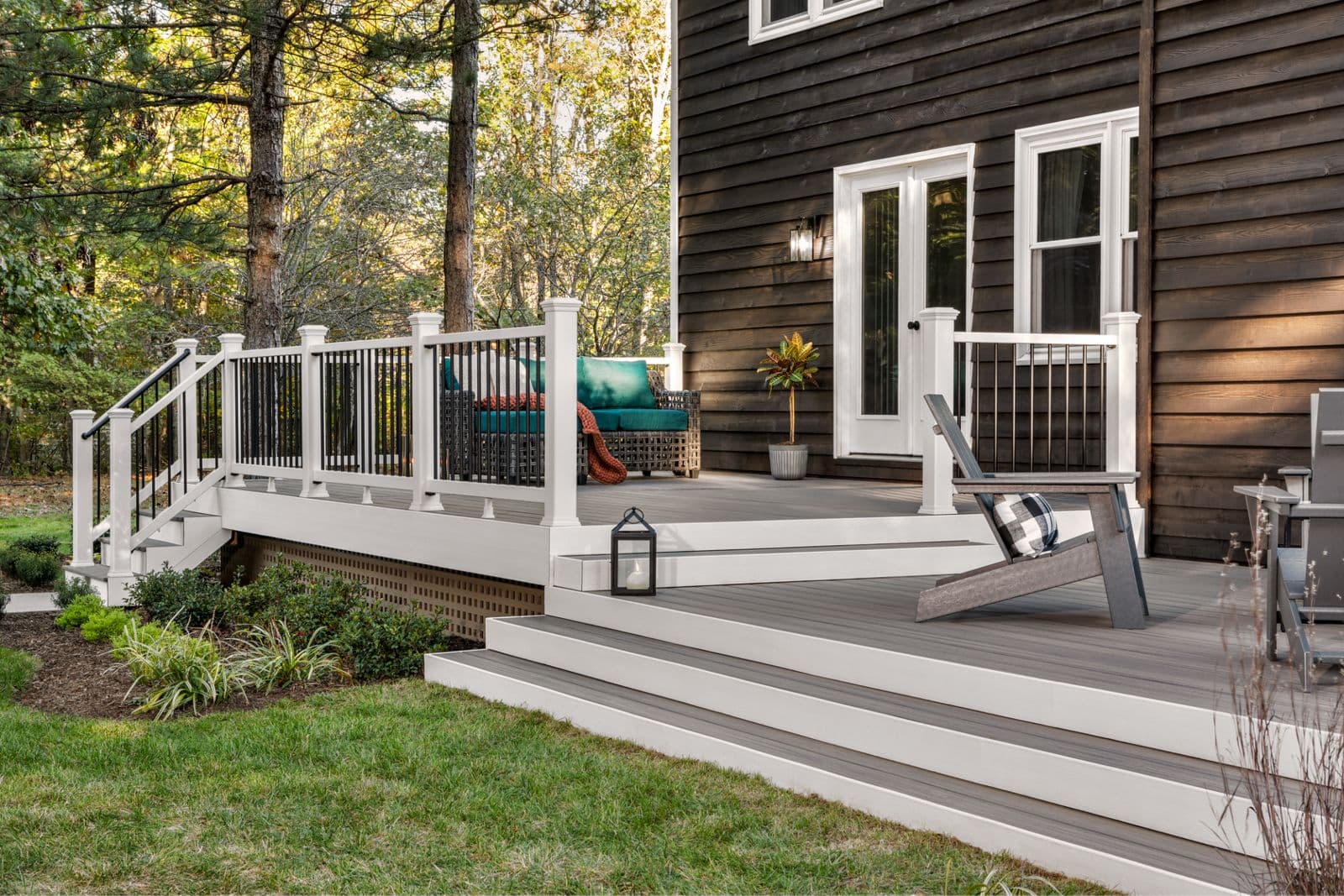
What is Decking Fascia and Why is it Important?
Decking fascia, sometimes called rim joist cover or skirt board, is the material applied to the perimeter of the deck frame, covering the exposed ends of the joists and beams. It serves both an aesthetic and protective function.
Aesthetically, fascia creates a clean, finished edge that hides the structural elements beneath the deck. Without it, the exposed framing can look unfinished and detract from the deck's overall appearance. From a protection standpoint, fascia can help shield the rim joist from weathering, though it is not a primary structural or waterproofing component. It contributes to the overall visual integrity and perceived quality of the deck.
Material Compatibility: Matching Fascia to Decking
The most common approach is to match the fascia material to your main decking boards for a uniform look. This ensures consistent color, texture, and weathering characteristics.
For hardwood decking like Ipe, you would typically use Ipe boards for fascia. Ipe is known for its hardness and natural resistance to rot and termites, making it a suitable choice for perimeter finishing. If your main deck boards are hardwood, using a different material for fascia might lead to discrepancies in how they age or require different maintenance.
If you are using composite or PVC decking, these manufacturers often offer matching fascia boards designed specifically for their decking lines. These typically come in the same colors and finishes as the main deck boards, ensuring a seamless match. These materials are engineered for low maintenance and consistent appearance over time.
Thermally modified Ash and Maximo Accoya decking also have corresponding options for fascia. Thermally modified Ash is modified with heat and steam for enhanced stability, while Maximo Accoya is acetylated wood, offering durability and stability for various applications. Using the same material for fascia ensures a consistent aesthetic and performance.
While less common, some designs incorporate a contrasting fascia material or color to create a deliberate visual accent. If pursuing this, ensure the contrasting material is compatible with outdoor exposure and complements the primary decking.
Profile and Dimensions: Selecting the Right Fascia Board
Fascia boards are generally thinner than main decking boards and are available in various widths and lengths to accommodate different deck heights and designs. Common widths include 8-inch, 10-inch, or 12-inch, but custom sizes may be available depending on the material.
The thickness of fascia boards is typically around 1/2 inch to 3/4 inch. This reduced thickness helps keep the weight down and allows for easier installation. Ensure the chosen width is sufficient to cover the entire rim joist, usually extending slightly below the deck surface to create a clean drip edge. Measure the exact height of your rim joist assembly, including any ledger boards or joist hangers, to determine the appropriate fascia board width.
When planning for corners, consider how the fascia boards will meet. Mitered corners provide a clean, continuous look, while butt joints with trim can offer a more rustic or distinct appearance. Some manufacturers also offer pre-formed corner pieces for specific decking lines.
Fastening Fascia: Methods and Best Practices
Proper fastening is crucial for fascia boards to remain secure and look good over time. The method will depend on the fascia material and the desired aesthetic.
For hardwood fascia, face fastening with screws is common. Pre-drilling is often necessary to prevent splitting, especially with dense hardwoods like Ipe. Counter-sinking and plugging screw holes can create a nearly invisible finish. Stainless steel screws are recommended for corrosion resistance.
Composite and PVC fascia boards often have specific fastening systems recommended by the manufacturer. These can include color-matched screws designed to blend in, or hidden fastening clips that attach to the back of the board, providing a smooth, fastener-free surface. Always refer to the manufacturer's installation guidelines for these materials.
Regardless of the material, ensure fasteners are spaced appropriately to secure the board firmly without causing bowing or warping. Allow for slight expansion and contraction of the material, especially with longer runs.
Worked Example: Estimating Fascia for a Rectangular Deck
Let's assume a hypothetical deck measuring 12 feet by 16 feet, intended to be finished with Ipe decking and matching Ipe fascia. The deck has three exposed sides: one 12-foot side and two 16-foot sides.
1. **Calculate total linear footage:** Add the lengths of the exposed sides: 12 feet + 16 feet + 16 feet = 44 linear feet.
3. **Consider board lengths:** Ipe fascia boards are often available in various lengths, such as 8, 10, 12, 14, 16, and 20 feet. To minimize waste and seams, we would aim for lengths that match our deck sides where possible.
* For the 12-foot side, a 12-foot board. (1 board)
* For the two 16-foot sides, two 16-foot boards. (2 boards)
* Total boards for primary coverage: 3 boards.
4. **Account for waste and cuts:** It is prudent to add a waste factor, typically 10-15%, especially when mitered corners are planned. For 44 linear feet, a 10% waste factor means ordering approximately 48.4 linear feet. In this case, ordering an extra 12-foot board (total 4 boards) would provide sufficient material for cuts and potential mistakes, bringing the total to 56 linear feet of material.
Before you order
- Match fascia material to main decking for consistency (e.g., Ipe decking with Ipe fascia).
- Measure rim joist height precisely to select appropriate fascia board width.
- Verify fascia board thickness for compatibility with desired aesthetic and installation method.
- Confirm manufacturer-recommended fastening methods for composite/PVC fascia.
- Calculate total linear footage needed, including waste factor for cuts and corners.
- Plan for corner details (mitered vs. butt joints) and material availability.
- Select appropriate corrosion-resistant fasteners.
- Consider complementary trim elements like stair risers or post wraps if applicable.
Confirm installation details, approved uses and warranty terms in the current instructions for the exact product and profile. Your installer should verify the substrate, structure and applicable project requirements.
Questions to help you decide
Can I use regular decking boards as fascia?
While it's technically possible, it's generally not recommended for several reasons. Decking boards are typically thicker than dedicated fascia boards, which can make them heavier, harder to cut neatly, and might create an overly bulky appearance. Dedicated fascia boards are often designed to be thinner and sometimes have specific profiles or fastening systems that make them better suited for rim joist coverage. Using the correct product ensures a cleaner finish and easier installation.
Do I need to leave a gap between fascia boards?
Yes, similar to decking boards, fascia boards can expand and contract with temperature and moisture changes. Always consult the product's installation guide for precise spacing recommendations.
What is the difference between fascia and skirting?
Fascia specifically refers to the board covering the rim joist or perimeter beam of the deck frame, creating a finished edge directly below the deck surface. Skirting, or lattice, refers to a broader enclosure that runs from the bottom of the deck frame down to the ground. Skirting often encloses the entire under-deck area, providing ventilation and deterring pests, while fascia is purely for finishing the visible edge of the deck structure.
Request a Quote for Your Decking Fascia and Trim
Ready to complete your deck project with the right fascia and edge finishes? Provide your project dimensions, desired material, and specific profile requirements, along with your ZIP code, to request a material quote. We can help confirm current availability and service options for your chosen decking and finishing components.
Request a material quote →