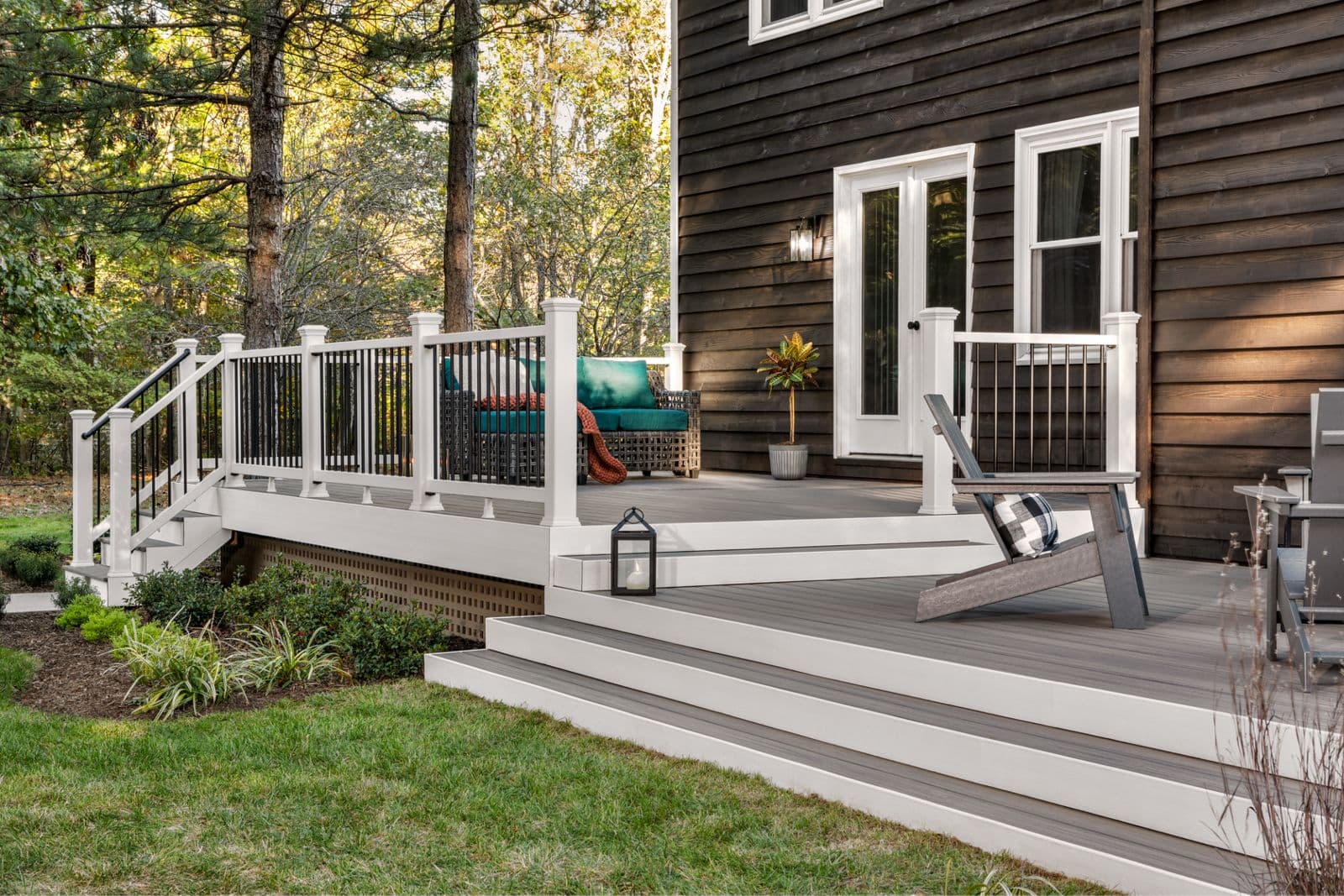
The Unique Environment of a Covered Porch
A covered porch offers protection from direct rainfall and intense UV radiation, which can affect the performance and appearance of decking materials. While this shelter can reduce weathering, it also means less direct sunlight for drying, potentially retaining moisture longer in shaded areas. This environment can influence the choice between natural wood and synthetic materials.
Consider the level of enclosure: is your porch fully screened, partially open, or completely exposed on one or more sides? These factors will determine the degree of protection and the amount of ambient moisture and humidity the decking will experience. For instance, a fully screened porch might experience less direct moisture but higher humidity than an open-sided porch.
Decking Material Options for Covered Porches
Several decking materials are suitable for covered porches, each with distinct characteristics:
Hardwood Decking: Species like Ipe are known for their natural durability and resistance to rot, making them a strong candidate even in areas with higher ambient moisture. Hardwoods can be left to weather to a silver-gray patina or regularly oiled to maintain their original color. The reduced UV exposure on a covered porch may slow the weathering process. Ipe, with its high density and natural resistance to termites and salt air, is a robust choice.
Thermally Modified Ash: This real wood product is modified with heat and steam, enhancing its stability and resistance without added preservatives. Thermally modified Ash offers a natural wood aesthetic with improved performance in environments where moisture might be a concern. It supports selected decking applications, but the specific profile and installation system must be confirmed for suitability.
Maximo Accoya: This acetylated wood is another enhanced natural wood option. Accoya is known for its durability and stability, making it suitable for long-lasting decks. It is real wood enhanced through acetylation, not heat treatment. Maximo Accoya offers minimal upkeep and can be specified in custom profiles by project.
Composite Decking: Often made from a blend of wood fibers and recycled plastics, composite decking is engineered for low maintenance. It resists rot, splinters, and insect damage. The reduced sun exposure on a covered porch can help preserve its color and finish over time. Many composite brands are relied upon by professionals.
PVC Decking: As a 100% synthetic material, PVC decking is waterproof to the core. This makes it an excellent choice for areas where moisture is a primary concern, such as porches that may experience occasional splashing or high humidity. PVC decking requires near-zero maintenance, with no oiling or sanding needed.
When making your selection, balance aesthetic preference with the level of maintenance you are willing to commit to and the specific environmental conditions of your covered porch.
Coordinating Thresholds and Transitions
A covered porch often serves as a transition zone between the interior of a home and the outdoors. Planning the threshold between the interior flooring and the decking is critical for a seamless flow and to prevent trip hazards. The height difference should be minimal and safe, adhering to local building practices.
Consider how the decking material will meet the house. A slight slope away from the structure can aid in drainage, even in a covered space, preventing moisture from pooling against the foundation. Flashing and proper sealing are essential to protect the house structure from any incidental moisture.
Planning for Furniture and Usage
The primary purpose of your covered porch will dictate furniture placement and, consequently, the decking layout. If the porch will host a dining area, ensure the decking is stable and flat for tables and chairs. For lounging areas, consider how rugs or specific furniture pieces might interact with the decking surface.
Heavy planters or large, fixed furniture pieces should be considered during the structural planning phase. While decking boards themselves are not structural supports, the underlying frame must be designed to bear the anticipated loads, including furniture, occupants, and any decorative elements. Avoid assuming that evenly distributing heavy items can substitute for proper structural review.
Worked Example: Decking for a 12'x20' Covered Porch
Let's consider a hypothetical 12-foot by 20-foot covered porch. The homeowner desires a low-maintenance solution with a natural wood appearance.
Measurements: The porch is 12 feet wide (144 inches) and 20 feet long (240 inches).
Material Choice: The homeowner selects Maximo Accoya decking for its enhanced durability, stability, and natural wood look with minimal upkeep.
Layout Plan: To minimize waste and create a clean look, the boards will run parallel to the 20-foot length. This means each board will be 20 feet long. For the 12-foot width, we divide 144 inches by 5.5 inches per board, which equals approximately 26.18 boards. Since partial boards are not typically purchased as such, we round up to 27 boards to cover the full width, with the last board potentially ripped to fit.
Quantity Calculation: We need 27 boards, each 20 feet long. Total lineal footage: 27 boards * 20 feet/board = 540 lineal feet. The area is 12 feet * 20 feet = 240 square feet.
Edge Considerations: The cut edge of the last board needs to be considered for a clean finish, possibly requiring a trim board or careful placement against a wall. The connection to the house at the 12-foot side will be carefully flashed and sealed. A picture-frame border could also be considered around the perimeter for a finished look, which would add to the material quantity.
This example illustrates that while the area is 240 square feet, the actual purchase quantity is 540 lineal feet of 5.5-inch wide boards, assuming full 20-foot lengths are available and used. Always confirm board availability in specific lengths to optimize for minimal waste.
Maintenance and Longevity in a Sheltered Environment
Even with a covered porch, proper maintenance is important for longevity. While direct sun and rain are reduced, dust, pollen, and debris can still accumulate. Regular sweeping and occasional cleaning with appropriate products are recommended for all decking types.
For natural wood decking, the frequency of oiling (if desired to maintain color) may be reduced compared to fully exposed decks due to lower UV exposure. However, it is still important to monitor the decking for signs of moisture retention, especially in corners or areas with limited airflow. Always follow the manufacturer's specific cleaning and maintenance instructions for your chosen product.
Before you order
- Assess the level of enclosure and exposure of your covered porch (fully screened, partially open, etc.).
- Determine the primary use of the porch (dining, lounging, mixed use).
- Evaluate decking material options based on aesthetics, maintenance preference, and moisture resistance.
- Plan the transition and threshold between indoor flooring and the porch decking.
- Consider drainage strategies for the porch surface, even under cover.
- Account for structural support needed for anticipated furniture or heavy planters.
- Calculate material quantities carefully, considering board widths and lengths to minimize waste.
- Review manufacturer-specific installation and maintenance guidelines for the chosen decking.
- Coordinate with your contractor on flashing, sealing, and any specific framing requirements.
Confirm installation details, approved uses and warranty terms in the current instructions for the exact product and profile. Your installer should verify the substrate, structure and applicable project requirements.
Questions to help you decide
Is hardwood decking suitable for a covered porch?
Yes, hardwood decking, particularly dense species like Ipe, is suitable for covered porches. The shelter helps protect the wood from the harshest elements, potentially extending the time before re-oiling is needed if you wish to preserve the original color. Hardwoods are naturally resistant to rot and insects, making them a durable choice for this environment.
Do I need to worry about drainage on a covered porch?
Even though a porch is covered, it's still good practice to plan for drainage. Incidental moisture from humidity, spills, or wind-driven rain can occur. A slight slope away from the house and appropriate board spacing can help ensure that any moisture that does accumulate can dry or drain away, preventing water from pooling.
What is the best low-maintenance decking for a covered porch?
Composite and PVC decking are excellent low-maintenance options for covered porches. They are engineered to resist rot, splinters, and insect damage, and typically do not require sanding, staining, or sealing. PVC decking, being 100% synthetic, is waterproof to the core, making it particularly suitable for any high-moisture situations.
Start Your Covered Porch Decking Project
Ready to select the perfect decking for your covered porch? Request a material quote today. Provide your project dimensions, desired profile, and ZIP code to confirm current availability and service options. Our team is here to help you plan your ideal outdoor space.
Request a material quote →