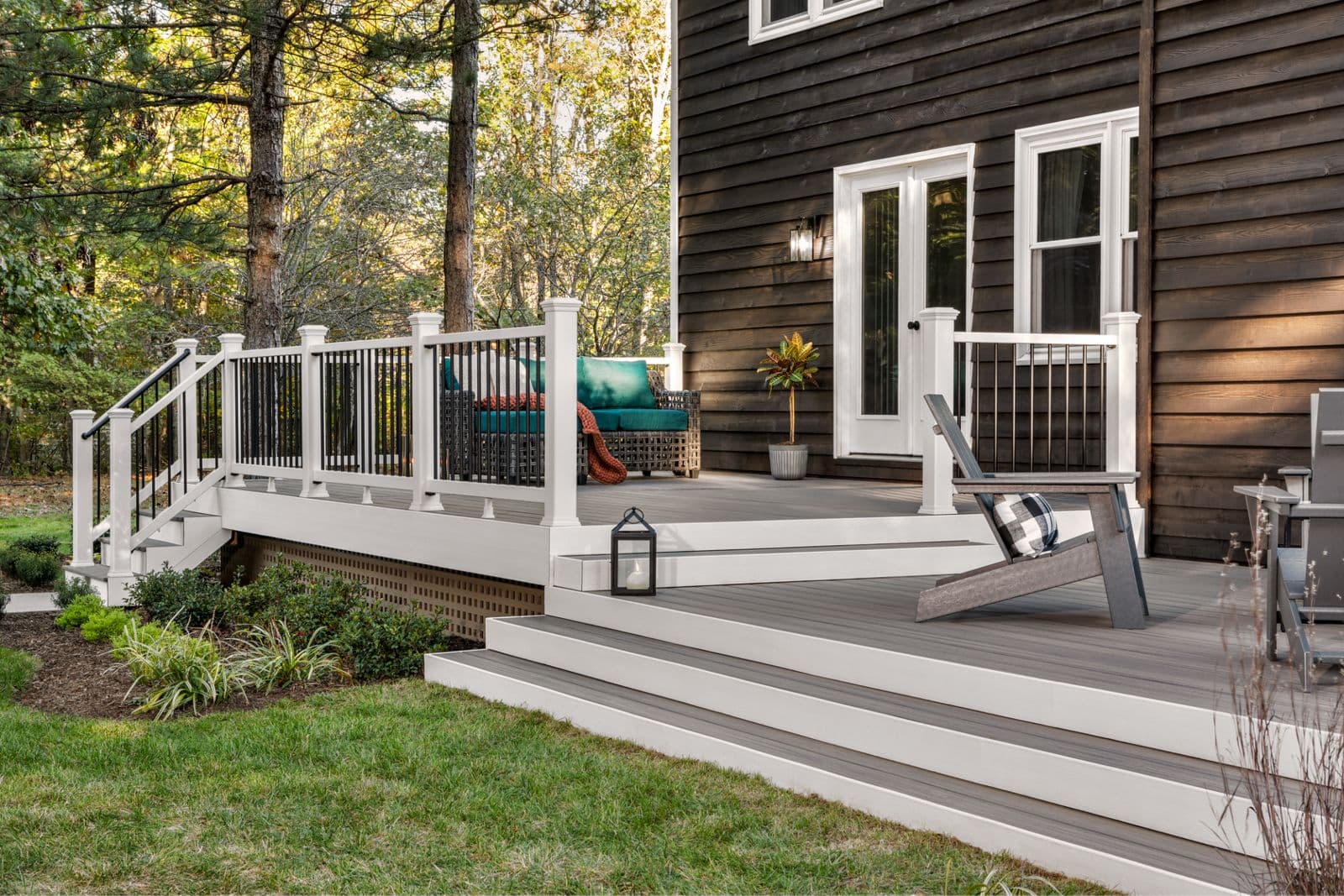
Understanding the Coastal Environment's Impact
Coastal environments present a distinct set of challenges for exterior building materials. The most significant factor is salt exposure, delivered through salt spray carried by sea breezes. This airborne salt can accelerate corrosion of metal fasteners and hardware, and it can also affect the surface integrity and aging process of certain decking materials.
High humidity levels, common in coastal areas, can contribute to moisture absorption in wood products, potentially leading to swelling, shrinking, and increased susceptibility to mildew. Additionally, intense ultraviolet (UV) radiation from prolonged sun exposure can degrade finishes and cause materials to fade or break down over time. Understanding these forces is crucial for selecting appropriate decking.
Decking Material Options for Coastal Settings
Several decking materials offer varying degrees of suitability for coastal homes:
Hardwood Decking: Species like Ipe are known for their natural density and resistance to rot and termites. Ipe specifically offers natural resistance to salt air. While it can age to a silver patina, periodic oiling can help maintain its original color. Hardwoods are a natural product and may require more consistent maintenance in a coastal setting to preserve their appearance.
Thermally Modified Wood: Thermally modified Ash, for example, is treated with heat and steam to enhance stability and durability without added preservatives. This process makes the wood less prone to moisture absorption, which can be beneficial in humid coastal climates. The specific decking profile and installation system must be confirmed for appropriate applications.
Maximo Accoya: This is real wood enhanced through acetylation, a process distinct from thermal modification. Acetylation improves durability and stability, making Accoya suitable for long-lasting decks and precision joinery applications. It offers minimal upkeep and can be specified with custom profiles. Maximo Accoya is not a thermally modified wood.
Composite Decking: Often made from a blend of wood fibers and plastic, composite decking is engineered for low maintenance. Many brands offer near-zero maintenance, eliminating the need for oiling or sanding. The specific composition and capstock technology can influence its resistance to fading and staining in direct sun and salt spray.
PVC Decking: As a 100% synthetic material, PVC decking is waterproof to the core. This makes it an excellent choice for environments where moisture is a constant concern, such as docks and pool decks, and by extension, highly suitable for coastal applications where salt spray and humidity are prevalent. PVC decking requires minimal upkeep.
Considering Hardware and Fasteners for Salt Air
The choice of fasteners and hardware is as critical as the decking material itself. Standard galvanized screws and connectors may corrode rapidly in salt air, leading to structural compromise and unsightly rust stains on the decking. Stainless steel is generally recommended for coastal applications due to its superior corrosion resistance.
Verify that all hidden fasteners, structural connectors, and railing hardware are also rated for coastal or corrosive environments. Even small components, like screws for trim or access panels, should meet these standards to ensure the longevity of the entire deck structure.
Planning for Drainage and Ventilation
Effective drainage and ventilation are essential for any deck, but especially in coastal areas where humidity is high. Proper spacing between decking boards allows water to drain quickly, preventing standing water that can encourage mold and mildew growth or contribute to the deterioration of the deck structure.
Adequate airflow beneath the deck helps to dry out moisture, which is crucial for the long-term health of wood-based decking and the substructure. Ensure that your deck design includes sufficient gaps for air circulation and that landscaping or other elements do not block this essential airflow.
Worked Example: Decking for a Coastal Beach House
Consider a hypothetical 12-foot by 20-foot deck for a beach house, located within 100 feet of the ocean. The homeowner desires a natural wood look with minimal maintenance, prioritizing durability against salt air and UV exposure.
Material Choice: Given the requirements, Maximo Accoya decking (acetylated wood) is selected. It offers enhanced durability and stability for long-lasting decks, with minimal upkeep, making it a strong contender for coastal applications. Alternatively, PVC decking could be chosen for its 100% synthetic, waterproof core and best-in-class performance for docks and pool decks, which translates well to salt-air resistance.
Board Dimensions: Assuming 5.5-inch wide Maximo Accoya decking boards are chosen, with standard 16-foot and 20-foot lengths available. For a 12-foot by 20-foot deck, using 20-foot boards for the 20-foot dimension minimizes butt joints. The 12-foot width will require approximately 26 boards (12 feet * 12 inches/foot / 5.5 inches/board = 26.18 boards). To account for potential cuts and waste, 27 boards of 20-foot length would be a reasonable initial estimate. This provides 540 linear feet of decking.
This ensures maximum corrosion resistance against salt spray.
Substructure: The substructure (joists and beams) would be treated lumber, specifically rated for ground contact or severe weather exposure, and all connectors (joist hangers, hurricane ties) would also be stainless steel.
This example illustrates how material selection, fastener choice, and design considerations are integrated to create a durable coastal deck.
Before you order
- Assess proximity to saltwater and prevailing wind direction for salt spray exposure.
- Evaluate material properties for natural or enhanced resistance to salt, UV, and humidity.
- Verify product warranties and any exclusions related to coastal environments or specific installation practices.
- Plan for adequate ventilation beneath the deck and proper drainage between boards.
- Consider the long-term maintenance commitment for your chosen material in a coastal setting.
- Review local building codes and coastal zone regulations that may impact material choices or construction methods.
Confirm installation details, approved uses and warranty terms in the current instructions for the exact product and profile. Your installer should verify the substrate, structure and applicable project requirements.
Questions to help you decide
Which decking material is best for resisting salt spray?
PVC decking is an excellent choice due to its 100% synthetic, waterproof core, making it highly resistant to salt spray and moisture. Maximo Accoya (acetylated wood) and dense hardwoods like Ipe also offer strong resistance to salt air, though their aging process and maintenance needs may differ.
Do I need special fasteners for a coastal deck?
Yes, special fasteners are crucial. Standard galvanized fasteners can corrode quickly in salt air.
How does coastal humidity affect decking?
High coastal humidity can increase moisture absorption in wood-based decking, potentially leading to swelling, shrinking, and increased risk of mold or mildew. Materials like thermally modified wood, Maximo Accoya, and PVC decking are designed to be more dimensionally stable or waterproof, offering better performance in humid conditions.
Ready to Plan Your Coastal Deck?
Request a material quote with your project dimensions, desired decking profile, and ZIP code. Confirm current availability and service options for your coastal decking project.
Request a material quote →