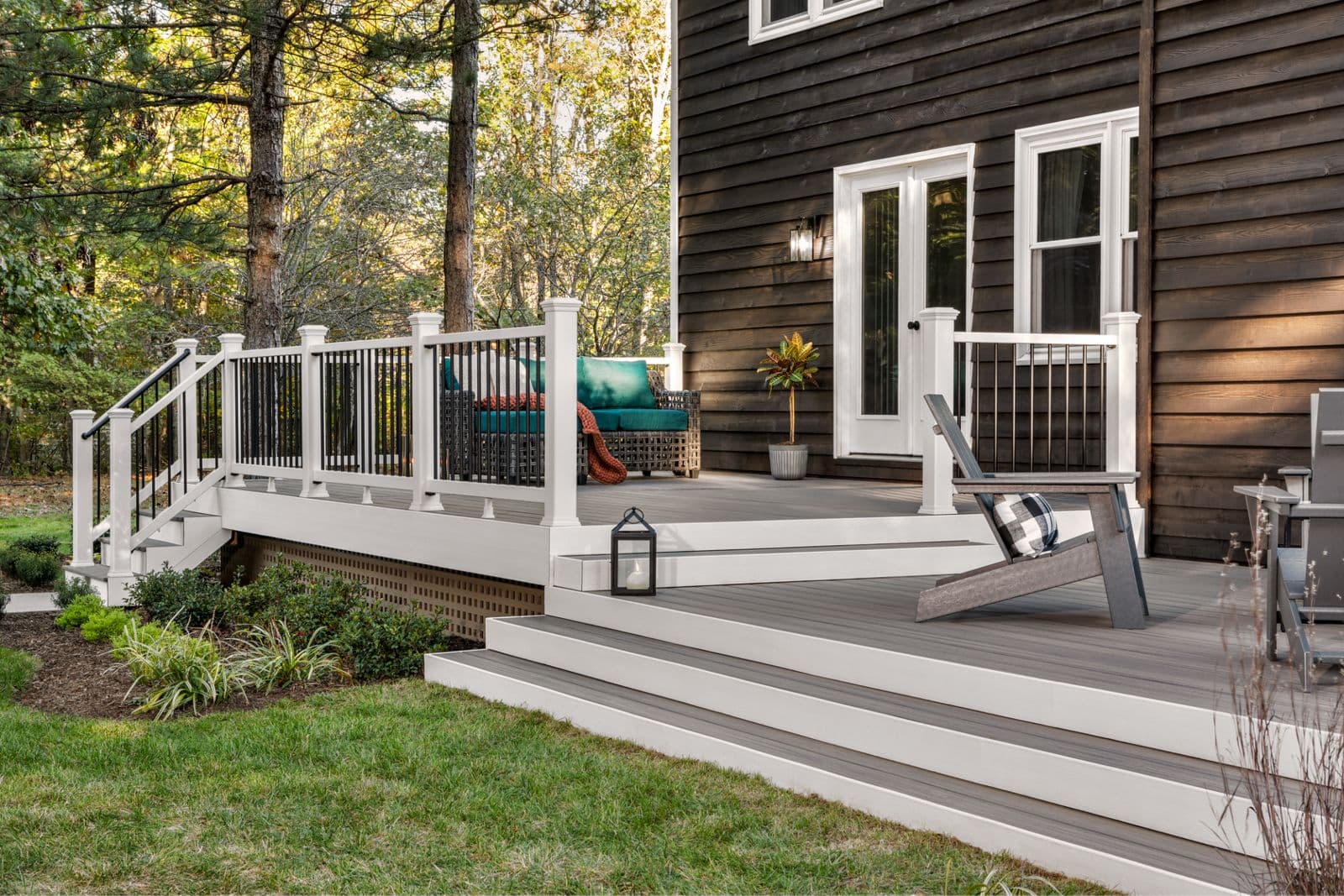
Understanding Your Decking Material
The first and most crucial step in selecting a cleaning product is to accurately identify your decking material. Different materials react uniquely to various chemicals and cleaning methods. Using a product designed for composite decking on a natural hardwood deck, for instance, could strip its finish or cause irreversible damage.
Common decking materials include:
Hardwood (e.g., Ipe): Known for its density and natural resistance to rot and insects. Hardwoods often age to a silver patina if left untreated, or can be oiled to maintain their original color. (S1)
Thermally Modified Wood (e.g., Thermo Ash): Wood modified with heat and steam to enhance stability and durability without added preservatives. (S1)
Acetylated Wood (e.g., Maximo Accoya): Real wood enhanced through a non-toxic acetylation process, offering durability and stability. (S1)
Composite Decking: A blend of wood fibers and plastic, designed for low maintenance. (S1)
PVC Decking: 100% synthetic and waterproof, often chosen for docks and pool surrounds. (S1)
If you are unsure of your decking material, check your original purchase records, consult with your installer, or contact the manufacturer of your decking boards. This information is foundational to proper care.
Consulting Manufacturer Care Guides
Every reputable decking manufacturer provides specific care and maintenance instructions for their products. These guides are the authoritative source for cleaning product compatibility. They detail recommended cleaners, prohibited chemicals, and approved cleaning methods. Ignoring these guidelines can void your product warranty.
Look for sections that address:
Routine cleaning for general dirt and grime.
Specific treatments for common stains (e.g., grease, mildew, rust).
Approved cleaning agents and any dilution ratios.
Prohibited substances (e.g., bleach, pressure washers at high settings, abrasive cleaners).
If you no longer have the physical guide, most manufacturers make these documents available on their websites. Search for your specific product line and material type.
The Importance of Spot Testing
Even when a cleaning product is generally recommended by the manufacturer, it is always prudent to perform a spot test in an inconspicuous area of your deck. This step helps confirm compatibility with your specific decking boards and ensures the product does not cause discoloration, dullness, or damage.
To conduct a spot test:
Choose a hidden area, such as under a planter, behind a grill, or a board end.
Apply the diluted cleaning product according to the manufacturer's instructions.
Allow it to sit for the recommended dwell time.
Rinse thoroughly and allow the area to dry completely.
Inspect the area for any adverse reactions, such as staining, fading, or changes in texture. If no issues are observed, proceed with cleaning the rest of your deck.
Common Cleaning Product Exclusions by Decking Type
While specific exclusions vary by manufacturer, certain cleaning agents are broadly incompatible with particular decking materials:
For Hardwood Decking (e.g., Ipe): Avoid harsh degreasers, bleach, or acidic cleaners, which can strip natural oils, damage the wood fibers, or alter its color. Pressure washing should be done with extreme caution at low settings to prevent gouging the wood. For Ipe, regular cleaning with mild soap and water is often sufficient. (S1)
For Thermally Modified and Acetylated Wood Decking (e.g., Thermo Ash, Maximo Accoya): These modified woods benefit from their enhanced stability. However, harsh chemicals can still damage their surface or finish. Always verify specific instructions for stain removal. (S1)
For Composite Decking: Abrasive cleaners, solvents, and bleach-based products can damage the surface, leading to fading, staining, or a dull finish. Certain types of composite decking can also be susceptible to damage from high-pressure washing. (S1)
For PVC Decking: While highly resistant to moisture, some strong solvents or abrasive cleaners can scratch the surface or affect its color. Mild soap and water are generally effective. (S1)
Always refer to the precise care guide for your specific product to avoid these common pitfalls.
Hypothetical Example: Cleaning a Maximo Accoya Deck
Consider a hypothetical 10x12 foot deck constructed with Maximo Accoya decking, a real wood product enhanced through acetylation. The homeowner notices a build-up of general dirt and some mildew spots after a damp season.
1. Identify Material: Maximo Accoya (acetylated wood). (S1)
2. Consult Manufacturer Guide: The Maximo Accoya care guide specifies using a mild, pH-neutral soap solution for general cleaning and a diluted oxygen bleach solution (e.g., sodium percarbonate) for mildew, explicitly prohibiting chlorine bleach, abrasive scrubbers, and high-pressure washers above 1,000 PSI.
3. Gather Supplies: Bucket, soft-bristle brush, garden hose, pH-neutral deck cleaner, and an oxygen bleach-based mildew remover.
4. Spot Test: The homeowner chooses a small, hidden corner of the deck. They apply the diluted oxygen bleach solution to a mildew spot, let it sit for 15 minutes, then rinse. After drying, no discoloration or damage is observed.
5. General Cleaning: The entire deck is swept to remove loose debris. A solution of pH-neutral deck cleaner is applied with a soft brush, working in sections. The deck is then thoroughly rinsed with a garden hose.
6. Mildew Treatment: For the remaining mildew spots, the diluted oxygen bleach solution is applied, left for 15 minutes, and then rinsed completely. The deck is allowed to air dry.
By following the manufacturer's specific recommendations and performing a spot test, the homeowner effectively cleans their Maximo Accoya deck without risking damage or voiding the warranty.
Before you order
- Identify your exact decking material (e.g., Ipe, Thermo Ash, Maximo Accoya, Composite, PVC).
- Locate and review the manufacturer's specific care and cleaning guide for your product.
- Note all recommended cleaning products, methods, and prohibited substances.
- If using a new cleaning product, perform a spot test in an inconspicuous area.
- Observe the spot test area for any adverse reactions after it dries completely.
- If the spot test is successful, proceed with cleaning the rest of your deck following the manufacturer's instructions.
- Ensure cleaning tools (brushes, pressure washers) are appropriate for your decking material.
Confirm installation details, approved uses and warranty terms in the current instructions for the exact product and profile. Your installer should verify the substrate, structure and applicable project requirements.
Questions to help you decide
Can I use a pressure washer on my deck?
The suitability of a pressure washer depends entirely on your decking material and the specific manufacturer's recommendations. For some materials like certain hardwoods or thermally modified wood, high pressure can damage the surface, gouge the wood, or strip finishes. Composite and PVC decks may also have specific pressure limits. Always consult your decking manufacturer's guide for approved pressure settings and nozzle types, and perform a spot test first. Using an incorrect setting can void your warranty.
Are 'eco-friendly' or 'natural' cleaners always safe for my deck?
Not necessarily. While many eco-friendly cleaners are formulated to be gentler, their chemical composition can still react differently with various decking materials. Ingredients like vinegar, while natural, can be acidic and potentially damage certain wood finishes or composite surfaces. Always check the product label for specific material compatibility and, most importantly, cross-reference with your decking manufacturer's care guide. A spot test is crucial even with 'natural' products.
What should I do if my decking manufacturer's guide is unavailable?
If you cannot locate the specific care guide for your decking, first try searching the manufacturer's website using your product name or series. If that fails, contact the retailer where you purchased the decking or the decking manufacturer directly, providing as much detail as possible about your product. In the interim, stick to the gentlest possible cleaning methods: warm water and a soft-bristle brush, always performing a spot test on an inconspicuous area before cleaning the entire deck. Avoid any harsh chemicals or abrasive tools until you have confirmed compatibility.
Request a Material Quote for Your Decking Project
Planning a new deck or renovating an existing one? Contact us for a material quote. Provide your project dimensions, desired decking profile, and ZIP code to confirm current availability and service options for hardwood, thermally modified, acetylated, composite, or PVC decking. Explore our full range of decking options today: Decking, Hardwood Decking, Ipe Decking, Composite Decking, PVC Decking.
Request a material quote →