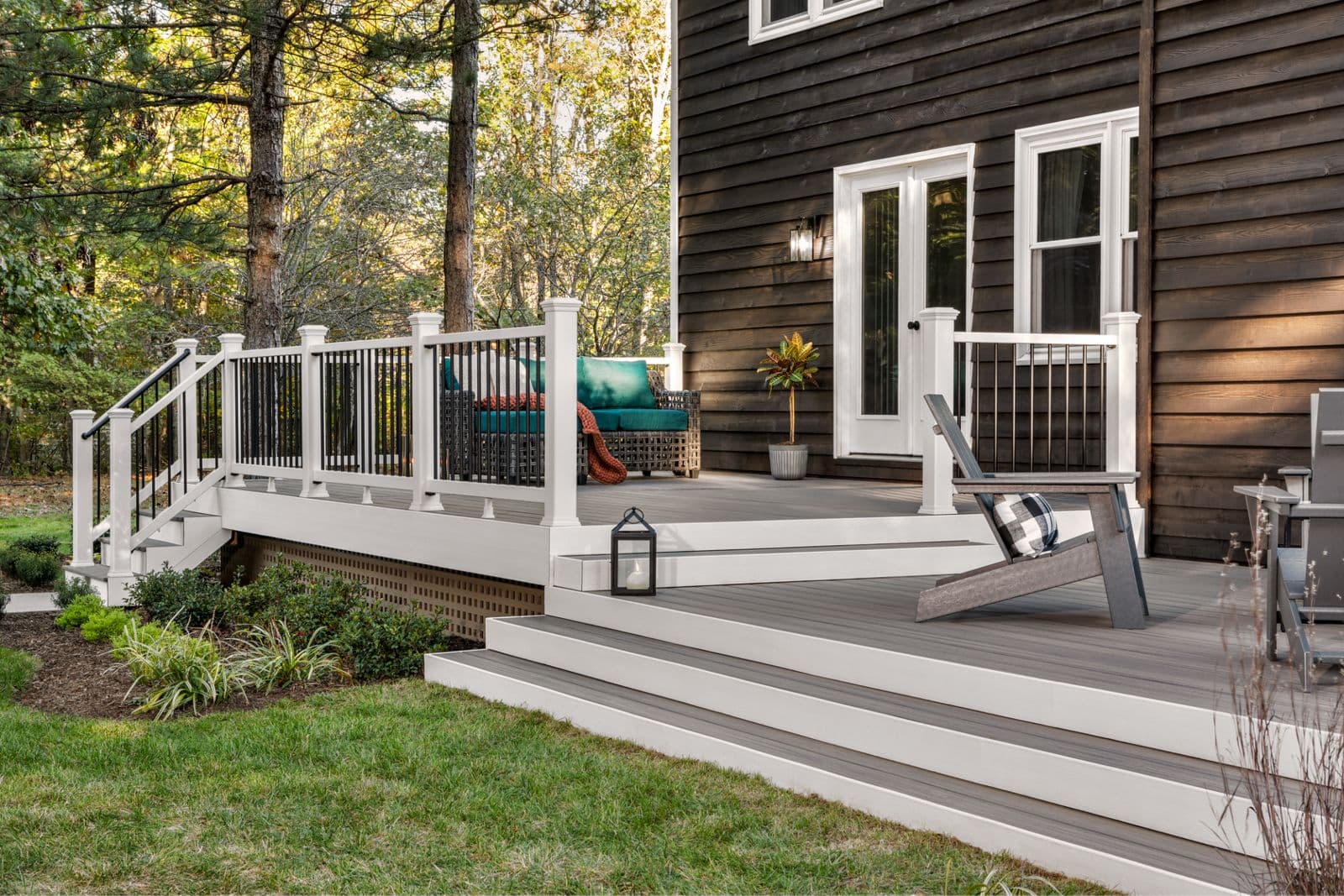
Common Decking Board Widths and Their Characteristics
Decking boards typically come in a few standard widths, though specific availability can vary by material type (hardwood, composite, PVC, thermally modified wood) and manufacturer. The most common nominal widths you'll encounter are 4-inch (actual ~3.5 inches), 6-inch (actual ~5.5 inches), and sometimes wider profiles like 8-inch (actual ~7.25 inches).
Each width offers distinct visual and functional characteristics:
Smallest widths (e.g., 4-inch nominal): These boards create a more detailed, intricate pattern. They can make a smaller deck feel larger by increasing the number of visible lines, or add a classic, traditional look to expansive areas. Installation may involve more fasteners and cuts due to the higher board count.
Mid-range widths (e.g., 6-inch nominal): This is a very popular and versatile choice, offering a balanced appearance that works well in most settings. It provides a good visual rhythm without being too busy or too monolithic. Many decking materials, including Ipe hardwood, composite, and PVC, are readily available in this size.
Wider widths (e.g., 8-inch nominal and beyond): Wider boards create a more contemporary, expansive feel. They can make a large deck appear even grander and less 'striped.' With fewer seams, they can offer a cleaner, more streamlined look. Wider boards may require specific framing considerations to prevent cupping or warping, depending on the material and installation method.
Visual Impact and Project Scale
The board width you select has a significant impact on how your deck is perceived. Consider the overall scale of your project and the surrounding environment.
For a compact urban backyard deck, using narrower boards might create a sense of greater length or width, making the space feel more open. Conversely, wider boards in a small area could make it feel disproportionately large or overwhelming.
On a sprawling deck designed for entertaining, wider boards can help ground the space and reduce visual clutter, allowing other design elements like furniture or landscaping to stand out. A mix of widths can also be used, for example, a wider main field with narrower border boards, to create visual interest or define different zones.
Think about the architectural style of your home. A traditional home might benefit from narrower boards, while a modern, minimalist design might be enhanced by wider, fewer boards. The goal is to create harmony between your deck and the rest of your property.
Material Specifics: Hardwood, Composite, and PVC Decking
Different decking materials offer various board widths and profiles. Understanding these differences is crucial for your selection.
Hardwood Decking: Species like Ipe are often available in standard nominal widths such as 4-inch and 6-inch. These natural wood boards offer durability and can be oiled to maintain color or allowed to age to a silver patina. The inherent characteristics of wood mean that precise dimensional stability can vary slightly, which is accounted for in installation guidelines.
Composite and PVC Decking: These engineered materials often provide consistent dimensions and a wider array of available widths, sometimes including those larger than traditional hardwood profiles. Composite decking offers near-zero maintenance, while PVC decking is 100% synthetic and waterproof, making it ideal for docks and pool decks. Both types can be found in various widths to suit different aesthetic preferences.
Thermally Modified Wood: Thermally modified Ash, for example, is modified with heat and steam for enhanced stability. While it supports selected decking applications, the specific profile and installation system must be confirmed, and available widths may align with common nominal sizes.
Maximo Accoya: This acetylated wood offers durability and stability for long-lasting decks. It can be customized for specific projects, which might include a range of board widths depending on the custom order.
Installation Considerations and Fastening
Board width can affect installation. Narrower boards mean more individual pieces to cut, position, and fasten. This can increase labor time, but also offers more flexibility in adjusting to irregular deck shapes or curves.
Wider boards can speed up installation in terms of laying fewer pieces, but they may require more careful handling to ensure proper alignment and consistent spacing. The type of fastener (hidden clips versus face screws) is generally independent of board width, but the number of fasteners per square foot will naturally be higher for narrower boards.
Always refer to the manufacturer's specific installation guidelines for your chosen decking material and width regarding fastening methods, joist spacing, and required gaps between boards. These guidelines ensure proper performance and longevity of your deck.
Worked Example: Calculating Quantities for Different Widths
Let's consider a hypothetical rectangular deck measuring 12 feet by 16 feet (192 square feet).
Option 1: 4-inch nominal width boards (actual ~3.5 inches).
The 12-foot width of the deck is 144 inches.
Number of boards needed across the 12-foot width: 144 inches / 3.625 inches per board = 39.72. We round up to 40 boards.
If boards are available in 16-foot lengths, we would need 40 boards at 16 feet each. Total linear feet: 40 boards * 16 feet/board = 640 linear feet.
Option 2: 6-inch nominal width boards (actual ~5.5 inches).
The 12-foot width of the deck is 144 inches.
Number of boards needed across the 12-foot width: 144 inches / 5.625 inches per board = 25.6. We round up to 26 boards.
If boards are available in 16-foot lengths, we would need 26 boards at 16 feet each. Total linear feet: 26 boards * 16 feet/board = 416 linear feet.
This example clearly shows that using wider boards significantly reduces the total number of boards and linear footage required. This directly impacts material costs and potentially installation labor. Always add a waste factor (typically 5-10%) to your final calculations for cuts and potential errors.
Before you order
- What is the overall size and shape of my deck?
- What is the architectural style of my home and desired aesthetic for the deck?
- Which decking materials (hardwood, composite, PVC, thermally modified wood) am I considering, and what widths are available for them?
- How will the chosen board width affect the perceived scale of the deck?
- What are the installation implications (labor, fasteners) for different board widths?
- Have I accounted for board spacing and waste factor in my material calculations?
- Are there specific manufacturer recommendations for board width based on joist spacing or application?
Confirm installation details, approved uses and warranty terms in the current instructions for the exact product and profile. Your installer should verify the substrate, structure and applicable project requirements.
Questions to help you decide
Does board width affect the structural integrity of the deck?
No, the board width itself does not affect the structural integrity of the deck frame. The structural support comes from the joists, beams, and posts. However, wider boards may require specific joist spacing or fastening patterns to prevent issues like cupping or warping, especially with natural wood products. Always follow the manufacturer's installation instructions for your chosen board width and material.
Can I mix different board widths on my deck?
While it's less common for the main field of a deck, mixing board widths is possible and can create unique design elements. For example, you might use a wider board for the main decking area and a narrower board for a picture-frame border or to delineate different zones on a large deck. If mixing widths, ensure all boards are compatible in terms of material, thickness, and installation requirements, and plan your layout carefully to ensure a cohesive look.
Will wider boards warp more than narrower boards?
The potential for warping depends more on the material type, quality, and proper installation than solely on board width. However, wider boards, especially in natural wood, can sometimes be more prone to cupping or twisting if not properly fastened or if exposed to significant moisture fluctuations. Engineered materials like composite or PVC decking are generally more dimensionally stable regardless of width. Proper ventilation beneath the deck and adherence to manufacturer spacing guidelines are crucial for minimizing such issues with any board width.
Ready to Plan Your Decking Project?
Request a material quote today by providing your project dimensions, desired decking profile, and ZIP code. Our team can help confirm current availability and service options for your chosen board widths and materials.
Request a material quote →