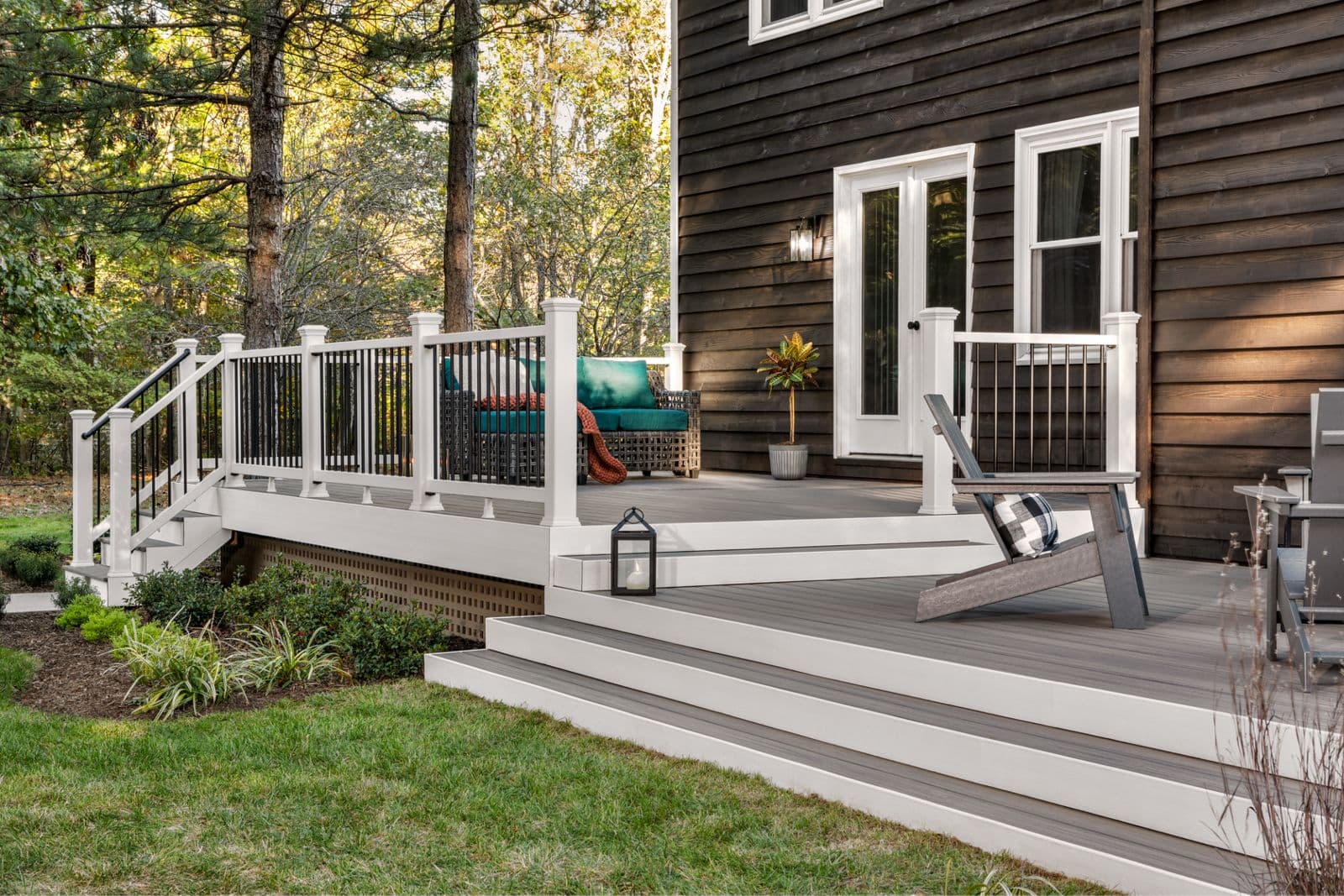
Understanding Decking Material Types and Available Lengths
Different decking materials come in a variety of standard lengths, which directly influences your planning. Hardwood decking, such as Ipe, is often available in a wider range of random lengths, reflecting the natural variations of timber. This can offer flexibility but requires careful sorting and planning on-site.
Composite and PVC decking, being manufactured products, typically come in more uniform, consistent lengths. These might include common dimensions like 12-foot, 16-foot, or 20-foot boards. Thermally modified wood and acetylated Maximo Accoya also tend to be available in more predictable lengths, similar to engineered products.
Always confirm the specific available lengths for your chosen decking material before finalizing your design. This information is crucial for accurate material takeoffs and minimizing waste.
Explore material options:
Hardwood Decking: /decking/hardwood
Ipe Hardwood Decking: /decking/hardwood/ipe
Composite Decking: /decking/composite
PVC Decking: /decking/pvc
The Importance of Joist Spacing and Support
Decking boards must be adequately supported by joists. The spacing of your joists will dictate where board ends can be joined. Typically, decking boards are joined over a joist, ensuring proper support for both ends of the board. This is fundamental to preventing movement, cupping, or sagging over time.
Always consult your project plans and local regulations to confirm joist spacing before planning your board lengths and seam placements. Inadequate support at seams can compromise the deck's structural integrity.
Planning Seam Locations for Aesthetics and Durability
Visible seams are an unavoidable part of any decking project that extends beyond a single board length. Thoughtful placement of these seams can enhance the overall appearance of your deck.
Consider staggering your seams in a random or repeating pattern rather than creating a straight line across the deck. This 'random' or 'offset' pattern helps distribute stress, avoids creating a visual 'fault line,' and can make the deck appear larger and more cohesive. Avoid placing seams in high-traffic areas if possible, as these spots may experience more wear.
For a clean, finished look, ensure all board ends are cut cleanly and precisely. Even with hidden fastening systems, visible end cuts contribute significantly to the deck's final appearance.
Minimizing Waste with an Efficient Cut List: A Worked Example
Creating a detailed cut list is essential for optimizing material use and reducing waste. Let's consider a hypothetical deck section that is 14 feet long and 10 feet wide, requiring standard 5.5-inch wide decking boards.
If you choose 16-foot boards, a 14-foot section leaves a 2-foot offcut. While this offcut might be reusable for smaller sections or trim, it's inefficient if not planned. If you could source 14-foot boards directly, you'd eliminate this waste entirely for that run.
Alternatively, if you use 12-foot boards for a 14-foot run, you'd need one 12-foot board and a 2-foot piece. This means every 14-foot run would require two boards (a 12-foot and a 2-foot piece cut from another board), creating more seams and potentially more waste from the second board.
A better strategy for a 14-foot section might be to use 16-foot boards, yielding a 2-foot offcut. If you have another section that requires a 2-foot board, you can plan to use that offcut. For example, if you have a 10-foot wide deck, and you are running boards along the 14-foot length, you would need approximately 22 boards (10 feet / 5.5 inches per board = 120 inches / 5.5 inches = 21.8 boards). So, you would purchase 22 boards.
If your deck is 24 feet long and you are using 16-foot boards, each run will require one 16-foot board and an 8-foot section. You can achieve this by cutting one 16-foot board into two 8-foot sections, effectively using two 16-foot boards for every two 24-foot runs, with no waste. This is an example of 'nesting' cuts.
Always sketch out your deck layout, marking joist locations and board runs. Then, experiment with different available board lengths to see how they fit. Calculate the total linear footage needed, then factor in a waste percentage (typically 5-10% for cuts and errors).
The goal is to match board lengths to your deck dimensions as closely as possible, minimizing the number of cuts and the size of unusable offcuts.
Special Considerations for Different Decking Materials
Hardwood Decking (e.g., Ipe): Hardwood boards often come in random lengths. This means you might receive a mix of 8-foot, 10-foot, 12-foot, and longer boards. Sorting these on-site and assigning them to specific runs can be a strategic way to minimize cuts and create a varied, natural look. Ipe is known for its hardness and natural resistance to rot and termites. It can age to a silver patina or be oiled to maintain its color.
Thermally Modified Ash: This material is modified with heat and steam, offering improved stability. It typically comes in more consistent lengths, making planning similar to composite products. Confirm the specific profile and installation system.
Maximo Accoya: This acetylated wood offers durability and stability, suitable for long-lasting decks. Like thermally modified wood, it's enhanced for performance and usually comes in predictable lengths, simplifying layout planning.
Composite and PVC Decking: These materials are engineered for consistency in size and appearance. They often come in fixed lengths, which can simplify planning but may result in more standard offcuts if your deck dimensions don't align perfectly with available lengths. PVC decking is 100% synthetic and waterproof, making it a strong choice for docks and pool decks.
Regardless of the material, always review the manufacturer's installation guidelines regarding end-to-end spacing and fastening at seams.
The Role of Picture Framing and Borders
If your deck design includes a picture-frame border, this will affect your internal decking board lengths. The border boards will run perpendicular or diagonal to the main field boards, creating a distinct edge. The length of your field boards will then be determined by the internal dimensions of the picture frame.
Planning the picture frame first allows you to define the exact space for the main decking field, making it easier to calculate the necessary lengths for the interior boards and potentially reducing the number of visible seams within the main deck area.
Before you order
- Confirm available board lengths for your chosen decking material.
- Sketch your deck layout, including joist locations and desired board direction.
- Measure the precise dimensions of each deck section.
- Determine your joist spacing to ensure proper seam support.
- Decide on a seam pattern (e.g., random, offset) for aesthetic appeal.
- Create a detailed cut list, experimenting with different board lengths to minimize waste.
- Account for any picture-frame borders or special design elements.
- Add a waste factor (5-10%) to your total material estimate.
- Review manufacturer guidelines for end-to-end spacing and fastening at seams.
Confirm installation details, approved uses and warranty terms in the current instructions for the exact product and profile. Your installer should verify the substrate, structure and applicable project requirements.
Questions to help you decide
Can I mix different board lengths on my deck?
Yes, mixing different board lengths is common, especially with hardwood decking that often comes in random lengths. It can create a more natural, less repetitive appearance. The key is to plan your layout carefully to ensure all board ends are properly supported over joists and seams are aesthetically staggered.
What is the longest decking board length available?
The longest available decking board lengths vary significantly by material and manufacturer. Hardwood decking can sometimes be sourced in very long, random lengths, while composite and PVC decking often have standard maximums, such as 20 feet. Always check the specific product specifications for the material you are considering.
How do I calculate how many boards I need if I'm planning for specific lengths?
First, measure the total linear footage required for each specific length after creating your cut list. For example, if your plan requires ten 12-foot boards and five 16-foot boards, you would order exactly that. If you are ordering random lengths, you would calculate the total linear footage needed for your project, then add a waste factor (typically 5-10%) to that total before placing your order. The supplier will then provide a mix of available lengths that add up to your total linear footage.
Ready to Plan Your Decking Project?
Request a material quote with your project dimensions, exact decking profile, and ZIP code to confirm current availability and service options. Our team can help you identify the right board lengths for your design.
Request a material quote →