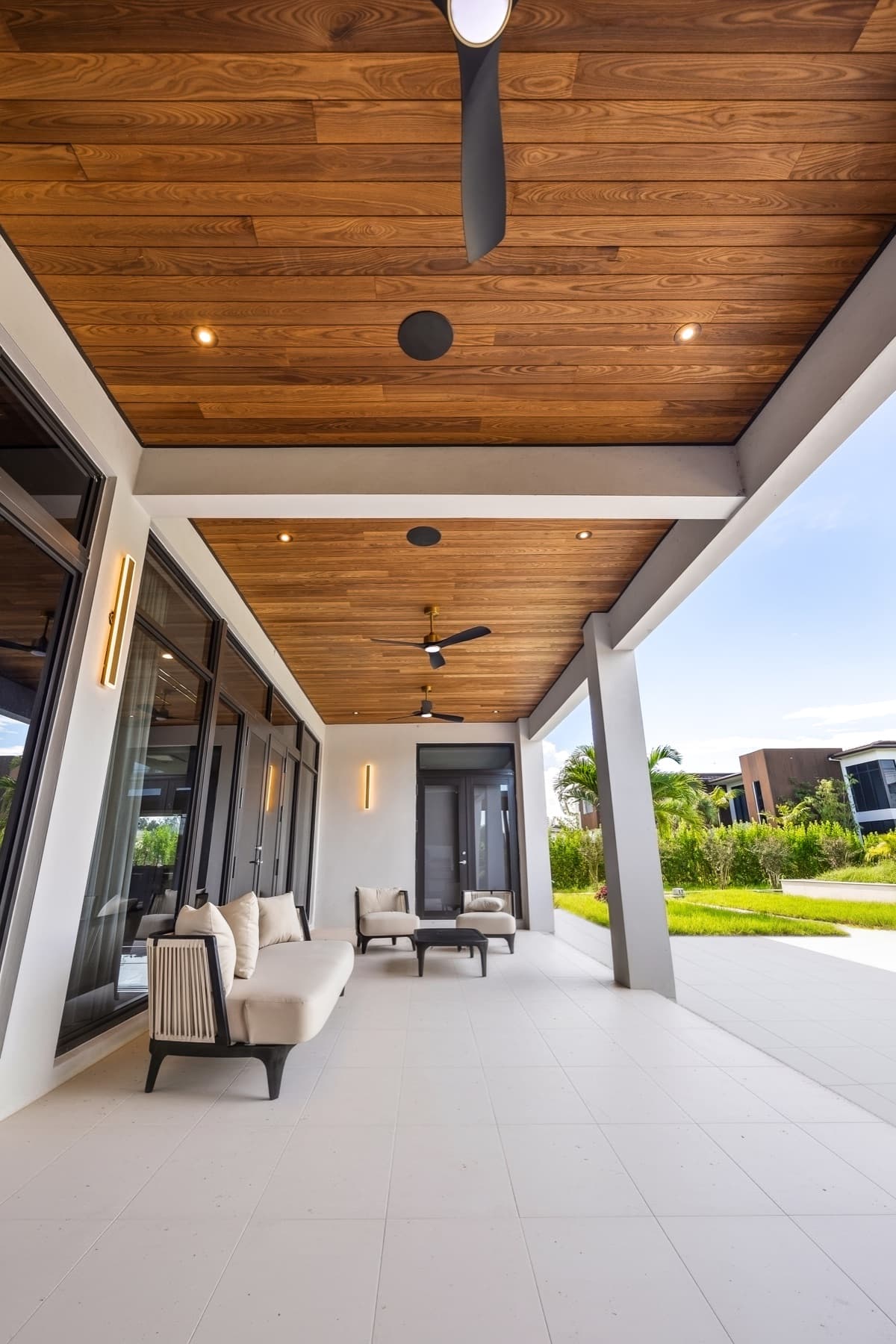
Understanding Honolulu's Climate and Its Impact on Porch Ceilings
Honolulu's climate is characterized by warm temperatures year-round and relatively high humidity, especially during the wetter months. These conditions can affect wood products differently than in drier climates. Materials need to resist moisture fluctuations without excessive warping, cracking, or susceptibility to biological degradation.
Proper ventilation is crucial for porch soffits to allow air circulation and prevent heat and moisture buildup in the roof cavity. While the ceiling material itself doesn't provide ventilation, its compatibility with a well-designed soffit system is key to long-term performance and indoor comfort.
Material Spotlight: Thermally Modified Wood for Coastal Exposure
Thermally modified wood offers enhanced stability and durability, making it a suitable option for porch ceilings and soffits in coastal environments like Honolulu. This modification process involves heating wood to high temperatures in a controlled environment, which alters its cellular structure. The result is wood with reduced moisture absorption and increased resistance to decay and insect activity.
Options like Scandinavian Thermally Modified Wood, including Ayous and Ash, provide a range of aesthetic choices from Nordic character to clean grain for contemporary designs. These materials are lighter than some traditional hardwoods, which can be advantageous for overhead applications. They are designed to maintain their form and appearance even with exposure to humid conditions. Thermally modified wood can be left unfinished to age naturally or can be finished to achieve a specific look.
Explore thermally modified wood options: /thermally-modified-wood/scandinavian
Hardwood Selections: Beauty and Durability
Brazilian hardwoods such as Ipe, Cumaru, Garapa, Angelim, Jatoba, and Tigerwood are known for their natural density, strength, and inherent resistance to decay and insects. These characteristics make them robust choices for porch ceilings and soffits, even in demanding climates. Their rich, natural colors can add a touch of warmth and luxury to any outdoor living space.
Ipe and Cumaru are recognized for their exceptional durability and deep brown tones. Garapa offers a golden hue that can brighten a porch area. Angelim, Jatoba, and Tigerwood also provide distinct grain patterns and color variations, allowing for diverse design possibilities. When considering hardwoods, it's important to understand that they may undergo color changes over time, especially if exposed to UV light without a protective finish. Regular maintenance, such as cleaning and reapplication of appropriate finishes, can help preserve their appearance.
Norx Composite: A Low-Maintenance Alternative
For those seeking a low-maintenance option, Norx composite ceiling and soffit materials present an alternative. Norx products are engineered to resist moisture, fading, and pests, reducing the need for frequent upkeep. This can be particularly appealing in Honolulu where consistent humidity might otherwise accelerate the weathering of some natural materials.
Norx composite materials are available in various colors and finishes, including options that mimic the look of natural wood, such as Oxford Gray. This allows for design flexibility while offering the practical benefits of a composite material. The uniform appearance and stability of composite boards can provide a consistent aesthetic over time.
Worked Example: Selecting Materials for a 10'x12' Porch in Honolulu
Consider a hypothetical 10-foot by 12-foot porch in Honolulu. The homeowner desires a durable, attractive ceiling that requires minimal maintenance, with integrated lighting. The existing roof structure includes a well-ventilated soffit system.
Option 1: Thermally Modified Ayous. This material offers good stability and can be finished or left to weather to a silver-gray patina. For a 120 square foot area, assuming 5.5-inch wide boards with minimal waste for cuts, approximately 260 linear feet of material would be needed. This choice balances natural beauty with enhanced performance for the local climate. The lighter weight of Ayous is also a practical consideration for overhead installation.
Option 2: Norx Composite. If the priority is minimal maintenance and consistent color, Norx composite in Oxford Gray could be selected. For the same 120 square foot area, the material calculation would be similar. Norx offers a uniform appearance and is designed to resist environmental factors without needing regular sealing or staining, which could be a significant advantage in Honolulu's climate. Compatibility with recessed lighting fixtures would need to be verified with the specific Norx product specifications.
In either case, verifying exact board lengths available and planning cuts to minimize waste is essential. Always account for a waste factor, typically 5-10%, depending on the complexity of the cuts and the layout.
Before you order
- Consider the exposure: Is the porch fully covered or partially exposed to rain and sun?
- Evaluate desired aesthetic: Do you prefer natural wood grain, a specific color, or a composite look?
- Assess maintenance commitment: Are you willing to perform regular cleaning and refinishing, or do you prefer low-maintenance options?
- Verify ventilation needs: Does the existing roof structure have adequate soffit ventilation, and will the chosen material allow for it?
- Plan for integrated features: Will you be adding lighting, fans, or other fixtures that require specific material compatibility?
- Check local building considerations: Are there any specific local guidelines or preferences for porch ceiling materials in Honolulu, HI?
- Review material specifications: Confirm dimensions, installation requirements, and suitability for humid, coastal environments.
Confirm installation details, approved uses and warranty terms in the current instructions for the exact product and profile. Your installer should verify the substrate, structure and applicable project requirements.
This is a planning guide for projects in Honolulu, HI. Ask our team to confirm availability, delivery to your ZIP code and which branch can support your order.
Questions to help you decide
What are the best materials for a porch ceiling in a humid climate like Honolulu?
For humid climates, materials with good dimensional stability and resistance to moisture, decay, and insects are ideal. Thermally modified wood (like Ayous or Ash), dense tropical hardwoods (such as Ipe or Cumaru), and composite materials (like Norx) are all suitable options due to their enhanced durability and performance in such conditions.
How does proper soffit ventilation relate to my porch ceiling choice?
While the porch ceiling material itself doesn't provide ventilation, it's critical that the soffit system above it allows for adequate airflow into the roof cavity. Proper soffit ventilation helps prevent heat and moisture buildup, which can contribute to mold, mildew, and premature deterioration of roof components. Ensure your chosen ceiling material is compatible with your ventilation strategy.
Can I leave wood porch ceiling materials unfinished in Honolulu?
Some wood species, particularly thermally modified wood and dense hardwoods, can be left unfinished to naturally weather to a silver-gray patina. However, this process will vary depending on exposure to sun and rain. Leaving wood unfinished may also require more frequent cleaning to prevent mildew growth in humid conditions. Applying a suitable finish can help maintain the original color, offer additional protection, and simplify cleaning.
Plan Your Honolulu Porch Ceiling Project
Ready to select materials for your porch ceiling or soffit project in Honolulu, HI? Request a material quote with your project dimensions, desired profile, and ZIP code to confirm current availability and service options. Visit /contact-us to get started.
Request a material quote →