Evaluating Your Existing Deck Frame for Renovation
Before selecting your new hardwood decking, a thorough inspection of your existing deck frame is crucial. This step determines whether the current substructure can adequately support the new decking material and if any components require repair or replacement.
Check for signs of rot, insect damage, or structural instability in joists, beams, and support posts. Pay close attention to areas prone to moisture accumulation, such as ledger boards and joist hangers. Even if the frame appears sound, it's wise to consult with a local professional to ensure compliance with current building codes and to confirm the frame's capacity for denser hardwood materials.
Choosing Hardwood Species for Honolulu's Climate
Honolulu's tropical climate, characterized by high humidity, sun exposure, and occasional heavy rainfall, demands decking materials that offer natural resistance to moisture, insects, and decay. Hardwood species like Ipe and Cumaru are frequently chosen for their inherent durability.
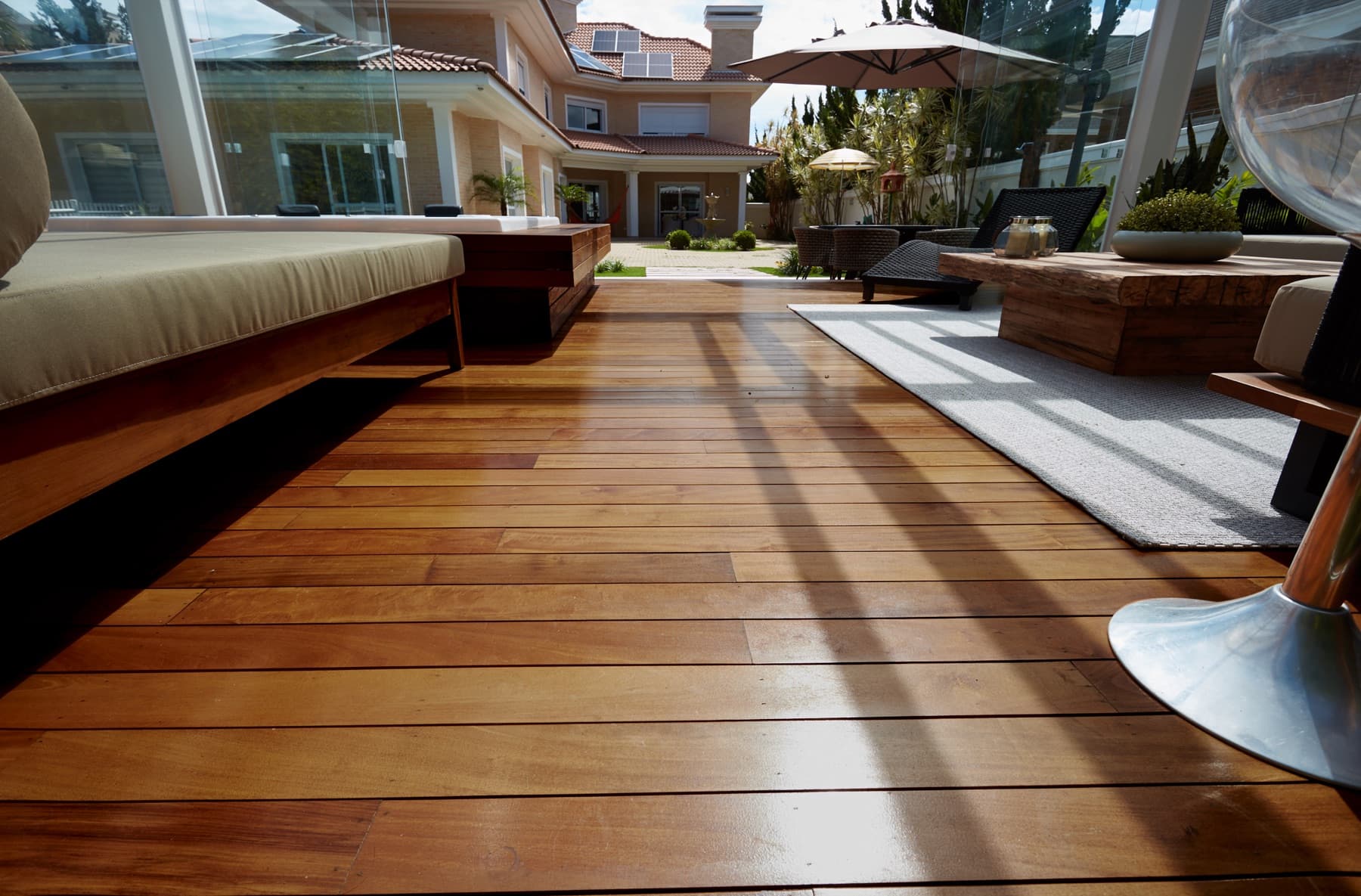
Ipe, also known as Brazilian walnut, is renowned for its density and natural resistance to rot, insects, and mold. It maintains minimal movement post-installation and weathers well after moisture exposure. Cumaru is another very durable tropical hardwood, resistant to termites and weather changes, offering stiffness, strength, and extreme hardness. Both species are dense enough that rot, termites, and marine borers find nowhere to start, providing defense without chemical pressure treatment. These characteristics make them suitable for coastal environments where salt air and spray are factors. While they can be left to weather to a silvery-gray patina, an annual wash is recommended, and an optional oil application can help maintain their original warm tones.
For specific product details, consider Ipe (Handroanthus spp.) and Cumaru (Dipteryx odorata).
Other hardwood species like Garapa, Tigerwood, Angelim, and Jatoba also offer distinct advantages in terms of appearance and durability, providing a range of options to match your aesthetic preferences and project requirements. Each species presents a unique grain pattern and color, from reddish-brown to olive-brown in Ipe, to the distinctive figure of Tigerwood, allowing for diverse design possibilities.
Consider the appearance you desire: will you oil the deck to maintain its rich color, or allow it to naturally silver over time? Both options offer structural integrity, but the aesthetic outcome differs significantly.
Planning for Ventilation and Drainage
Proper ventilation and drainage are critical for the longevity of any deck, especially in humid climates. Ensure that your deck design allows for adequate airflow beneath the deck boards to prevent moisture buildup, which can lead to mildew and rot, even with naturally resistant hardwoods.
Check that the spacing between deck boards is consistent and appropriate for the chosen hardwood species, allowing water to drain effectively and promoting air circulation. Review the existing substructure for any areas where water might pool and address these before installing new decking.
Calculating Material Needs: A Hypothetical Example
Accurate measurement and calculation are essential for ordering the correct quantity of hardwood decking. Let's consider a hypothetical deck renovation project in Honolulu, HI, where an existing lanai measures 10 feet by 15 feet.
First, determine the total area: 10 ft * 15 ft = 150 square feet. If you plan to use Ipe decking boards, which are often available in various dimensions such as 1x6 (nominal size, actual typically 3/4" x 5.5"), you will need to calculate the linear footage. For a 150 sq ft deck using 5.5-inch wide boards, the calculation is as follows:
Convert board width to feet: 5.5 inches / 12 inches/foot = 0.4583 feet. Linear feet needed per square foot: 1 / 0.4583 = 2.18 linear feet. Total linear feet for 150 sq ft: 150 sq ft * 2.18 linear feet/sq ft = 327 linear feet.
It is standard practice to add 10-15% for waste, cuts, and potential future repairs. For this project, adding 15% waste: 327 linear feet * 1.15 = 376.05 linear feet. Therefore, you would need to purchase approximately 377 linear feet of 1x6 Ipe decking. Remember that boards are sold in specific lengths (e.g., 3-24 ft for Ipe), so you will need to plan your cuts to minimize waste and account for the specific lengths available. This calculation is for the deck surface only; additional material will be needed for fascia, stairs, or other trim elements. Always confirm actual dimensions and availability with your supplier.
Considering Fastening Systems and Finishing Options
The choice of fastening system impacts both the aesthetics and performance of your hardwood deck. Hidden fastening systems create a clean, unblemished surface, while face-fastening provides a visible, secure attachment.
Hardwood decking can be left untreated to achieve a natural silvery-gray patina over time, or treated with a UV-blocking sealer or oil to preserve its original color. For example, Ipe's color ranges from reddish-brown to olive-brown. If you prefer to maintain this rich tone, an annual application of a suitable oil is recommended. Consult product documentation for specific recommendations on compatible finishes and sealers for your chosen hardwood species.
Before you order
- Inspect existing deck frame for integrity, rot, and insect damage.
- Consult a local professional for structural assessment and code compliance.
- Select hardwood species (e.g., Ipe, Cumaru) based on durability, appearance, and climate suitability.
- Plan for adequate ventilation and drainage beneath the deck.
- Measure deck dimensions accurately and calculate linear footage, adding 10-15% for waste.
- Choose between hidden or face-fastening systems.
- Decide on finishing (oiled vs. natural patina) and select compatible products.
- Confirm product availability and lead times for your chosen hardwood profiles and lengths.
Confirm installation details, approved uses and warranty terms in the current instructions for the exact product and profile. Your installer should verify the substrate, structure and applicable project requirements.
This is a planning guide for projects in Honolulu, HI. Ask our team to confirm availability, delivery to your ZIP code and which branch can support your order.
Questions to help you decide
How does Honolulu's climate affect hardwood decking?
Honolulu's high humidity, sun exposure, and rainfall require hardwood decking that is naturally resistant to moisture, rot, and insects. Species like Ipe and Cumaru are well-suited due to their density and inherent durability, which helps them withstand these conditions.
Can I reuse my existing deck frame for hardwood decking?
You may be able to reuse your existing deck frame, but it's essential to have it thoroughly inspected by a professional. The frame must be structurally sound, free of rot or insect damage, and capable of supporting the denser hardwood decking materials while adhering to local building codes.
What maintenance does hardwood decking require in a tropical environment?
Hardwood decking in Honolulu generally requires an annual wash to remove dirt and grime. If you wish to preserve the wood's original color, an annual application of a UV-blocking sealer or appropriate oil is recommended. Otherwise, the wood will naturally weather to a silvery-gray patina with no structural difference.
Ready to Transform Your Honolulu Deck?
Request a material quote for your project. Provide your project dimensions, desired hardwood profile, and ZIP code to confirm current availability and service options for your Honolulu, HI renovation.
Request a material quote →