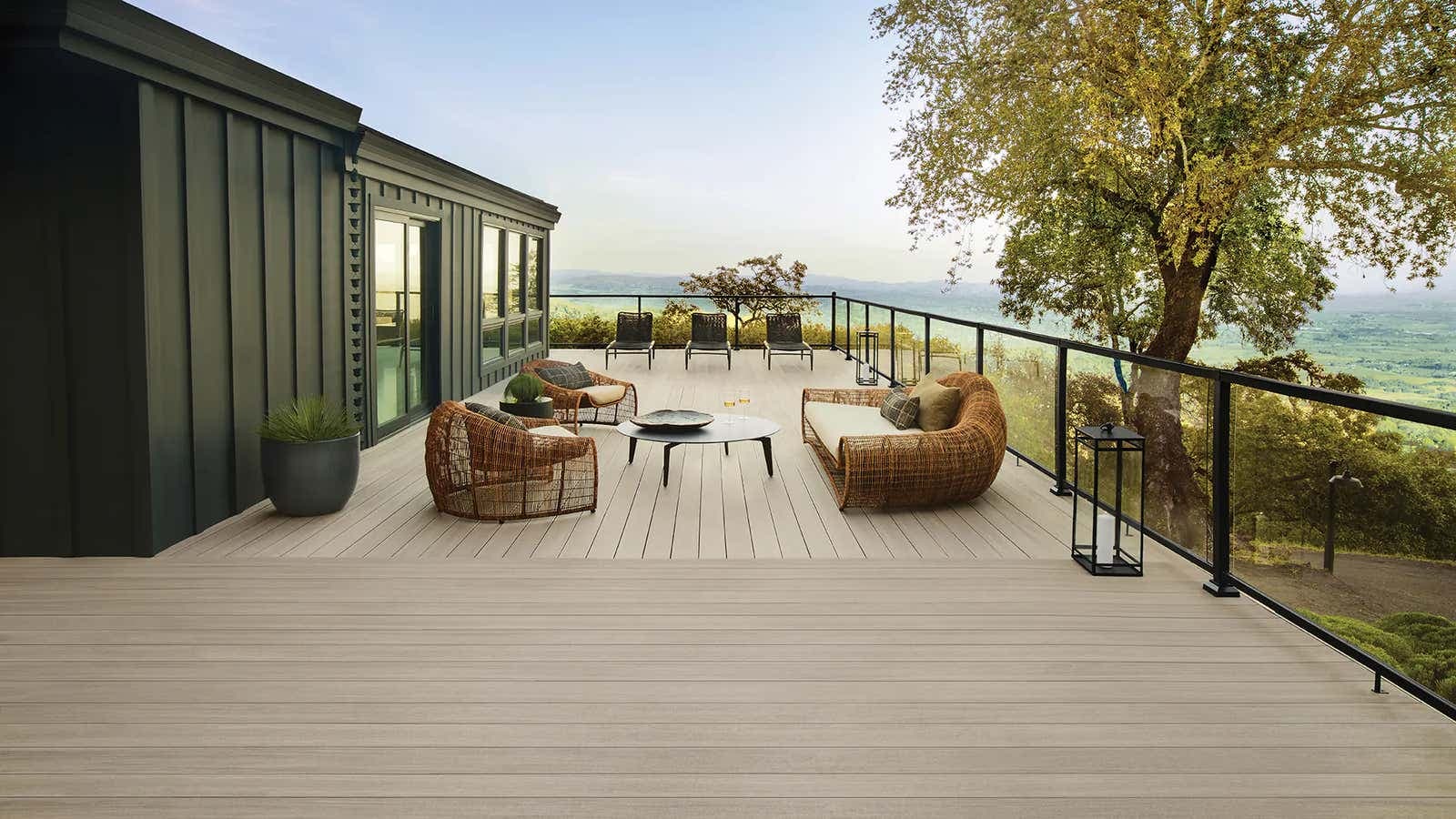
Why Composite Decking for Compact Honolulu Spaces?
Composite decking offers several advantages that are particularly relevant for compact outdoor areas in Honolulu. Unlike natural wood, composite boards are engineered for consistency in color and grain, which can be beneficial in small spaces where visual uniformity helps create a sense of order and openness. Many composite options are designed to resist fading and staining, a key factor in sun-drenched environments. This material also eliminates the need for regular oiling or staining, reducing ongoing maintenance tasks that can be difficult in a confined area.
The resistance of capped composite shells to humidity and salt air makes them a suitable choice for coastal locations like Honolulu. This durability can translate to a longer aesthetic life with less effort, allowing you to enjoy your compact outdoor space without constant upkeep. The availability of various profiles and colors from brands like Trex, TimberTech, and Fiberon allows for design flexibility, even within limited dimensions.
Choosing composite decking can also align with environmental considerations, as some products, such as certain Trex lines, incorporate up to 95% recycled content, made from reclaimed sawdust and plastic film.
Planning Your Layout for Limited Space
For compact outdoor spaces, optimizing the layout is crucial. Consider how the decking will integrate with existing structures, railings, and any built-in features. For a small lanai or balcony, a simple, straight board layout can make the space feel larger and less cluttered. If the area is extremely narrow, running boards parallel to the longest dimension can enhance the perception of length. Avoid overly complex patterns that might visually chop up the space.
Think about the primary function of the space. Will it be for a small bistro set, a reading nook, or simply to enhance an entryway? This will influence board direction and any potential borders. Picture-frame borders can define the edges of a compact deck, providing a clean finish and sometimes allowing for easier board cuts if the main area is not perfectly square.
Selecting Board Profiles and Colors
In a compact space, the choice of board width and color can significantly impact the overall feel. Wider boards can sometimes make a small area feel more expansive by reducing the number of visible seams. Conversely, very narrow boards might create a busier look. Review the available profiles from manufacturers like Trex, TimberTech, and Fiberon to see which widths best suit your design vision.
Lighter colors tend to reflect light, which can help a small space feel brighter and more open. Cooler-underfoot options are also available from various manufacturers, which can be a practical consideration for decks exposed to the Honolulu sun. While color consistency is a hallmark of composite decking, ensure you review physical samples to understand how the chosen hue will appear in different lighting conditions and against your home's exterior.
Access and Installation Considerations in Honolulu
Installing composite decking in a compact Honolulu space often involves unique logistical challenges. Limited access to backyards, balconies, or rooftop areas can affect material delivery and staging. Consider whether boards will need to be carried through narrow gates, up stairs, or lifted. Planning for jobsite access in advance can prevent delays and additional costs.
The structural integrity of the existing subframe is paramount, especially for balconies or elevated lanais. Always confirm that the current framing can adequately support the chosen composite decking, as different profiles and brands may have varying weights. Proper ventilation beneath the deck is also important, particularly in humid climates, to prevent moisture buildup. Consult the manufacturer's installation guidelines for specific spacing requirements between boards and for adequate airflow.
Worked Example: A 6x10 Foot Balcony Deck
Consider a hypothetical 6-foot by 10-foot balcony in Honolulu, designed for a small seating area. We'll use composite decking boards with nominal dimensions of 5.5 inches wide and 12 feet long. The goal is a simple, clean layout.
To cover the 6-foot width, we would need 6 feet / 5.5 inches = 72 inches / 5.5 inches = approximately 13.09 boards. Since we need full boards, we'd plan for 14 boards across the 6-foot dimension to ensure full coverage and account for any edge cuts. For the 10-foot length, we can use the 12-foot boards with minimal waste, cutting each board to 10 feet.
Total required boards: 14 boards (for width) * 1 (for length, as 12 ft boards cover 10 ft) = 14 boards. If we add a picture frame border, we might need additional boards. For a simple perimeter, two 12-foot boards cut to 10 feet each for the long sides, and two 6-foot pieces cut from a single 12-foot board for the short sides, would be sufficient. This adds 3 more boards (2 for long sides, 1 for short sides), bringing the total to 17 boards. Always factor in extra for cuts and potential errors.
This example assumes a standard joist spacing that supports the chosen composite board and proper fastening. Always refer to manufacturer specifications for exact spacing and installation details specific to the product.
Before you order
- Confirm the existing structure can support composite decking.
- Measure your compact space precisely, noting any obstructions.
- Choose a composite decking collection and color that complements your home and climate.
- Consider board width and how it impacts the visual scale of your space.
- Plan your layout to minimize cuts and enhance the sense of space.
- Verify manufacturer-recommended joist spacing and ventilation requirements.
- Account for delivery and jobsite access challenges in a compact Honolulu setting.
- Gather samples to see how colors appear in your specific lighting conditions.
Confirm installation details, approved uses and warranty terms in the current instructions for the exact product and profile. Your installer should verify the substrate, structure and applicable project requirements.
This is a planning guide for projects in Honolulu, HI. Ask our team to confirm availability, delivery to your ZIP code and which branch can support your order.
Questions to help you decide
Is composite decking suitable for humid, coastal climates like Honolulu?
Yes, many composite decking products are engineered with capped shells that resist moisture, salt air, and UV exposure. Brands like Trex, TimberTech, and Fiberon offer collections designed for durability in challenging outdoor environments, making them a practical choice for Honolulu's coastal conditions. Regular cleaning with soap and water is typically the only maintenance required.
How do I choose the right color for a small deck in a sunny location?
Lighter colors can help a compact space feel more open and brighter by reflecting sunlight. Additionally, some composite decking lines offer 'cooler-underfoot' technology, which can be a significant benefit in sunny Honolulu. Always review physical samples in your actual outdoor space to see how the color interacts with natural light throughout the day.
What maintenance is required for composite decking in a compact space?
Composite decking is known for its low maintenance. Typically, it only requires an annual wash with soap and water to remove dirt and debris. Unlike wood, it does not need sanding, staining, or oiling. This minimal upkeep is particularly advantageous for compact spaces where extensive maintenance tasks might be cumbersome.
Start Planning Your Compact Outdoor Space with Composite Decking
Ready to transform your lanai, balcony, or small patio in Honolulu? Request a material quote for composite decking by providing your project dimensions, desired profile, and ZIP code. We can help confirm current availability and service options for your project.
Request a material quote →