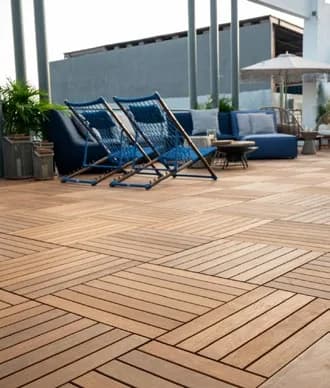
Assess Your Rooftop or Balcony Structure
Before selecting any deck tile, it is crucial to understand the existing structure of your rooftop or balcony. This includes reviewing the waterproofing membrane, the substrate material (often concrete), and the load-bearing capacity. These elements dictate the type of deck tile system that can be safely installed.
For rooftops, verify the condition of the roofing membrane. Any deck tile installation must not compromise its integrity or prevent access for future repairs. Balconies typically have a finished concrete slab with a waterproof coating. Ensure this coating is intact and drains properly before adding any new layers.
Crucially, confirm the structural load capacity. Rooftops and balconies are designed to support a specific amount of weight. Adding deck tiles, pedestals, furniture, planters, and occupants increases this load. Consult with a structural engineer or your building's management to ensure the proposed system is within safe limits for your specific location in Honolulu.
Understanding Building Permissions and Regulations in Honolulu
Installing deck tiles on a rooftop or balcony in Honolulu may require permits or approval from your building's association or local authorities. This is especially true for changes that affect the exterior appearance, structural load, or waterproofing of the building.
Before purchasing materials, contact your building's management or homeowner's association to understand their specific rules regarding rooftop or balcony modifications. They may have guidelines on materials, installation methods, and even color palettes. For larger projects, or those involving significant changes, consult with the City and County of Honolulu Department of Planning and Permitting to determine if a building permit is necessary. Ignoring these steps could lead to costly rework or removal.
Door Thresholds and Drainage Considerations
A critical measurement for any elevated outdoor space is the height of your door thresholds. The finished height of your deck tile system, including any pedestals or support structures, must be below the door threshold to prevent water intrusion into the interior. Leave a sufficient gap for proper drainage and to accommodate any slight movement or settling.
Effective drainage is essential on rooftops and balconies to prevent water pooling, which can damage the underlying structure and create slippery surfaces. Ensure that the deck tile system allows water to flow freely to existing drains. If using a pedestal system, verify that water can drain beneath the tiles and reach the roof drains without obstruction. In Honolulu's climate, managing rainwater effectively is paramount for longevity and safety.
Choosing Deck Tile Materials for Honolulu's Climate
The tropical climate of Honolulu, with its humidity, sun exposure, and occasional heavy rains, influences the best choice of deck tile material. Hardwood deck tiles are a popular option, offering durability and a natural aesthetic.
Ipe deck tiles are known for their deep chocolate tones and exceptional hardness. This density contributes to their resilience in outdoor environments. Garapa deck tiles offer warm golden tones, providing a brighter look for terraces and balconies. Cumaru deck tiles feature rich reddish-brown grain, combining tropical hardwood character with strength. Each of these hardwood options can withstand the elements, but regular maintenance is recommended to preserve their appearance.
Lumber Plus offers deck tiles in two primary sizes: 12 x 12 inches and 24 x 24 inches. The 12 x 12 inch format is compact, suitable for smaller areas or layouts with more edges and transitions. The 24 x 24 inch format is larger, ideal for more open surfaces where fewer tile seams are desired.
Worked Example: Planning Deck Tiles for a 10' x 12' Balcony
Let's consider a hypothetical 10-foot by 12-foot residential balcony in Honolulu with a single sliding glass door. The existing concrete slab slopes gently towards a perimeter drain. The door threshold is 3 inches above the slab.
First, a structural review confirms the balcony can support the added weight.
We opt for 24 x 24 inch Ipe deck tiles (4 square feet per tile) for a clean, expansive look. We plan to use a low-profile pedestal system to ensure proper drainage and level the surface. We measure the actual tile thickness and verify the minimum height of the pedestal system.
For a 10' x 12' area, the total square footage is 120 square feet. Since each 24 x 24 inch tile covers 4 square feet, a simple area calculation suggests 30 tiles (120 sq ft / 4 sq ft per tile). However, we must account for cuts and a grid layout.
Across the 10-foot width (120 inches), we will need 5 tiles (120 inches / 24 inches per tile). Across the 12-foot length (144 inches), we will need 6 tiles (144 inches / 24 inches per tile). This results in a total of 30 full tiles (5 x 6). No cuts are needed for the main field, but we must consider edge conditions and any obstacles like columns or railings, which may require additional tiles for cuts. It's prudent to order an additional 5-10% for waste and future replacements.
Before you order
- Confirm structural load capacity with building management or engineer.
- Verify building association or local permit requirements.
- Measure door thresholds and plan for adequate drainage clearance.
- Assess existing waterproofing membrane condition.
- Choose deck tile material (Ipe, Garapa, Cumaru) based on aesthetic and climate suitability.
- Select deck tile size (12x12 or 24x24) based on area and desired visual.
- Plan for the entire assembly, including pedestals or support system.
- Calculate required tile quantity, including waste factor.
- Consider access to drains and maintenance of the underlying surface.
- Confirm maintenance requirements for your chosen hardwood.
Confirm installation details, approved uses and warranty terms in the current instructions for the exact product and profile. Your installer should verify the substrate, structure and applicable project requirements.
This is a planning guide for projects in Honolulu, HI. Ask our team to confirm availability, delivery to your ZIP code and which branch can support your order.
Questions to help you decide
Do I need to get a permit for deck tiles on my Honolulu balcony?
It depends on your building's rules and the scope of your project. For most residential balconies, minor cosmetic changes like adding deck tiles may not require a city permit, but your condominium association or building management will likely have specific guidelines or require approval. Always check with them first. For larger rooftop installations or projects involving structural changes, a permit from the City and County of Honolulu Department of Planning and Permitting might be necessary.
How do I ensure proper drainage with deck tiles on my rooftop?
Proper drainage is crucial for rooftops. Deck tiles should always be installed over a system that allows water to flow freely to existing roof drains. This often involves using a pedestal system, which elevates the tiles and creates a clear pathway for water underneath. Ensure that the pedestals do not obstruct drain openings and that the underlying roof membrane's slope is maintained. Regular cleaning of drains and beneath the tiles is also recommended.
What maintenance do hardwood deck tiles require in Honolulu?
Hardwood deck tiles like Ipe, Garapa, and Cumaru are durable, but their appearance can benefit from regular maintenance, especially in Honolulu's climate. To maintain their original color, you can apply a UV-protective oil finish annually or as needed. Without treatment, the wood will naturally weather to a silver-gray patina. Regular cleaning to remove dirt, leaves, and debris is also important to prevent mildew growth and ensure proper drainage.
Request a Material Quote for Your Honolulu Deck Tile Project
Ready to transform your rooftop or balcony? Provide your project dimensions, desired deck tile profile, and ZIP code to request a material quote. We can help confirm current availability and service options for your Honolulu project. Explore our selection of Ipe, Garapa, and Cumaru deck tiles today.
Request a material quote →