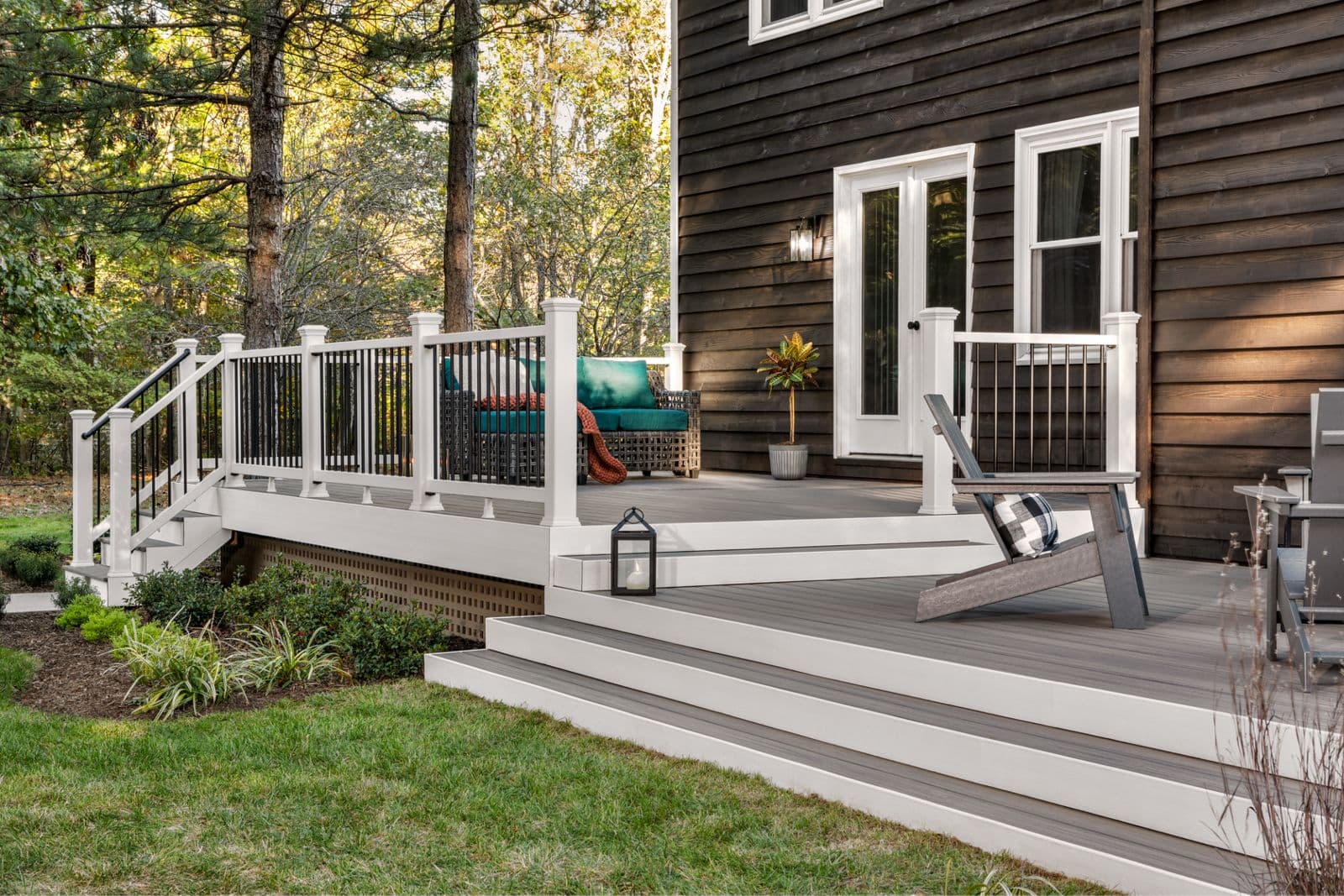
Understanding Trex Decking Collections
Trex offers several decking collections, each with distinct aesthetics and performance characteristics, all built around a core of 95% recycled materials and a protective shell. For a gathering space, factors like durability, aesthetic appeal, and maintenance are key. The lines generally differ in finish depth, color range, and warranty terms.
The Enhance® series, including Basics and Naturals, provides a lightweight option with traditional or multi-tonal, wood-grain inspired colors. Select® Earth Tones offer a mid-range option with high-performance shell technology and nature-inspired hues. For elevated aesthetics and the highest level of performance, the Transcend® series, available in Earth Tones and Tropical collections, features vibrant colors and a luxurious finish due to its three-sided shell protection. When planning your gathering space, consider the visual impact of these collections and how they integrate with your overall backyard design.
Matching fascia is also available to complete the look.
Designing for Flow and Function in a Gathering Space
A successful backyard gathering space needs to accommodate various activities, from dining to lounging. Consider the primary functions of your deck and how different zones might be designated. For example, a larger area might be dedicated to a dining table, while a smaller, more intimate section could host comfortable seating.
Think about pathways and traffic flow. How will people move between different areas of the deck and into the house or yard? Avoid layouts that create bottlenecks. Integrating steps or multi-level designs can help define spaces and add visual interest, but ensure they are wide enough and safely lit for evening use. If you plan for an outdoor kitchen or bar area, consider the proximity to utilities and the required clearances for appliances.
Coordinating Fascia and Edge Finishes
Fascia boards are essential for finishing the edges of your deck, creating a clean, polished look that conceals the substructure. Trex offers matching fascia boards for all its decking lines, ensuring a consistent aesthetic. The choice of fascia color should complement or match your main deck boards.
When planning, measure all exposed perimeter edges where fascia will be applied. This includes the outer rim joists and any stair risers. Proper installation of fascia boards is critical for the overall appearance and longevity of the deck. They are typically face-fastened, and it is important to use color-matched screws designed for composite materials to minimize visibility.
Fastening Systems for Trex Decking
Trex decking offers flexibility in fastening options: hidden clips or face screws. Hidden fastening systems, used with grooved-edge boards, create a smooth, fastener-free surface, which is often preferred for gathering spaces where bare feet are common. These clips install between boards, securing them to the joists from below, and help maintain consistent spacing.
Face-fastening, using square-edge boards, involves driving screws directly through the deck board into the joist. While visible, face screws can be color-matched to the decking for a less noticeable finish. This method is often used for perimeter boards or stairs where hidden fasteners may not be suitable. Regardless of the method, using fasteners specifically designed for composite decking is crucial to accommodate the material's expansion and contraction properties.
Hypothetical Project Example: A 12x16-foot Gathering Deck
Imagine a deck project for a 12-foot by 16-foot backyard gathering space, using Trex Transcend® Tropical decking in 'Island Mist'. The deck is a simple rectangle, elevated slightly from the ground, requiring fascia on all four sides. The homeowner desires a clean look with hidden fasteners.
For a 12x16-foot deck, assuming boards run the 16-foot length for minimal seams: the 12-foot width requires approximately 26 boards (12 feet / 5.5 inches per board = 26.18 boards, rounded up). Since boards are sold in 12, 16, and 20-foot lengths, we would need 26 boards at 16 feet each. For the perimeter fascia, a total of (12 + 12 + 16 + 16) = 56 linear feet is needed. Purchasing 20-foot fascia boards would require 3 boards (56 linear feet / 20 feet per board = 2.8, rounded up to 3). Always factor in a small percentage for cuts and waste.
This example assumes a standard joist spacing and a simple rectangular layout. Complex designs, diagonal layouts, or multiple levels will require more detailed calculations and potentially more waste. Always confirm board dimensions, available lengths, and fastening system requirements with current product specifications before ordering.
Before you order
- Identify primary activities for the gathering space (dining, lounging, grilling).
- Determine the desired aesthetic and select a Trex collection (Enhance, Select, Transcend).
- Choose a decking color that complements your home and landscape.
- Decide on board profile: grooved for hidden fasteners or square-edge for face-fastening.
- Measure the total square footage of the deck and linear footage for fascia.
- Calculate the number of deck boards needed, considering preferred lengths to minimize waste and seams.
- Calculate the number of fascia boards and confirm matching colors.
- Select the appropriate fastening system (hidden clips or color-matched face screws).
- Plan for any stairs, railings, or built-in features (benches, planters) and their material requirements.
- Consider under-deck ventilation to ensure proper airflow and material performance.
- Request a material quote with exact dimensions, chosen profiles, and your ZIP code.
Confirm installation details, approved uses and warranty terms in the current instructions for the exact product and profile. Your installer should verify the substrate, structure and applicable project requirements.
This is a planning guide for projects in Boston, MA. Ask our team to confirm availability, delivery to your ZIP code and which branch can support your order.
Questions to help you decide
What is Trex decking made from?
Trex composite decking is made from 95% recycled materials, primarily reclaimed wood fiber and plastic film. This composition gives it durability and resistance to common issues like splinters, rot, and insect damage, while also being a sustainable choice.
How do I maintain a Trex deck?
Trex decking is designed for low maintenance. Typically, a simple soap-and-water wash is sufficient to keep it clean and maintain its warranty. It does not require oiling, staining, or sealing, unlike traditional wood decks.
Can Trex decking be installed over an existing deck frame?
In some cases, Trex decking can be installed over an existing deck frame, but it's crucial to have the existing substructure inspected by a qualified professional. The frame must be structurally sound, meet current building codes, and have appropriate joist spacing for composite decking to ensure proper support and ventilation. Any damaged or unsuitable components of the old frame should be replaced.
Ready to Plan Your Trex Decking Project?
Request a material quote today with your project dimensions, desired Trex profile, and ZIP code to confirm current availability and service options for your backyard gathering space.
Request a material quote →