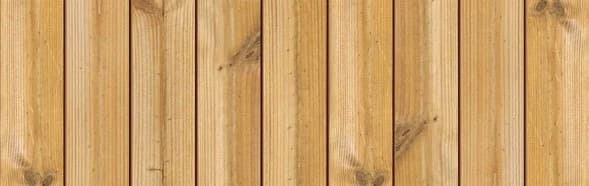
Understanding Scandinavian Thermally Modified Wood Samples
Scandinavian Thermally Modified Wood is known for its visible grain and warm color, achieved through a chemical-free modification process using heat and steam. This process enhances the wood's dimensional stability without introducing chemical preservatives. When you receive a sample, you are seeing a piece of this Nordic softwood selection, which naturally exhibits expressive grain patterns.
Samples typically represent the general tone and grain character. However, wood is a natural material, and variations will occur across a larger batch. The sample provides a baseline, but the full installation will feature a range of these natural characteristics. Keep this natural variation in mind as you evaluate. The material is suitable for various applications, including walls, ceilings, soffits, facades, and selected decking.
Your sample should ideally reflect the specific profile you are considering, as the profile's shape can influence how light interacts with the wood surface.
The Impact of Lighting on Appearance
Lighting is perhaps the most critical factor influencing how a wood sample appears. What looks perfect under the bright fluorescent lights of an showroom can look entirely different under natural daylight or the specific artificial lighting of your project space. Always view your samples in the exact lighting conditions they will experience in their final application.
For exterior applications, observe the sample at different times of day – morning, midday, and evening – and under various weather conditions, if possible. Direct sunlight will highlight the wood's warm tones and grain, while overcast conditions might reveal a more subdued, cooler appearance. For interior use, place the sample where it will be installed and evaluate it with both natural light from windows and any planned artificial lighting (e.g., recessed lights, lamps). The color temperature of your light bulbs (warm white, cool white) will significantly alter the wood's perceived hue.
Evaluating Texture and Profile Details
Beyond color, the texture and profile of the Scandinavian Thermally Modified Wood sample are important. Run your hand over the surface to feel the finish. The thermal modification process can result in a distinct surface feel. If you are considering a fluted or V-joint profile, notice how the grooves and edges catch the light and create shadow lines. These details contribute to the overall visual depth and character of the installed surface.
A small sample might not fully convey the impact of a repeating profile across a large area. For example, a Fluted #5 profile will create a more pronounced linear texture and shadow play than a flat S4S E4E board. Consider how these lines and textures will contribute to the architectural effect of your wall or ceiling.
Pairing Samples with Adjacent Materials
Wood surfaces rarely exist in isolation. They interact with surrounding materials like paint, stone, metal, or other types of siding. Bring samples of these adjacent finishes into proximity with your Scandinavian Thermally Modified Wood sample. Observe how the colors and textures complement or contrast each other.
For instance, the warm Nordic grain of Scandinavian Thermally Modified Wood might be enhanced by cool-toned stucco or a dark metal trim. Conversely, pairing it with other warm materials could create a different, perhaps more rustic, aesthetic. This comparative evaluation helps ensure a cohesive and harmonious design across your entire project. Remember that the chemical-free process and natural character of the wood mean its inherent warmth will be a dominant feature.
Worked Example: Selecting for a Covered Soffit
Consider a hypothetical project for a covered outdoor soffit measuring 10 feet by 20 feet. They have received two samples: one with a natural, unfinished appearance and another with a clear, UV-protective finish.
To make an informed decision, they take both samples to the project site. They place them against the existing light gray stucco wall and under the planned exterior recessed lighting. In the morning, the natural sample appears slightly brighter and more golden, while the finished sample shows a deeper, richer tone. By midday, with direct overhead sun, both samples brighten considerably, but the finished sample maintains more of its initial depth. In the evening, under the warm-toned recessed lights, both samples take on a cozy, inviting glow, with the natural sample’s grain slightly more pronounced.
They also observe the texture. The V-Joint profile creates subtle shadow lines that add visual interest, especially as the sun moves. They decide that for a covered soffit, where direct weathering is minimized, the natural, unfinished look provides the desired bright and airy aesthetic, allowing the wood's inherent character to shine without additional surface treatment. This decision is based on observing the samples in situ, rather than relying solely on showroom conditions.
For a 10 x 20 foot soffit, the area is 200 square feet. A 1x6 nominal board is actually closer to 5.5 inches wide. To cover a 20-foot length, you'd need roughly 200 / (5.5/12) = 436.36 linear feet, or approximately 437 linear feet of material, assuming minimal waste. If boards come in 16-foot lengths, you would need 437 / 16 = 27.3 boards. Rounding up to 28 boards would provide some allowance for cuts and potential waste. This calculation is a starting point and should be refined with a detailed cut plan and waste factor for the specific project.
Before you order
- View samples in different lighting conditions (natural, artificial, varying times of day).
- Evaluate samples against all adjacent materials (paint, stone, metal, other wood).
- Assess the sample's texture and how the chosen profile creates shadow lines.
- Consider the sample's size and how the pattern or grain might repeat over a larger area.
- Discuss potential appearance changes over time, especially for unfinished wood.
- Confirm the botanical species and origin match your expectations (Nordic softwood selection from Scandinavia).
- Verify the specific profile (e.g., V-Joint, Fluted #5, S4S E4E) and nominal size (e.g., 1 × 6, 5/4 × 6) of the sample.
- Understand the intended application for the profile (e.g., siding, ceilings, decking).
Confirm installation details, approved uses and warranty terms in the current instructions for the exact product and profile. Your installer should verify the substrate, structure and applicable project requirements.
Questions to help you decide
How large should my sample be?
While small samples are useful for initial color and texture evaluation, larger samples or mock-ups (at least 2-3 boards wide) provide a better representation of how the grain patterns and profile details will appear across a wider area. If possible, request the largest sample available to give you a more accurate visual.
Will the color of Scandinavian Thermally Modified Wood change over time?
Yes, like all natural wood, Scandinavian Thermally Modified Wood will undergo some changes in appearance over time, especially when exposed to UV light and weathering. Unfinished wood will gradually lighten and develop a silvery-gray patina. Applying a finish can help slow this process and maintain the initial warm tones, but regular maintenance will be required to preserve the finish.
Can I get samples of different profiles?
Each profile interacts with light differently and contributes a unique aesthetic to your project. Seeing these differences firsthand is crucial for making the best choice.
Ready to Plan Your Project?
Request a material quote with your project dimensions, exact profile, and ZIP code to confirm current availability and service options for Scandinavian Thermally Modified Wood. Explore our product pages for more information on specific profiles and applications: Scandinavian Thermally Modified Wood, Siding and Cladding, Thermally Modified Wood, NORX, Maximo Accoya.
Request a material quote →