Understanding Scandinavian Thermally Modified Wood
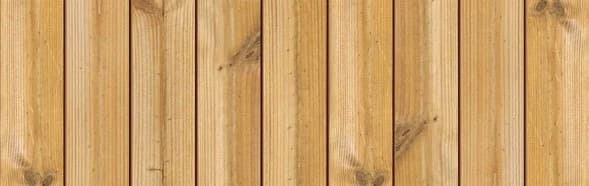
Scandinavian Thermally Modified Wood is a Nordic softwood selection that undergoes a heat and steam treatment process. This modification improves the wood's dimensional stability without the use of chemical preservatives. The process results in a material with an expressive grain and a warm, natural color, suitable for both interior and exterior applications.
Its enhanced stability makes it a candidate for outdoor features where traditional softwoods might be more prone to warping or movement when exposed to varying weather conditions. The chemical-free modification process is a key benefit for those seeking a more natural material choice for their outdoor living spaces. While the modification enhances stability, all wood exposed to the elements will experience some degree of weathering and color change over time, typically mellowing to a silver-gray if left unfinished.
Profiles and Their Application in Privacy Screens
Scandinavian Thermally Modified Wood is available in several profiles, each offering a different aesthetic and application suitability. For privacy screens, the choice of profile will influence the visual texture, light filtration, and overall design of the screen.
Common profiles include:
The gap allows for some air and light passage while maintaining privacy.
Fluted #5 (1 × 6 nominal size): Featuring a ribbed or fluted surface, this profile adds architectural texture and depth. It can create interesting visual effects as light hits the screen throughout the day, offering a more contemporary aesthetic.
S4S E4E (5/4 × 6 nominal size): This profile is smooth on four sides and eased on four edges, providing a versatile, clean-lined board. It can be used for a solid screen or spaced to create varying degrees of openness. Its thickness (5/4) may offer additional robustness for certain screen designs.
When selecting a profile, consider the desired level of visual privacy, the amount of light and air you wish to pass through, and the overall architectural style of your outdoor space. The 'Interior to exterior' benefit of this wood allows for a cohesive design if you are also using it on adjacent walls or ceilings.
Design Considerations for a Privacy Screen
Designing a privacy screen with Scandinavian Thermally Modified Wood involves more than just selecting the boards. Careful planning of the screen's structure, dimensions, and integration with the surrounding environment is essential.
Structure and Support: A privacy screen is a non-structural element, but it requires a robust support system to withstand environmental forces, particularly wind. The design of the posts, framing, and fastening methods must be engineered to securely hold the wood panels. Local building codes may have specific requirements for freestanding structures or those attached to existing buildings.
Orientation and Spacing: The orientation of the wood boards (horizontal or vertical) and their spacing will significantly impact the screen's appearance and function. Horizontal boards can create a sense of width, while vertical boards can emphasize height. Varying the spacing between boards can adjust the level of privacy and light penetration.
Finish and Maintenance: While Scandinavian Thermally Modified Wood is inherently durable due to the thermal modification process, applying a finish can help maintain its original color longer and provide additional protection against UV rays and moisture. If left unfinished, the wood will naturally weather to a silver-gray patina over time. Regular cleaning is recommended to remove dirt and mildew and preserve the wood's appearance.
Worked Example: Material Takeoff for a Privacy Screen
Let's consider a hypothetical privacy screen project: a freestanding screen, 8 feet long and 6 feet high, intended to partially block a view. We'll assume a practical coverage width of 5.5 inches per board, allowing for the joint.
Screen Dimensions: Length = 8 feet (96 inches), Height = 6 feet (72 inches)
For a horizontal board layout, where boards run along the 8-foot length:
Number of boards needed vertically: Screen Height / Board Coverage Width = 72 inches / 5.5 inches per board = 13.09. Round up to 14 boards.
Each board needs to be 8 feet long. Therefore, we need 14 boards, each 8 feet in length.
Total Linear Footage: 14 boards × 8 feet/board = 112 linear feet.
If boards are typically sold in standard lengths (e.g., 8, 10, 12, 16 feet), you would purchase the most efficient lengths. For 112 linear feet, you might purchase fourteen 8-foot boards or a combination like eleven 10-foot boards (110 linear feet, requiring two small additional pieces) or seven 16-foot boards (112 linear feet, with less cutting and fewer end joints). Always account for potential waste from cuts and select the next full board length.
This calculation is for the wood boards only. Additional materials for the support structure (posts, framing, fasteners) would need to be calculated separately based on the chosen design and engineering requirements.
This example assumes no spacing between boards beyond the inherent nickel gap. If additional spacing is desired, the number of boards would decrease, and the overall appearance would change.
Complementary Products and Considerations
When planning a privacy screen with Scandinavian Thermally Modified Wood, consider these complementary products and services:
Siding and Cladding: If your privacy screen is near a building, coordinating the wood choice with your siding or cladding can create a cohesive look. Explore our range of siding and cladding options.
Thermally Modified Wood: For other outdoor projects requiring similar durability and stability, our general selection of thermally modified wood offers various species and applications.
Brands like NORX or Maximo Accoya: These brands may offer alternative wood solutions with different characteristics, which might be suitable for specific design requirements or performance needs. NORX offers a range of thermally modified wood products, while Maximo Accoya is an acetylated wood product known for its exceptional durability.
Fasteners: The choice of fasteners is crucial for the longevity of your privacy screen. Stainless steel screws are typically recommended for exterior wood applications to prevent staining and corrosion. Consult product specifications for recommended fastener types and installation methods.
Finishes: While Scandinavian Thermally Modified Wood can be left to weather naturally, a clear or pigmented finish can enhance its appearance and offer additional protection. Select finishes specifically designed for exterior wood applications.
Always review the specific product documentation for installation guidelines, spacing recommendations, and approved fastening methods for the chosen profile and application.
Before you order
- Determine the primary purpose of the privacy screen (e.g., full privacy, partial screening, decorative accent).
- Measure the desired dimensions of the screen (length and height).
- Decide on the board orientation (horizontal or vertical) and any intentional spacing between boards.
- Plan the structural support system (posts, framing) to ensure stability against wind and other forces.
- Consider how the screen will integrate with existing landscaping or structures.
- Evaluate the need for a protective finish or if natural weathering is desired.
- Calculate the quantity of wood boards needed, accounting for cuts and potential waste.
- Identify suitable fasteners for exterior thermally modified wood applications.
- Confirm any local building code requirements for privacy screens or similar outdoor structures.
Confirm installation details, approved uses and warranty terms in the current instructions for the exact product and profile. Your installer should verify the substrate, structure and applicable project requirements.
Questions to help you decide
Can Scandinavian Thermally Modified Wood be painted or stained?
Yes, Scandinavian Thermally Modified Wood can be painted or stained. Applying a finish can help maintain its original color, protect it from UV exposure, and provide additional moisture resistance. If left unfinished, the wood will naturally weather to a silver-gray patina over time. Always use exterior-grade paints or stains formulated for wood, and follow the manufacturer's application instructions.
How does thermal modification improve the wood for outdoor use?
Thermal modification involves heating the wood to high temperatures in a controlled environment, often with steam. This process alters the wood's cellular structure, reducing its ability to absorb moisture. This reduction in moisture absorption leads to significantly improved dimensional stability, meaning the wood is less prone to warping, swelling, or shrinking when exposed to changes in humidity and temperature. It also enhances the wood's resistance to decay, making it more suitable for outdoor applications without chemical preservatives.
What kind of maintenance is required for a Scandinavian Thermally Modified Wood privacy screen?
Maintenance for a Scandinavian Thermally Modified Wood privacy screen depends on whether it's finished or left natural. If unfinished, periodic cleaning to remove dirt, mildew, and other debris is generally sufficient. If a finish is applied, maintenance will involve cleaning and re-applying the finish according to the product manufacturer's recommendations, typically every few years, to preserve its appearance and protective qualities. Regular inspection for any structural issues or loose fasteners is also advised for any outdoor wood structure.
Ready to Plan Your Scandinavian Thermally Modified Wood Privacy Screen?
Request a material quote with your project dimensions, desired profile, and ZIP code to confirm current availability and service options. Our team can help you identify the right quantities and profiles for your outdoor project.
Request a material quote →