Understanding the Natural Character of Scandinavian Thermally Modified Wood
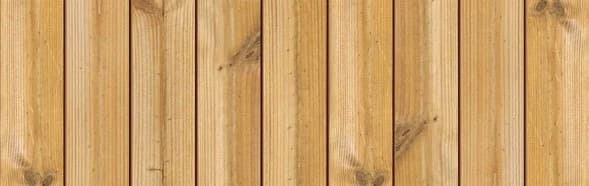
Scandinavian Thermally Modified Wood is derived from a selection of Nordic softwoods, chosen for their expressive grain and consistent structure. The thermal modification process, which uses heat and steam, enhances the wood's stability without introducing chemical preservatives. This process also imparts a warm, consistent color throughout the wood, which can range from a light golden brown to a richer caramel tone, depending on the specific timber and modification intensity.
The visible grain patterns are a hallmark of its natural character. Unlike some engineered materials that mimic wood, Scandinavian Thermally Modified Wood retains the organic lines, knots, and textures that are inherent to natural timber. This provides a surface that feels authentic and visually dynamic, making it suitable for architectural walls, ceilings, soffits, and siding where a natural aesthetic is desired. The 'Natural - warm Nordic grain' tone described in its properties highlights this core appeal.
When considering a natural look, it's important to appreciate that wood is a natural product and will exhibit variations. These variations are part of its appeal and contribute to the unique character of each installation. Expect to see slight differences in grain intensity and color across boards, which will blend into a cohesive, natural appearance once installed.
Profile Options for a Natural Aesthetic
The choice of profile significantly influences the final look of your installation. Scandinavian Thermally Modified Wood is available in several profiles, each offering a different visual texture and shadow line that can enhance or temper its natural appearance. For a clean, modern natural look, profiles that emphasize the board's length and grain are often preferred.
It creates a subtle V-shaped groove or a narrow gap between boards, defining each piece while allowing the wood's natural grain to dominate. This profile can provide a classic, clean aesthetic that highlights the individual character of each board.
For a more contemporary natural design, the "Fluted #5" profile (nominal size 1 × 6) is designed for architectural walls and ceilings. Its linear flutes introduce a textured surface that interacts with light, creating dynamic shadows that emphasize the wood's natural depth and warmth. This can be particularly effective in spaces aiming for a sophisticated yet organic feel.
The "S4S E4E" (Surfaced Four Sides, Eased Four Edges) profile (nominal size 5/4 × 6) is a versatile option for siding, ceilings, and decking. Its smooth, eased edges present a clean, substantial look, allowing the natural grain and color of the thermally modified wood to be the primary focus without strong shadow lines or complex patterns. This profile is often selected when a minimalist, unadorned natural appearance is desired.
Worked Example: Designing a Natural Siding Elevation
Consider a hypothetical residential project: a single-story home with an 8-foot-high wall section, 20 feet long, designed to feature Scandinavian Thermally Modified Wood siding for a natural look. The goal is to achieve a subtle, continuous aesthetic that emphasizes the wood's inherent character.
Each board has a face width of approximately 5.5 inches (accounting for the joint).
**Step 1: Calculate the total linear footage required.** Total wall area = 8 feet (height) × 20 feet (length) = 160 square feet. To cover 160 square feet with boards that have a 5.5-inch (0.458-foot) face width, we need: 160 sq ft / 0.458 ft (width) = approximately 349.34 linear feet.
**Step 2: Account for waste.** It is prudent to add a waste factor, typically 10-15% for siding projects, to account for cuts, defects, or future repairs. For a natural look, minimizing visible cuts and optimizing board lengths can be important. Let's use a 10% waste factor: 349.34 linear feet × 1.10 = 384.27 linear feet.
**Step 3: Determine board lengths and purchase quantity.** Assume boards are available in 8-foot, 12-foot, and 16-foot lengths. To minimize cuts and maintain a continuous natural appearance, longer boards are often preferred for siding. For a 20-foot wall, using 12-foot and 8-foot boards or two 10-foot cuts from a 20-foot equivalent (if available) would reduce end joints.
If we aim for horizontal installation, a 20-foot run would require two 10-foot pieces per course (if available), or one 12-foot and one 8-foot piece, with a single butt joint. With an 8-foot wall height, this means 8 feet / 0.458 feet per board = approximately 17.47 courses. Rounding up to 18 courses for full coverage and cutting.
Therefore, for 18 courses, each 20 feet long, we need 18 courses × 20 feet/course = 360 linear feet. Adding 10% waste: 360 linear feet × 1.10 = 396 linear feet.
To achieve 396 linear feet using 16-foot boards: 396 / 16 = 24.75 boards. Round up to 25 boards. This provides some flexibility for cuts and allows for a natural staggering of joints. This example demonstrates how specific product dimensions and project layout influence the total material order, emphasizing the importance of detailed planning to achieve the desired aesthetic while managing material use.
Maintaining the Natural Look: Finish and Weathering
One of the key decisions for a natural-look project is how to manage the wood's appearance over time. Scandinavian Thermally Modified Wood, like all natural wood, will undergo changes when exposed to the elements. Without a protective finish, it will gradually weather to a soft, silvery-gray patina.
If you desire to preserve the warm Nordic grain and original color, a high-quality exterior finish with UV inhibitors is recommended. These finishes help to slow the weathering process and maintain the wood's initial appearance. Regular reapplication, according to the manufacturer's instructions for the specific finish, will be necessary.
Conversely, if the silvery-gray patina of naturally weathered wood is part of your desired aesthetic, you may choose to leave the wood unfinished. This approach allows the material to age gracefully and develop a unique character over time, aligning with a truly organic and low-maintenance natural look. It is important to understand that this change is a natural process and not a defect. The choice between maintaining the original color and allowing natural weathering is a crucial design decision that influences the long-term visual character of your project.
Applications for a Natural Aesthetic
The versatility of Scandinavian Thermally Modified Wood allows it to be used in various applications to achieve a natural look, both indoors and out. Its "Interior to exterior" suitability and range of profiles support coordinated design across different areas.
For exterior facades, it brings warmth and natural texture, creating an inviting entrance or a harmonious blend with the surrounding landscape. On ceilings and soffits, the wood can extend the natural aesthetic upwards, providing visual continuity and a sense of depth. In interior spaces, it can be used for feature walls or ceiling panels to introduce organic elements and a calming atmosphere.
The material's enhanced dimensional stability from thermal modification contributes to its performance across these applications, making it a reliable choice for areas where consistent appearance and minimal movement are desired. When planning for a natural look, consider how the wood's inherent qualities can complement other materials and architectural elements in your design.
Before you order
- Do I prefer the original warm Nordic grain or a naturally weathered silvery-gray patina over time?
- Will this material be used for interior or exterior applications, or a combination?
- What is the total area to be covered, and what are the dimensions for accurate linear footage calculations?
- Have I accounted for waste (10-15%) in my material quantity estimate?
- If maintaining the original color, have I selected a suitable exterior finish with UV inhibitors and planned for reapplication?
- How will the natural variations in grain and color contribute to the overall aesthetic of my project?
Confirm installation details, approved uses and warranty terms in the current instructions for the exact product and profile. Your installer should verify the substrate, structure and applicable project requirements.
Questions to help you decide
Will Scandinavian Thermally Modified Wood look exactly like the sample?
As a natural wood product, Scandinavian Thermally Modified Wood will exhibit variations in grain patterns and color. While samples provide a general representation of the species and thermal modification, each board will have unique characteristics. These natural variations contribute to the authentic and organic appeal of the material.
How does thermal modification affect the natural appearance?
The thermal modification process uses heat and steam to enhance the wood's dimensional stability and imparts a more consistent, warm color throughout the material. This process does not alter the natural grain structure but can deepen the wood's inherent tones, providing a richer, more uniform natural appearance compared to untreated softwood.
Can I paint Scandinavian Thermally Modified Wood if I change my mind about the natural look?
While Scandinavian Thermally Modified Wood can be painted, doing so would cover its natural grain and color, which is often the primary reason for choosing this material for a natural look. If a painted finish is desired, it's generally more cost-effective to select a different wood product or substrate designed for opaque finishes. If you choose to paint, ensure proper surface preparation and use high-quality primers and paints suitable for exterior wood.
Request a Material Quote for Your Natural-Look Project
Ready to bring the natural beauty of Scandinavian Thermally Modified Wood to your home or commercial space? Provide your project dimensions, desired profile, and ZIP code to receive a material quote. We can also confirm current availability and service options for your location. Visit our product page for more details on Scandinavian Thermally Modified Wood or explore related products like our other siding and cladding options.
Request a material quote →