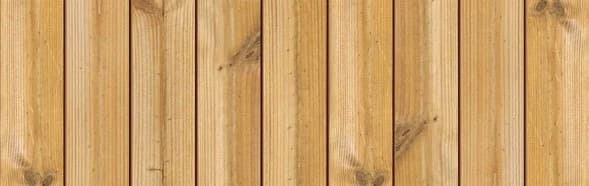
Understanding Scandinavian Thermally Modified Wood
Scandinavian Thermally Modified Wood is a Nordic softwood selection that undergoes a controlled heat and steam treatment. This process alters the wood's cellular structure, improving its stability and consistency. The result is a material with an expressive grain and a warm, natural tone, suitable for modern architectural surfaces.
A key benefit of thermal modification is that it enhances the wood's properties without introducing chemical preservatives. This makes it a suitable choice for environments where material composition is a consideration. It is applied across various architectural elements, from walls and ceilings to soffits and facades, offering coordination potential for design schemes that extend from interior to exterior spaces.
The wood's natural character and warm Nordic grain contribute to its appeal, making it a versatile option for creating inviting and sophisticated hospitality interiors.
Profiles for Hospitality Wall Applications
The profile of the wood planks significantly impacts the visual texture and installation method of a hospitality wall. Scandinavian Thermally Modified Wood is available in several profiles, each offering a distinct aesthetic.
The Fluted #5 profile (1 × 6 nominal size) offers a textured surface with linear detailing, ideal for architectural walls and ceilings where a more dynamic visual is desired. For a flat, smooth appearance, the S4S E4E profile (5/4 × 6 nominal size) can be considered, which is also used for siding, ceilings, and decking. The choice of profile should align with the desired design language of the hospitality space.
When planning, consider how the chosen profile will interact with lighting, as shadows and highlights can enhance or alter the perceived texture of the wall.
Finishing and Appearance Over Time
Scandinavian Thermally Modified Wood inherently possesses a warm, natural tone due to the thermal modification process. This color can deepen and evolve over time, especially if exposed to UV light. For hospitality applications, maintaining a consistent appearance or planning for a graceful aging process is important.
If a specific color or enhanced protection is desired, a finish can be applied. Clear sealers or stains can help to preserve the initial color or introduce a new hue, while also offering a layer of protection against daily wear in high-traffic areas. It is important to select finishes that are compatible with thermally modified wood and suitable for the interior environment, considering factors like VOC content and durability.
Regular cleaning and occasional reapplication of finishes, if used, will be part of the long-term maintenance plan to ensure the wall retains its intended appearance.
Worked Example: Feature Wall in a Hotel Lobby
Consider a hotel lobby requiring a 10-foot high by 16-foot wide feature wall behind the reception desk. The design calls for a contemporary look with subtle texture. The Fluted #5 profile of Scandinavian Thermally Modified Wood (1 × 6 nominal size, actual coverage approximately 5.125 inches per board considering a typical reveal) is selected for its architectural detail.
The total wall area is 160 square feet. To calculate the number of planks needed: First, convert the actual coverage to feet: 5.125 inches / 12 inches/foot = 0.427 feet. For a 16-foot wide wall, the number of planks needed horizontally is 16 feet / 0.427 feet/plank = 37.47 planks. This means 38 planks will be required to cover the width. Each plank needs to be 10 feet long for the height. Therefore, 38 planks of 10-foot length are needed. This is a total of 380 linear feet.
For purchase, planks are typically sold in standard lengths, such as 8, 10, 12, or 16 feet. If 10-foot lengths are available, 38 pieces would be ordered. If only 12-foot lengths are available, 38 pieces of 12-foot planks would be ordered, resulting in 2 feet of offcut per plank, which may or may not be reusable for other parts of the project. Always account for cutting waste and select lengths that minimize waste while ensuring full coverage. This calculation does not include any allowance for miscuts or damage, so it's prudent to add a waste factor, typically 5-10%.
Installation and Substructure Considerations
Proper installation is crucial for the longevity and appearance of Scandinavian Thermally Modified Wood walls in hospitality settings. The material can be installed directly onto a suitable substructure. For interior walls, this typically involves wood furring strips or metal studs. The substructure must be plumb and level to ensure a consistent finished surface.
Fastening methods should be selected to secure the planks without marring the visible surface. Hidden fasteners or blind nailing are often preferred for a clean aesthetic. When using face fasteners, ensure they are appropriate for the wood species and exposure conditions, even in interior applications, to prevent staining or corrosion over time. Proper ventilation behind the cladding, especially in scenarios where there might be temperature fluctuations, can help maintain the wood's stability. Always refer to manufacturer guidelines for specific installation instructions and recommended fasteners.
For exterior or covered exterior hospitality walls, a rainscreen assembly may be appropriate to manage moisture and provide ventilation, enhancing the material's performance and lifespan. This involves creating a cavity behind the cladding.
Before you order
- Determine the desired aesthetic: Do you prefer a smooth, textured, or linear profile?
- Consider the application: Is the wall interior, covered exterior, or fully exposed?
- Evaluate finish requirements: Will the natural wood tone be sufficient, or is a specific stain/sealer needed?
- Assess maintenance expectations: What level of ongoing care is feasible for the hospitality environment?
- Confirm substructure compatibility: Is the existing or planned wall structure suitable for wood cladding?
- Review local building codes: Are there specific requirements for interior finishes in commercial spaces?
- Calculate material quantities: Have you accounted for waste and potential offcuts based on available plank lengths?
- Plan for professional installation: Will a skilled installer be engaged for the project?
- Request samples: Have you reviewed physical samples of the chosen profile and finish?
Confirm installation details, approved uses and warranty terms in the current instructions for the exact product and profile. Your installer should verify the substrate, structure and applicable project requirements.
Questions to help you decide
Can Scandinavian Thermally Modified Wood be used in high-moisture hospitality areas, such as spas or bathrooms?
While thermally modified wood offers enhanced stability, its suitability for consistently high-moisture environments depends on the specific product and installation details. For areas like spas or bathrooms, it is essential to ensure proper ventilation, waterproofing of the underlying structure, and potentially a protective finish. Consult manufacturer guidelines for applications in such conditions and consider a mock-up to assess performance.
Does Scandinavian Thermally Modified Wood require a finish for interior hospitality walls?
Scandinavian Thermally Modified Wood does not strictly require a finish for interior applications. Its natural warm tone and grain are often desired. However, applying a clear sealer or stain can offer additional protection against scuffs and spills, make cleaning easier, and allow for specific color matching if needed. The choice of finish affects the long-term appearance and maintenance.
How do I clean and maintain Scandinavian Thermally Modified Wood walls in a hospitality setting?
For routine cleaning, dry dusting or wiping with a soft, damp cloth is typically sufficient. Avoid abrasive cleaners or harsh chemicals, as these can damage the wood surface or finish. If a finish has been applied, follow the maintenance recommendations for that specific product. For deeper cleaning or to address specific stains, use a mild, pH-neutral cleaner. Regular maintenance helps preserve the aesthetic and integrity of the wall.
Ready to Specify Scandinavian Thermally Modified Wood for Your Hospitality Project?
Request a material quote today. Provide your project dimensions, desired profile, and ZIP code to confirm current availability and service options. Explore our full range of <a href="/thermally-modified-wood/scandinavian">Scandinavian Thermally Modified Wood</a>, <a href="/siding-and-cladding">Siding and Cladding</a>, <a href="/thermally-modified-wood">Thermally Modified Wood</a>, and products from <a href="/brands/norx">NORX</a> and <a href="/products/maximo-accoya">Maximo Accoya</a>.
Request a material quote →