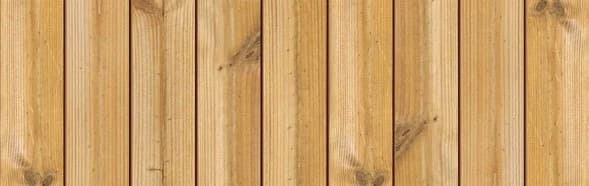
The Natural Appearance of Scandinavian Thermally Modified Wood
Scandinavian Thermally Modified Wood is derived from a selection of Nordic softwoods. The thermal modification process gives the wood a consistent, warm tone and visible grain patterns. This natural appearance is often sought for its character in walls, ceilings, soffits, and facades.
Without any finish, Scandinavian Thermally Modified Wood will gradually weather to a silver-gray patina when exposed to UV radiation and the elements. This natural aging process is a common and accepted characteristic for many wood cladding materials. To achieve or maintain a dark facade, however, a finish is essential to either establish the dark color or protect an applied dark pigment.
Achieving a Dark Facade: Finish Options
To achieve a dark facade with Scandinavian Thermally Modified Wood, you generally have two primary approaches: opaque stains or paints, or semi-transparent dark stains. Each option offers different aesthetic qualities and maintenance requirements.
Opaque finishes, such as dark paints or solid stains, completely cover the wood grain, providing a uniform, consistent dark color. These finishes offer strong UV protection to the wood underneath, which can slow the natural weathering process. However, opaque finishes may require more frequent maintenance as they can show wear, chipping, or peeling over time, especially on sun-exposed elevations.
Semi-transparent dark stains allow some of the wood's natural grain and texture to show through, offering a more nuanced dark appearance. These stains often contain pigments that block some UV rays, but the wood itself will still be visible and subject to some degree of natural change. Reapplication will be necessary to maintain the color and protection, typically at intervals determined by exposure and product specifications.
Impact of Sun Exposure on Dark Facades
Dark-colored surfaces absorb more solar radiation than lighter surfaces. On a facade, this means that dark Scandinavian Thermally Modified Wood will experience higher surface temperatures when exposed to direct sunlight. This increased thermal cycling can put additional stress on finishes, potentially leading to faster degradation, cracking, or fading of the applied dark color.
For elevations with significant sun exposure, carefully select a finish designed for exterior use and high UV resistance. Regular inspection and maintenance are particularly crucial for dark facades to preserve their appearance and protect the wood. Consider how the facade's orientation (e.g., south-facing versus north-facing) will influence the intensity and duration of sun exposure.
Profile Selection for Dark Facades
Scandinavian Thermally Modified Wood is available in several profiles suitable for facades. The choice of profile can influence the visual impact of a dark finish.
A V-Joint or Nickel Gap profile creates distinct shadow lines that can enhance the depth and texture of a dark facade, especially when the sun casts shadows across the surface. The Fluted #5 profile, with its structured linear pattern, will interact with light to create varied highlights and shadows, adding a dynamic quality to a dark finish. The S4S E4E profile offers a smoother, more uniform surface, which can provide a sleek, minimalist dark appearance. Consider how the chosen profile will complement the desired dark aesthetic and how it will interact with light throughout the day.
You can explore available profiles at: /thermally-modified-wood/scandinavian
Worked Example: Dark Facade for a Modern Residence
Consider a modern residence with a prominent 20-foot wide by 10-foot high facade section intended to be dark. The architect specifies Scandinavian Thermally Modified Wood with a Fluted #5 profile, to be finished with an opaque dark charcoal stain.
The Fluted #5 profile is listed as 1 × 6 nominal size. Assuming an actual coverage width of 5.125 inches (a common dimension for nominal 1x6), each board provides approximately 0.427 feet of vertical coverage. For a 10-foot height, a single board would cover 10 feet * 0.427 feet = 4.27 square feet. The total area is 200 square feet (20 ft * 10 ft).
To cover the 20-foot width, approximately 20 feet / (5.125 inches / 12 inches/foot) = 46.8 boards are needed. Rounding up to the nearest full board, 47 boards are required for the width. If boards are typically supplied in 10-foot lengths, then 47 boards of 10 feet each will be purchased. This provides a total length of 470 linear feet. The total area covered would be 47 boards * (5.125 inches / 12 inches/foot) * 10 feet = 200.5 square feet.
Due to the facade's south-facing orientation, a high-quality exterior stain with strong UV inhibitors is selected. The project budget includes provisions for recoating every 3-5 years, depending on visual assessment and the finish manufacturer's guidance, to maintain the deep dark color and protect the wood.
Complementary Materials for a Dark Facade
A dark Scandinavian Thermally Modified Wood facade can be effectively complemented by other materials to create visual interest and architectural harmony. Light-colored stone or stucco can provide a striking contrast, highlighting the dark wood. Metal accents, such as black window frames, dark trim, or minimalist railings, can reinforce a contemporary aesthetic.
Consider integrating other thermally modified wood products for continuity. For instance, /thermally-modified-wood can offer options for other elements, while /siding-and-cladding provides a broader context for exterior material choices. For specific branding, explore /brands/norx materials, or consider /products/maximo-accoya for different wood characteristics in other areas of the project.
Before you order
- Desired level of grain visibility: Opaque (no grain) vs. Semi-transparent (some grain visible)?
- Orientation of the facade: High sun exposure requires more durable finishes and frequent maintenance.
- Maintenance commitment: Are you prepared for regular recoating of dark finishes?
- Profile choice: How will the chosen profile (V-Joint, Fluted, S4S) interact with light and the dark finish?
- Complementary materials: What other materials will be used to balance or enhance the dark wood?
- Budget for finish and maintenance: Have you accounted for the cost of quality dark finishes and their upkeep?
Confirm installation details, approved uses and warranty terms in the current instructions for the exact product and profile. Your installer should verify the substrate, structure and applicable project requirements.
Questions to help you decide
Will a dark finish make my Scandinavian Thermally Modified Wood facade hotter?
Yes, dark finishes absorb more solar radiation than lighter colors, which can lead to higher surface temperatures for the wood. This increased heat can accelerate the degradation of the finish and may influence indoor temperatures if insulation is inadequate.
How often do dark finishes on Scandinavian Thermally Modified Wood need reapplication?
The frequency of reapplication depends on several factors, including the type of finish (paint, solid stain, semi-transparent stain), the quality of the product, and the facade's exposure to sun and weather. Generally, opaque finishes might last longer before needing a full reapplication, but may show wear more prominently. Semi-transparent stains often require reapplication every 2-5 years. Always refer to the specific finish manufacturer's recommendations.
Can I achieve a dark look without paint or stain?
Scandinavian Thermally Modified Wood naturally weathers to a silver-gray patina over time when left unfinished. It does not naturally darken to a deep brown or black. To achieve a dark aesthetic, an applied finish (stain or paint) is necessary.
Plan Your Dark Facade with Scandinavian Thermally Modified Wood
Ready to bring a striking dark facade to your project? Request a material quote today. Provide your project dimensions, desired profile, and ZIP code to confirm current availability and service options. Our team can assist you in selecting the right Scandinavian Thermally Modified Wood and understanding its finishing requirements.
Request a material quote →