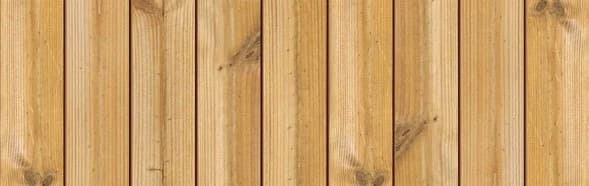
Understanding Scandinavian Thermally Modified Wood
Scandinavian Thermally Modified Wood is a Nordic softwood selection that undergoes a controlled heat and steam process. This modification improves the wood's dimensional stability, making it less prone to expansion and contraction due to changes in humidity. It also gives the wood a consistent, warm tone and enhances its natural grain character, suitable for a range of applications from walls and ceilings to soffits and selected decking.
The chemical-free modification process is a key benefit, relying solely on heat and steam. However, this process does not inherently protect freshly cut end grain from moisture absorption or UV exposure in the same way the factory-finished surfaces might. Therefore, any field cuts expose new surfaces that require specific attention to maintain the material's performance and appearance over time, particularly for exterior use.
Why Cut End Treatment Matters
Exposed end grain on any wood product, including Scandinavian Thermally Modified Wood, is more absorbent than face grain. Without proper treatment, cut ends can readily absorb moisture, leading to potential issues such as swelling, checking, or discoloration, especially in exterior or high-humidity interior environments. For exterior applications, UV exposure can also cause untreated end grain to weather differently than the protected face, resulting in an inconsistent appearance.
Treating cut ends helps to seal these vulnerable areas, reducing moisture uptake and providing a more uniform finish across the entire installation. This step is essential for maintaining the long-term performance and aesthetic appeal of your Scandinavian Thermally Modified Wood project.
Making Clean Field Cuts
The quality of your field cuts directly impacts the effectiveness of any subsequent end treatment. Use sharp, appropriate saw blades for woodworking to ensure clean, splinter-free cuts. For cross-cutting, a miter saw or circular saw with a fine-toothed blade is generally recommended. For ripping cuts, a table saw with a suitable blade will provide the best results. Dull blades can lead to tear-out, making it harder to achieve a smooth, sealed end.
When making cuts, support the material adequately to prevent vibration and ensure a steady pass. Measure twice and cut once, allowing for any necessary expansion gaps as specified by the manufacturer or project design. Precise cuts not only look better but also provide a consistent surface for applying end sealers or finishes.
Choosing the Right End Treatment for Exterior Applications
For exterior applications of Scandinavian Thermally Modified Wood, all field-cut ends should be treated. A suitable end-grain sealer or a high-quality exterior wood finish designed for end grain protection is typically recommended. These products penetrate the wood fibers, creating a barrier against moisture ingress and helping to stabilize the end grain.
When selecting an end treatment, consider products that are compatible with any overall finish you plan to apply to the entire surface of the wood. Some treatments may be clear, while others might contain pigments to match or complement the wood's natural tone or an applied stain. Always follow the manufacturer's instructions for application, including temperature ranges, drying times, and the number of coats required for optimal protection. This step is critical for profiles used in siding, soffits, and decking.
Interior Applications: When and How to Treat Cut Ends
For interior applications of Scandinavian Thermally Modified Wood, such as feature walls or ceilings, the need for end treatment may vary. In areas with stable humidity and no direct exposure to moisture, a full end-grain sealer might not be strictly necessary for performance. However, applying a compatible finish to cut ends can provide a more uniform appearance, especially if the wood is stained or finished. This helps to ensure that the cut ends blend seamlessly with the rest of the surface.
If the interior space experiences significant humidity fluctuations, such as a bathroom or an enclosed porch, treating the cut ends with a clear sealer designed for interior wood can offer additional protection against potential moisture absorption and movement. Always prioritize aesthetic consistency and long-term stability when deciding on interior cut end treatments.
Worked Example: Calculating Cuts for a Fluted Siding Panel
Consider a project using 1x6 Fluted #5 Scandinavian Thermally Modified Wood for a facade. You have a wall section that is 10 feet wide and 8 feet high. The planks are supplied in various lengths, and you plan a horizontal installation.
Each 1x6 plank has a nominal width of 6 inches, meaning a coverage width slightly less than 6 inches due to the profile. For simplicity, let's assume a working coverage of 5.5 inches per plank. To cover the 8-foot (96-inch) height, you would need 96 inches / 5.5 inches/plank = 17.45 planks. Round up to 18 planks vertically. Since the wall is 10 feet (120 inches) wide, each of these 18 planks would need to be cut to 120 inches long.
If you purchase planks in 12-foot (144-inch) lengths, each plank can yield one 120-inch piece with a 24-inch offcut. For 18 planks, you would purchase 18 x 12-foot planks. This results in 18 primary cuts (one per plank end to achieve 120 inches). Additionally, if you need to create shorter pieces for specific details or around openings, each additional cut will expose two new end grains requiring treatment. For this simple wall, you'd have 18 field-cut ends requiring treatment. The 24-inch offcuts could be saved for smaller sections or trim, but their ends would also require treatment if used in an exterior application.
Before you order
- Identify all areas where field cuts will be made on Scandinavian Thermally Modified Wood.
- Determine if the cut ends are for interior or exterior applications.
- Select an appropriate end-grain sealer or finish compatible with the project's overall aesthetic and exposure.
- Ensure you have sharp, clean cutting tools suitable for woodworking.
- Plan for proper ventilation and personal protective equipment during cutting and finishing.
- Review manufacturer guidelines for specific end treatment recommendations.
- Account for drying times of sealers/finishes in your project schedule.
Confirm installation details, approved uses and warranty terms in the current instructions for the exact product and profile. Your installer should verify the substrate, structure and applicable project requirements.
Questions to help you decide
Do I need to treat cut ends for Scandinavian Thermally Modified Wood used indoors?
For interior applications in stable humidity environments, treating cut ends may not be strictly necessary for performance but is often recommended for aesthetic consistency, especially if a finish is applied to the main surfaces. In high-humidity interior areas like bathrooms, a clear interior wood sealer can offer additional protection.
What kind of product should I use to treat exterior cut ends?
For exterior applications, use an end-grain sealer or a high-quality exterior wood finish specifically designed for end-grain protection. Choose a product compatible with any other finishes applied to the wood and follow the manufacturer's application instructions carefully.
Can I use regular wood glue to seal cut ends?
Wood glue is primarily designed for bonding wood pieces together, not for sealing end grain against moisture absorption. While it might offer some temporary protection, it is generally not a substitute for a dedicated end-grain sealer or exterior wood finish, especially for applications exposed to weather or significant moisture.
Request a Quote for Scandinavian Thermally Modified Wood
Planning your project's cut ends and field cuts is part of specifying the right materials. Request a material quote for Scandinavian Thermally Modified Wood with your project dimensions, desired profile, and ZIP code to confirm current availability and service options.
Request a material quote →