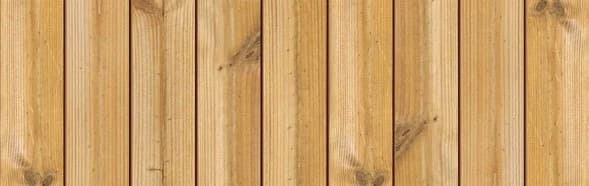
Confirming Product Profiles and Dimensions
Scandinavian Thermally Modified Wood is available in several profiles, each suited for specific applications. These details are crucial because they dictate the appearance, fastening methods, and overall coverage of the material.
S4S E4E (smooth on four sides, eased four edges) is a versatile profile suitable for siding, ceilings, and even selected decking. Each profile has specific installation requirements that your contractor will need to account for.
Verifying Application Suitability
While Scandinavian Thermally Modified Wood is versatile, suitable for walls, ceilings, soffits, facades, and selected decking, it is essential to confirm that the chosen profile and material are appropriate for each specific application in your project. Discuss with your contractor how the material will be used in different areas, such as an exterior facade versus an interior feature wall or a covered soffit.
The thermal modification process enhances dimensional stability without chemical preservatives, making it a suitable choice for various environments. However, specific applications, like decking, may require particular profiles or additional considerations for structural support and drainage, which your contractor should confirm based on local conditions and project specifics.
Detailed Takeoff and Quantity Calculation
Accurate material quantity is paramount. Your contractor should provide a detailed takeoff, calculating the square footage for each area where Scandinavian Thermally Modified Wood will be installed. This calculation must account for waste factor, cuts, and any specific layout patterns. It is not simply area divided by board coverage.
For instance, if you are cladding a wall section measuring 10 feet high by 20 feet long with 1x6 V-Joint boards, the total surface area is 200 square feet. A nominal 1x6 board typically provides about 5.5 inches of visible coverage. Therefore, you would need approximately 44 boards (20 feet / (5.5 inches / 12 inches per foot)) to cover the width, assuming full-length boards are available. However, accounting for cuts around windows, doors, and a typical 10-15% waste factor is crucial. For a project with multiple short sections or complex angles, the waste factor might be higher. Confirm these calculations with your contractor to avoid shortages or excessive over-ordering.
Confirming Substructure and Fastening Methods
The performance and longevity of Scandinavian Thermally Modified Wood depend significantly on its substructure and fastening. Discuss with your contractor the proposed framing, furring strips, or other support systems. Confirm that these supports are appropriate for the chosen profile and application, ensuring proper ventilation for exterior applications like rainscreen systems.
Review the fastening schedule: what type of fasteners will be used (e.g., stainless steel screws, hidden clips), their spacing, and whether they are compatible with the wood and local climate conditions. Proper fastening prevents cupping, warping, and ensures the material remains securely in place over time. The specific profile may dictate certain fastening methods, such as face-fastening for S4S E4E or hidden fasteners for certain tongue-and-groove profiles.
Planning for Site Conditions and Delivery
Before the order is placed, your contractor should confirm the logistics for material delivery, storage, and handling on the job site. This includes verifying access for delivery trucks, identifying a suitable, protected area for storing the wood to prevent moisture absorption or damage, and outlining the process for acclimation if necessary.
Discuss any specific handling requirements for the wood, such as protecting it from direct sunlight or rain before installation. A well-planned site logistics strategy minimizes material damage, reduces installation time, and contributes to a smoother project timeline.
Reviewing Finish and Maintenance Considerations
While Scandinavian Thermally Modified Wood is known for its natural character and warm Nordic grain, discuss with your contractor any intended finishes or sealants, especially if you wish to maintain its initial color or protect it from UV exposure. If left unfinished, the wood will gradually weather to a silver-gray patina.
Confirm that any proposed finishes are compatible with thermally modified wood and that the contractor is familiar with their application. Understanding the long-term maintenance implications, such as periodic cleaning or reapplication of finishes, is also an important part of the pre-order discussion.
Before you order
- Have you confirmed the exact Scandinavian Thermally Modified Wood profile(s) and nominal sizes for each application?
- Has the contractor verified the suitability of the chosen profiles for all intended uses (e.g., siding, ceiling, decking)?
- Is there a detailed material takeoff, including a waste factor, for each distinct area?
- Have the substructure and fastening methods been confirmed and specified for all installations?
- Are the site logistics for delivery, storage, and material protection clearly outlined?
- Have any desired finishes or long-term maintenance plans been discussed and understood?
- Are there any specific project-related details (e.g., rainscreen gap, corner details) that require custom cuts or additional material?
- Have all questions regarding product documentation and installation guidelines been addressed?
- Is there a clear point of contact for any material-related queries during installation?
Confirm installation details, approved uses and warranty terms in the current instructions for the exact product and profile. Your installer should verify the substrate, structure and applicable project requirements.
Questions to help you decide
What is Scandinavian Thermally Modified Wood?
Scandinavian Thermally Modified Wood is Nordic softwood that has undergone a heat and steam treatment process. This modification improves its dimensional stability and durability without the use of chemical preservatives, making it suitable for both interior and exterior applications. It features an expressive Nordic grain and a warm, natural tone.
Can Scandinavian Thermally Modified Wood be used for both interior and exterior projects?
Yes, its enhanced dimensional stability and resistance to environmental factors make Scandinavian Thermally Modified Wood suitable for a wide range of applications, from interior walls and ceilings to exterior facades, soffits, and selected decking. The specific profile chosen will determine the best fit for each application.
What profiles are available for Scandinavian Thermally Modified Wood?
The availability of specific profiles may vary, so it's always best to confirm with your supplier.
Ready to Plan Your Scandinavian Thermally Modified Wood Project?
Request a material quote with your project dimensions, exact profile, and ZIP code to confirm current availability and service options for Scandinavian Thermally Modified Wood. Explore our full range of <a href="/thermally-modified-wood/scandinavian">Scandinavian Thermally Modified Wood</a>, <a href="/siding-and-cladding">Siding and Cladding</a>, and other <a href="/thermally-modified-wood">Thermally Modified Wood</a> products.
Request a material quote →