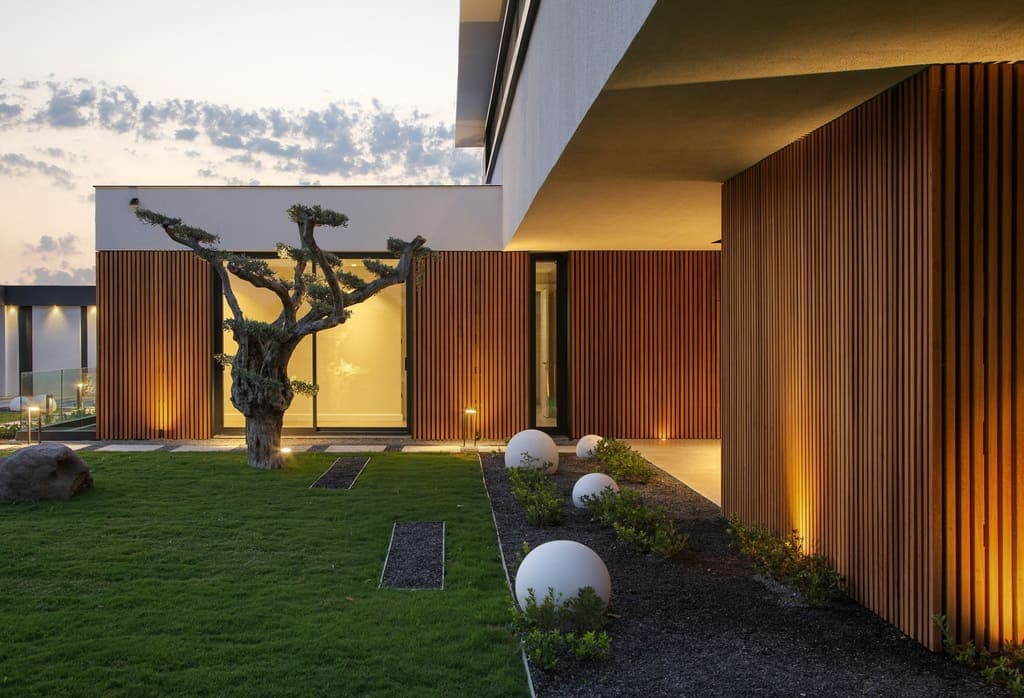
Understanding Thermally Modified Wood for Vertical Applications
Thermally modified wood is created by heating wood to high temperatures in an oxygen-controlled environment. This process changes the wood's chemical and physical properties, resulting in improved stability and reduced moisture absorption. For vertical applications like covered patio walls, these characteristics are particularly beneficial as they help mitigate warping, cupping, and checking that can occur with untreated wood due to moisture fluctuations. The modification process also typically darkens the wood, offering rich, consistent tones that can vary depending on the species and treatment intensity.
While thermally modified wood is enhanced for outdoor use, its performance on covered patio walls is distinct from fully exposed facades. A covered patio wall benefits from protection against direct rain and intense UV exposure, which can prolong the finish and maintain the wood's appearance. However, these walls still experience ambient humidity and temperature changes, making the dimensional stability of thermally modified wood a valuable attribute. It is important to select profiles and finishes that are suitable for vertical, semi-protected outdoor environments.
Selecting the Right Profile and Species
The aesthetic of your covered patio walls will largely depend on the profile of the thermally modified wood you choose. Common profiles include tongue and groove, shiplap, and square edge, each offering a different shadow line and visual texture. Tongue and groove profiles, for example, create a tight, interlocking fit that can provide a more uniform appearance, while shiplap offers a distinct overlap that creates a staggered shadow line. Square edge profiles, when installed with a gap, can create a modern, slatted look.
When considering species, thermally modified North American softwoods like Pine or Spruce, or hardwoods like Ash, are often available. NORX thermally modified wood, for example, is offered in various profiles suitable for cladding and siding applications, which would include covered patio walls. Each species will react to the thermal modification process differently, resulting in unique grain patterns and color variations. For a uniform aesthetic, consider how the chosen profile and species will integrate with other materials in your patio design. Explore available options at our NORX product page and Maximo Accoya for additional choices.
Finishing Options for Covered Patio Walls
While thermally modified wood exhibits enhanced durability, applying a finish can protect its surface and maintain its desired appearance. Left unfinished, thermally modified wood will naturally weather to a silver-gray patina over time, similar to other wood species exposed to the elements. For those who prefer to preserve the original color or introduce a specific hue, various finishes are available.
Clear penetrating oils or UV-resistant stains are popular choices for covered patio walls. These finishes can enhance the wood's natural tones, provide protection against moisture and UV degradation, and simplify maintenance. When selecting a finish, consider its compatibility with thermally modified wood, its expected lifespan in a semi-protected environment, and the reapplication schedule. Always follow the manufacturer's recommendations for application and maintenance to ensure optimal performance and appearance. You can find related products at our siding and cladding section.
Attachment and Substructure Considerations
Proper attachment and substructure are critical for the longevity and stability of thermally modified wood walls. For covered patio walls, a robust substructure, typically consisting of furring strips or a rainscreen system, is recommended. This creates an air gap behind the wood, allowing for ventilation and drainage, which is beneficial even in covered applications by preventing moisture accumulation. Furring strips should be securely fastened to the underlying structural wall, ensuring they are plumb and level to provide a consistent mounting surface for the wood.
Fasteners should be corrosion-resistant, such as stainless steel screws, to prevent staining and ensure long-term hold. Depending on the chosen profile, fasteners can be face-fastened or concealed. Concealed fastening systems offer a clean, uninterrupted wood surface, while face fastening provides a more traditional look. Always refer to product-specific installation guidelines for recommended fastener types, spacing, and installation methods to ensure compliance and structural integrity.
Worked Example: Covered Patio Wall in a New York City Townhouse
Consider a hypothetical covered patio area for a New York City townhouse, measuring 10 feet wide by 8 feet tall. The goal is to calculate the material needed for one wall.
For an 8-foot tall wall, this means 8 feet / 0.5 feet/module = 16 modules. Each board must be 10 feet long. Therefore, 16 boards, each 10 feet long, will cover the wall. If boards are typically sold in 10-foot lengths, this would mean purchasing 16 individual 10-foot boards. If longer lengths are available and more cost-effective for other walls, a different cutting plan may be considered. The substructure would require vertical furring strips, spaced according to manufacturer guidelines, to support the horizontal boards.
Before you order
- Confirm the specific exposure conditions of your covered patio walls (e.g., direct sun exposure, proximity to moisture sources).
- Select a thermally modified wood species and profile suitable for vertical outdoor applications and your desired aesthetic.
- Choose a finish (or decide to let it weather) that aligns with your maintenance expectations and design goals.
- Plan the substructure carefully, ensuring proper ventilation and drainage behind the wall material.
- Verify fastener types and installation methods are appropriate for thermally modified wood and local building practices.
- Calculate material quantities accurately, accounting for cuts, waste, and specific board lengths.
- Consider the overall design integration with other patio elements like flooring, lighting, and furniture.
Confirm installation details, approved uses and warranty terms in the current instructions for the exact product and profile. Your installer should verify the substrate, structure and applicable project requirements.
This is a planning guide for projects in New York, NY. Ask our team to confirm availability, delivery to your ZIP code and which branch can support your order.
Questions to help you decide
Can thermally modified wood be painted for covered patio walls?
Yes, thermally modified wood can be painted, though it is often chosen for its natural wood appearance. If painting, ensure the paint is suitable for exterior wood and compatible with thermally modified wood. Proper surface preparation, including cleaning and priming, is essential for good adhesion and a lasting finish.
How does the New York climate affect thermally modified wood on covered patio walls?
While covered patio walls are protected from direct rain and harsh sun, New York's seasonal humidity fluctuations can still affect wood. Thermally modified wood's enhanced dimensional stability helps it resist swelling and shrinking more effectively than untreated wood, making it a more resilient choice for these conditions. Proper ventilation behind the wall is still important to manage ambient moisture.
What maintenance is required for thermally modified wood on covered patio walls?
Maintenance depends on whether the wood is finished or left to weather naturally. For unfinished wood, occasional cleaning to remove dirt and debris is generally sufficient. If a finish is applied, periodic reapplication according to the manufacturer's instructions will be necessary to maintain its protective qualities and appearance. Inspecting the walls annually for any signs of wear or damage is also recommended.
Ready to Enhance Your Covered Patio Walls?
Request a material quote for your project. Provide your project dimensions, desired thermally modified wood profile, and ZIP code to confirm current availability and service options for New York, NY.
Request a material quote →