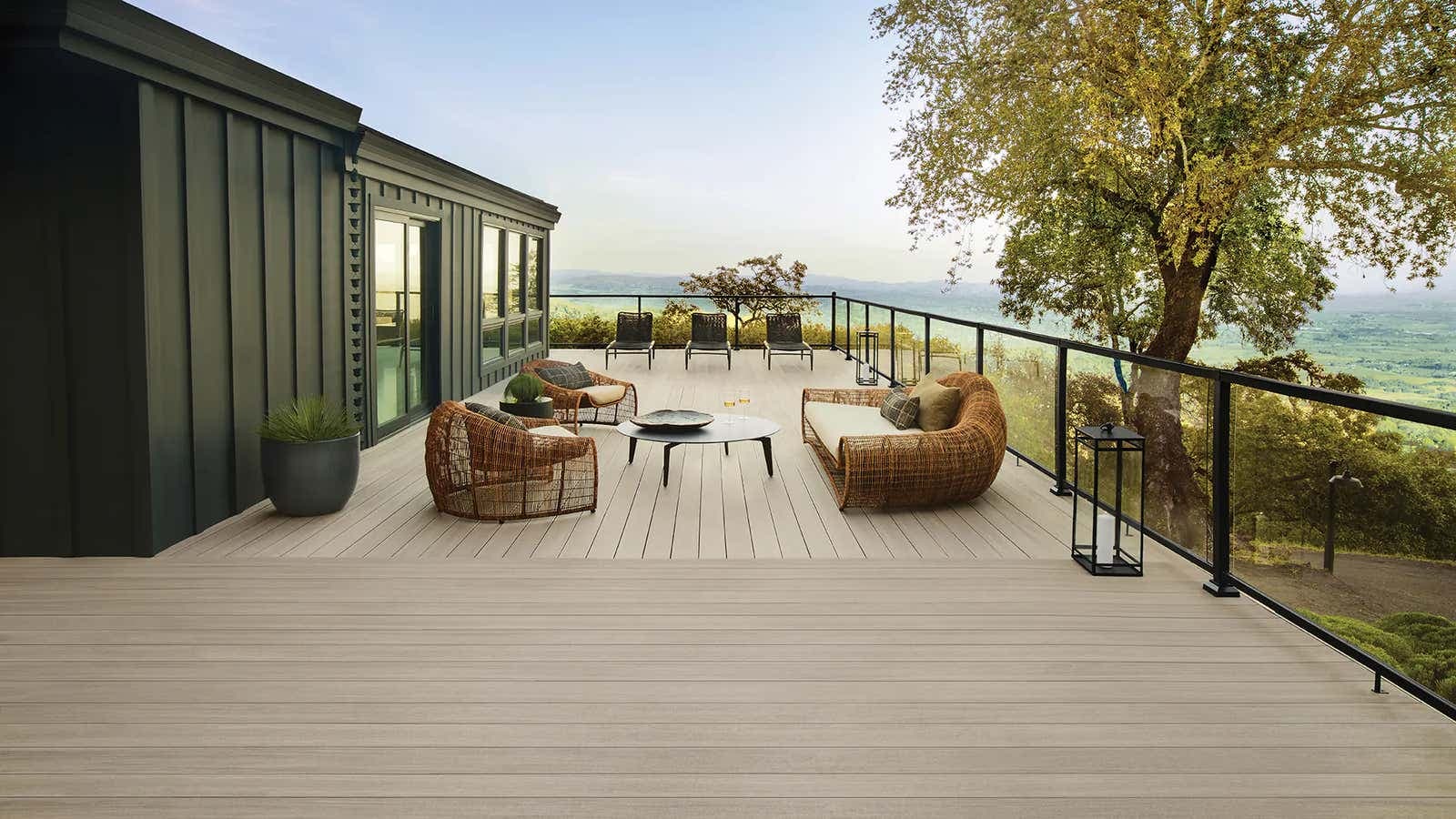
Why Composite Decking for Compact Urban Spaces?
In New York, NY, where every square foot counts, the choice of decking material can significantly impact the usability and longevity of a compact outdoor area. Composite decking, made from a blend of wood fibers and recycled plastics, is designed to withstand diverse weather conditions and heavy foot traffic without requiring extensive upkeep.
For small balconies or rooftop decks, the low-maintenance aspect of composite decking is a primary benefit. A simple soap-and-water wash is typically sufficient for cleaning, eliminating the need for regular sanding, staining, or oiling. This reduces the ongoing effort and expense that might be impractical in a smaller space or for residents with limited time.
Additionally, many composite decking options feature consistent color and grain, ensuring a uniform appearance across the installed area. This predictability can be an advantage in compact designs where visual consistency contributes to a cohesive and polished look. Some collections also offer cooler-underfoot options, which can be a consideration for sun-exposed urban rooftops.
Understanding Collection-Specific Support and Installation for Smaller Footprints
While composite decking offers general benefits, specific collections from manufacturers like Trex, TimberTech, and Fiberon may have distinct support and installation requirements. For compact spaces, understanding these details is crucial, especially when working with existing structures or limited sub-surfaces.
Always refer to the manufacturer's installation guide for the chosen collection. These guides specify joist spacing, fastener types (hidden or face-fastened), and ventilation requirements. In small spaces, adequate ventilation beneath the deck is still important to prevent moisture buildup, even if the area is partially enclosed. Some composite boards are designed for specific fastening systems that may impact the ease of installation or removal in tight quarters.
For instance, some collections are compatible with specialized clips that provide consistent spacing and a clean, screw-free surface. Others might require traditional face-fastening. When planning for a compact space, consider how these installation methods will affect the project timeline and any potential need for professional assistance, particularly if the space has irregular dimensions or existing structural elements.
Navigating Project Access and Logistics in New York, NY
One of the most significant challenges for any renovation project in New York, NY, is logistical access. This is especially true for compact outdoor spaces, which might be on upper floors, accessible only through narrow hallways, or located in buildings with strict delivery schedules and elevator restrictions.
When ordering composite decking, consider the length of the boards. Longer boards can reduce seams but may be difficult to maneuver through tight stairwells or small elevators. Shorter lengths, while potentially increasing the number of cuts, could be more practical for transport and installation in confined areas.
Coordinate with your building management regarding delivery windows, material staging areas, and any required protection for common areas. Confirming these details upfront can prevent delays and additional costs. Many suppliers quote by collection, color, profile, quantity, and project ZIP, so providing precise project dimensions and access information is essential for an accurate estimate.
Worked Example: Decking a 100-Square-Foot Balcony
Consider a hypothetical New York City balcony measuring 10 feet by 10 feet, for a total of 100 square feet. This space needs to accommodate a small bistro set and a few planters. We'll use a standard composite decking board that is 12 feet long and 5.5 inches wide (actual coverage).
First, calculate the coverage per board: 12 feet * (5.5 inches / 12 inches/foot) = 5.5 square feet per board. To cover 100 square feet, you would theoretically need 100 / 5.5 = 18.18 boards. Given typical waste for cuts and the need to purchase full boards, you should plan to purchase at least 20-22 boards to account for cuts, especially if you plan for a picture-frame border.
If the balcony is 10 feet deep, and you lay the boards parallel to the 10-foot depth, each 12-foot board will yield one 10-foot section with a 2-foot offcut. These 2-foot offcuts might be usable for a border or if the space has varied dimensions. However, if the balcony is 10 feet wide, you would need to cut each 12-foot board down to 10 feet, resulting in a 2-foot offcut that may or may not be reusable depending on the layout.
Always add an additional 10-15% for waste and future repairs. For this 100 sq ft project, ordering 22 boards (12-foot length) would provide approximately 121 sq ft of material, allowing for cuts and a buffer. Remember to factor in fascia boards or trim if desired for a finished edge.
Design Considerations for Small Spaces
In a compact urban setting, every design choice impacts the perception and functionality of the space. When selecting composite decking, consider how color, board width, and layout can enhance your small outdoor area.
Lighter colors can make a small space feel more open and expansive, reflecting light and potentially feeling cooler underfoot. Darker colors, while elegant, might absorb more heat and make the area feel more enclosed. Many composite lines offer a range of consistent colors and grain patterns.
Board width can also influence the visual scale. Wider boards might reduce the number of visible seams, contributing to a cleaner, less cluttered look, while narrower boards can create a sense of depth or movement. Consider a simple, straightforward layout to avoid making the space feel too busy. A picture-frame border can provide a finished edge and define the space without adding visual complexity.
Before you order
- Verify building codes and landlord/condo association rules for decking installations in your specific building and area.
- Measure your compact space precisely, noting any irregular angles, existing structures, or obstacles.
- Consider access routes for material delivery (stairwells, elevators, doorways) and potential restrictions.
- Research different composite decking collections for specific support, fastener, and ventilation requirements.
- Choose a color and board width that complements your aesthetic and helps maximize the perception of space.
- Plan for fascia or trim boards to create a finished edge, especially if the deck is elevated.
- Calculate material quantities, adding 10-15% for cuts and waste.
- Confirm current availability of your chosen profile and color with your supplier.
- Obtain a material quote that includes all necessary components and delivery options to your ZIP code.
Confirm installation details, approved uses and warranty terms in the current instructions for the exact product and profile. Your installer should verify the substrate, structure and applicable project requirements.
This is a planning guide for projects in New York, NY. Ask our team to confirm availability, delivery to your ZIP code and which branch can support your order.
Questions to help you decide
Can composite decking be installed over an existing concrete slab or balcony?
Yes, composite decking can often be installed over concrete slabs or balconies, but it requires proper preparation and a suitable substructure. You'll need to ensure adequate drainage and ventilation beneath the deck boards. This usually involves installing sleepers or a pedestal system to elevate the decking and allow for airflow. Always consult the manufacturer's specific installation guidelines for your chosen composite decking collection, as requirements can vary.
How do I maintain composite decking in a small urban space?
Maintaining composite decking in a small urban space is generally straightforward. Most composite decking requires only an annual wash with soap and water to remove dirt, pollen, and debris. Avoid using harsh chemicals or abrasive cleaners unless specifically approved by the manufacturer. Unlike wood, composite decking does not require sanding, staining, or sealing, which is a significant advantage in compact areas where such tasks might be difficult or messy. For specific cleaning instructions, refer to the manufacturer's recommendations for your product.
What are the common challenges of installing composite decking in New York, NY?
The primary challenges in New York, NY, for composite decking installation often revolve around logistics and access. These include limited staging areas for materials, navigating narrow hallways and elevators for delivery, and adhering to strict building regulations or co-op/condo board rules. Planning for material delivery, understanding building access hours, and potentially choosing shorter board lengths to facilitate transport can help mitigate these issues. Additionally, ensuring proper drainage and ventilation, especially on rooftop or elevated balconies, is crucial for the longevity of the deck.
Ready to Plan Your Composite Decking Project?
For your New York, NY, compact outdoor space, request a material quote with your project dimensions, exact profile, and ZIP code. We can help confirm current availability and service options for composite decking from leading brands.
Request a material quote →