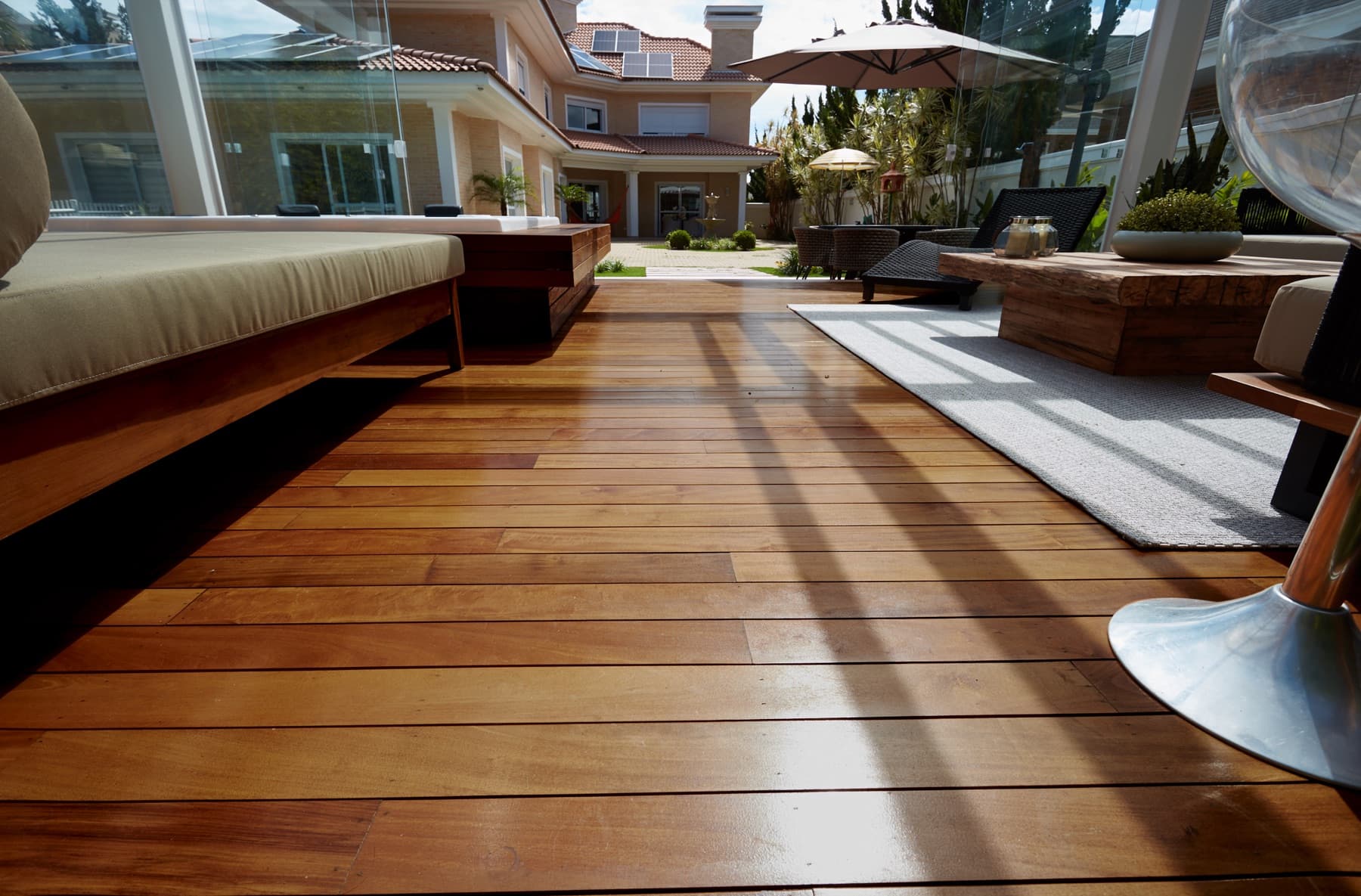
Assess Your Existing Deck Frame
Before selecting any decking material, a thorough inspection of your existing deck frame is crucial. Hardwood decking, especially dense species like Ipe and Cumaru, can be heavier than some alternatives. Verify that your joists, beams, and support posts are in sound condition, free from rot, insect damage, or significant warping. Pay close attention to connections, especially where the deck attaches to your building.
Crucially, confirm that the joist spacing is appropriate for the hardwood decking you intend to install. Most hardwood decking requires tighter joist spacing than softer woods or some composite materials to prevent excessive deflection and ensure long-term stability. Consult the specific product guidelines for the recommended joist span for your chosen hardwood board dimensions.
Consider the age and material of your current framing. If it's an older structure, a professional inspection by a qualified contractor or structural engineer can provide peace of mind and identify any necessary repairs or upgrades before you invest in new decking material.
Understanding Hardwood Decking: Ipe and Cumaru
Among the options for hardwood decking, Ipe and Cumaru stand out for their density and natural resilience, making them suitable for demanding environments like New York, NY. These tropical hardwoods offer distinct advantages for renovation projects.
Ipe, also known as Brazilian Walnut, is recognized for its exceptional durability and resistance to rot, insects, and weather changes. It features a rich reddish-brown to olive-brown color that can be maintained with oiling or allowed to weather to a silvery-gray patina. Its high density also contributes to its fire resistance.
Cumaru, often called Brazilian Teak, provides similar benefits in terms of durability and resistance to termites and weather. It shares many structural characteristics with Ipe, though it typically comes at a different price point. Cumaru exhibits a range of reddish-brown to golden-brown tones and is also known for a subtle cinnamon and vanilla scent when worked.
Both species offer significant longevity compared to many other decking materials, reducing the need for frequent replacement, which is a key benefit for urban renovation projects where access and disruption can be concerns. They are also naturally resistant, requiring minimal chemical treatments for preservation.
Considering the New York, NY Environment
New York, NY's climate presents specific challenges and considerations for outdoor decking. Hardwood decking's natural properties can be advantageous in this context.
Temperature fluctuations, from humid summers to freezing winters, demand a material that can resist warping and cracking. Ipe and Cumaru are known for their stability and resistance to movement after installation, even with exposure to moisture and temperature shifts. This makes them a robust choice for year-round outdoor use.
Urban environments often mean exposure to higher levels of foot traffic and general wear. The density and hardness of Ipe and Cumaru contribute to their ability to withstand heavy use, making them suitable for residential decks, balconies, and even commercial patios in the city. Their natural resistance to rot and insects is also beneficial in an urban setting where moisture and pest exposure can occur.
For coastal areas or properties near the water, such as those in the boroughs bordering the Atlantic, Ipe and Cumaru are considered marine-grade standards. They are frequently used for docks and boardwalks, demonstrating their resilience to salt air and spray, which is a relevant factor for some New York City locations.
Planning for Your Project Dimensions
Accurate measurements are fundamental for any renovation. For hardwood decking, especially when working with existing framing, precise dimensions are vital for estimating material needs and minimizing waste. Measure the length and width of your deck area, noting any irregularities, angles, or obstructions like columns or railings.
Consider the board lengths available. Hardwood decking is typically supplied in various lengths. Planning your layout to utilize common board lengths can reduce the number of cuts and potential waste. For instance, if you have a 12-foot-deep deck, ordering 12-foot boards might be efficient, minimizing butt joints and offcuts. However, always factor in a waste percentage for cuts and potential defects.
Example: A 10-foot by 15-foot deck area, requiring 6-inch wide Ipe boards. The total area is 150 square feet. If each board is 6 inches (0.5 feet) wide and 10 feet long, each board covers 5 square feet. This means you would need approximately 30 boards for the main area. However, accounting for cuts around edges, potential miscuts, and a typical waste factor of 10-15% is advisable. For this example, you might plan to purchase 33-35 boards to ensure you have enough material.
Remember that area-equivalent coverage does not always translate directly to purchase quantity, especially if specific board lengths are required to minimize seams or achieve a particular aesthetic. A detailed cut plan can help optimize material use.
Maintenance and Long-Term Considerations
One of the appeals of hardwood decking, particularly Ipe and Cumaru, is their relatively low maintenance requirements compared to some other wood species. However, understanding these needs before installation is key to ensuring your deck remains in good condition.
For both Ipe and Cumaru, a simple annual cleaning with soap and water is generally sufficient to remove dirt and grime. If you prefer to maintain the original rich color of the wood, applying a UV-blocking sealer or oil annually is recommended. Without this treatment, the wood will naturally weather to a soft, silvery-gray patina, which is a desirable look for many and does not impact the structural integrity of the deck.
Hardwood's density makes it resistant to common issues like rot, fungi, and insect infestation, which reduces the need for chemical treatments often associated with other wood types. This natural resistance is a long-term benefit, contributing to the overall lifespan of the deck with minimal intervention.
When planning your renovation, consider how maintenance fits into your lifestyle. If a hands-off approach is preferred, allowing the wood to silver naturally is an option. If you desire to preserve the original color, factor in the time and cost for annual oiling.
Before you order
- Have I thoroughly inspected my existing deck frame for structural integrity, rot, and insect damage?
- Is my joist spacing adequate for the chosen hardwood decking (e.g., Ipe or Cumaru) according to product specifications?
- Do I need to make any repairs or upgrades to the existing frame before installing new decking?
- Have I accurately measured my deck area, accounting for irregular shapes and obstructions?
- Which hardwood species (Ipe, Cumaru, etc.) best fits my aesthetic preferences and budget?
- Do I prefer the natural silvery-gray patina or will I commit to annual oiling to preserve the original color?
- Have I considered the specific environmental factors of my New York, NY location (e.g., sun exposure, salt air, foot traffic)?
- Have I accounted for potential waste and ordered extra material for cuts and unforeseen needs?
- Will I be installing the decking myself or hiring a professional experienced with dense hardwoods?
Confirm installation details, approved uses and warranty terms in the current instructions for the exact product and profile. Your installer should verify the substrate, structure and applicable project requirements.
This is a planning guide for projects in New York, NY. Ask our team to confirm availability, delivery to your ZIP code and which branch can support your order.
Questions to help you decide
Can I install hardwood decking over my existing deck boards?
No, it is generally not recommended to install new hardwood decking directly over existing deck boards. The existing boards can trap moisture, lead to rot, and create an unstable surface. The new decking should be installed directly onto a sound, properly spaced joist system for ventilation and structural integrity. Always remove old decking first.
How do I choose between Ipe and Cumaru for my New York renovation?
Both Ipe and Cumaru are excellent choices, offering high durability and resistance. Ipe is often considered the benchmark for extreme hardness and longevity, with a deep reddish-brown to olive-brown color. Cumaru is also very durable, with a similar resistance profile, and tends to have reddish-brown to golden-brown tones, often at a different price point. Consider your budget, desired color, and specific project demands. For specific profile and length availability, it's best to confirm with a supplier.
What kind of fasteners should I use for hardwood decking in a renovation?
For dense hardwoods like Ipe and Cumaru, specialized fasteners are typically recommended. This often includes pre-drilling and using stainless steel screws to prevent splitting and ensure secure attachment. Hidden fastening systems are also popular for a cleaner look. Always follow the manufacturer's specific fastening instructions for your chosen hardwood and profile to ensure proper installation and performance.
Ready to Plan Your Hardwood Deck Renovation in New York, NY?
Request a material quote today. Provide your project dimensions, desired hardwood profile, and ZIP code to get started. Our team can help confirm current availability and service options for your New York, NY project.
Request a material quote →