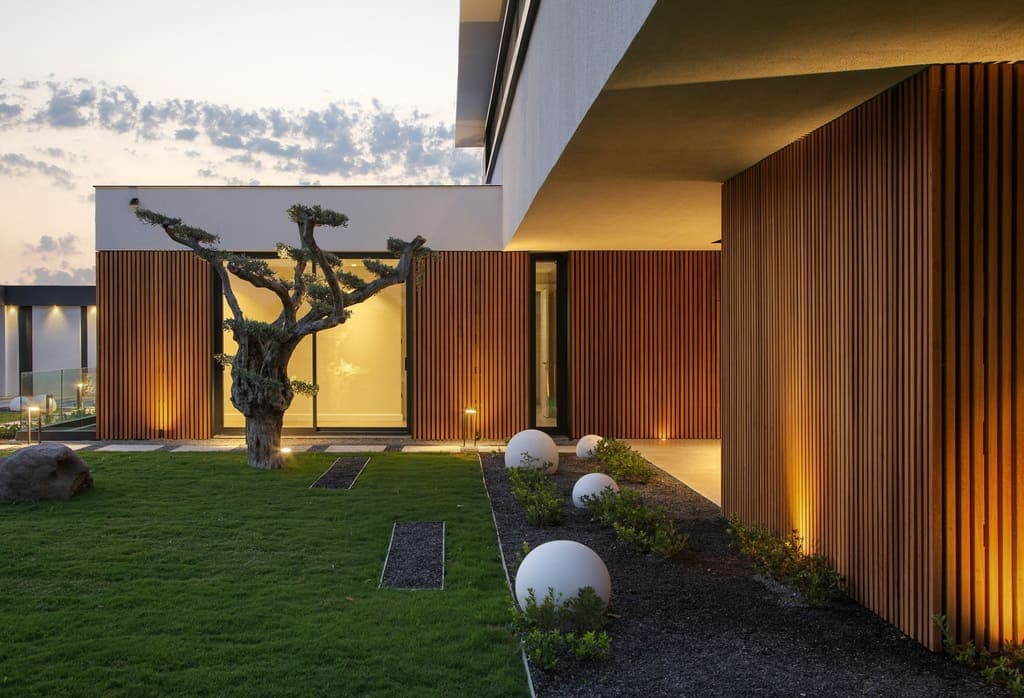
Understanding Thermally Modified Wood for Wall Applications
Thermally modified wood undergoes a high-heat treatment process that alters its cellular structure. This process aims to enhance the wood's stability and reduce its tendency to absorb moisture, which can be beneficial in humid climates. For covered patio walls, these characteristics contribute to a material that is less prone to warping, cupping, or checking compared to untreated wood, especially when protected from direct weather.
While thermally modified wood is often considered for exterior siding, its application on covered patio walls benefits from the reduced exposure, which can help maintain its appearance and structural integrity over time. The thermal modification process also imparts a consistent, darker tone to the wood, which can be appealing for design purposes.
It is important to select profiles specifically designed or approved for wall cladding. While thermally modified wood decking is common, wall applications require different fastening and ventilation considerations. Always verify that the chosen profile is suitable for vertical installation.
Species and Profiles Suitable for Covered Patio Walls
Thermally modified wood is available in various species, with popular options including Ash and Pine. Thermally modified Ash, such as the NORX Ash, is known for its stability and rich brown tones. It can be a good choice for a premium aesthetic on a covered patio wall. Thermally modified Pine, like NORX Pine, offers a more economical option while still benefiting from the thermal modification process.
For covered patio walls, common profiles include tongue-and-groove (T&G), shiplap, and square-edge boards. Tongue-and-groove profiles create a tight, interlocking fit, which can offer a clean, continuous look and aid in protecting the substructure. Shiplap provides distinct shadow lines and allows for some expansion and contraction. Square-edge boards can be installed with a gap for a more open, slatted appearance, which may be desirable for certain design aesthetics or to enhance air circulation.
Consider the desired visual effect and the level of protection needed for the underlying structure when selecting a profile. For example, a T&G profile might be preferred for a more finished, interior-like feel on a covered patio, while shiplap or slatted designs offer a more traditional outdoor aesthetic.
Installation Considerations for Fort Lauderdale's Climate
Even on covered patios, Fort Lauderdale's high humidity and potential for occasional wind-driven rain mean that proper installation is crucial. Adequate ventilation behind the wall cladding is essential to prevent moisture buildup, which can lead to mold or mildew, even on thermally modified wood. A rainscreen-like assembly, where a small air gap is maintained between the cladding and the structural wall, is recommended.
Use corrosion-resistant fasteners, such as stainless steel screws, to prevent staining and ensure long-term durability. Blind fastening, where fasteners are hidden within the profile, can enhance the aesthetic and protect the fasteners from direct exposure. For square-edge profiles, visible face fastening may be used.
Ensure proper clearance from the ground or patio surface to prevent moisture wicking into the bottom boards. Also, plan for adequate drainage at the base of the wall.
Consider the direction of the prevailing winds and any potential for splash-back from heavy rains when designing the covered patio walls. While covered, some areas might still experience indirect moisture.
Finishing and Maintenance for Covered Patio Walls
Thermally modified wood can be left unfinished to weather naturally to a silver-gray patina, or it can be finished with an exterior-grade oil or stain to maintain its original color. For covered patio walls, an unfinished look can be attractive and low-maintenance, as the wood is protected from the most intense UV radiation and rain.
If choosing to apply a finish, select a product designed for exterior wood and suitable for a humid climate. Finishes will require periodic reapplication, though the frequency may be reduced compared to fully exposed siding due to the covered nature of the application. Always follow the manufacturer's recommendations for application and maintenance of any finishing product.
Regular cleaning with a soft brush and mild soap and water can help remove dust, pollen, and any mildew that might accumulate in humid conditions. Inspect the walls periodically for any signs of wear, damage, or moisture intrusion, and address them promptly.
Hypothetical Project Example: Covered Patio Wall
Consider a homeowner in Fort Lauderdale planning to clad a covered patio wall section that is 10 feet wide and 8 feet tall. They choose NORX Ash Thermally Modified Wood with a shiplap profile, where each board is 5 inches wide (nominal, with an effective coverage of 4.5 inches) and available in 10-foot lengths.
To calculate the needed material, the wall area is 10 feet * 8 feet = 80 square feet. The effective coverage area per 10-foot board is 4.5 inches / 12 inches/foot * 10 feet = 3.75 square feet. Therefore, approximately 80 sq ft / 3.75 sq ft/board = 21.33 boards are needed. Accounting for cuts, waste, and future repairs, ordering an additional 10-15% is prudent. So, 22 boards * 1.15 = 25.3 boards. The homeowner would likely order 26-28 boards to ensure enough material.
The installation would involve creating a furring strip system (e.g., 1x3 pressure-treated lumber) spaced vertically at 16 or 24 inches on center, attached to the existing wall structure. This creates the necessary air gap for ventilation. The shiplap boards would then be face-fastened to the furring strips using stainless steel screws, ensuring each board is level and plumb. Ends would be cut to fit, and any exposed end grain would be sealed if a finish is applied. Proper flashing and a drip edge would be installed at the base of the wall to direct water away.
Before you order
- Confirm species suitability for covered outdoor wall application.
- Select a profile (T&G, shiplap, square-edge) appropriate for desired aesthetic and ventilation.
- Verify local building code requirements for wall cladding, even on covered patios.
- Plan for adequate ventilation behind the cladding (e.g., rainscreen assembly).
- Choose corrosion-resistant fasteners suitable for humid conditions.
- Determine finishing preference: natural weathering or applied stain/oil.
- Plan for required ground clearance and drainage at the base of the wall.
- Consider the direction of wind and potential for indirect moisture.
- Calculate material quantities, including an allowance for waste and cuts.
Confirm installation details, approved uses and warranty terms in the current instructions for the exact product and profile. Your installer should verify the substrate, structure and applicable project requirements.
This is a planning guide for projects in Fort Lauderdale, FL. Ask our team to confirm availability, delivery to your ZIP code and which branch can support your order.
Questions to help you decide
Does thermally modified wood require a finish for covered patio walls?
No, thermally modified wood does not require a finish for structural integrity, even in Fort Lauderdale's climate. It will naturally weather to a silver-gray patina over time. However, applying an exterior-grade oil or stain can help maintain its original color and offer some additional protection against environmental factors. The 'covered' aspect helps slow the weathering process compared to fully exposed applications.
Can thermally modified wood be used near a pool on a covered patio?
Yes, thermally modified wood can be used on covered patio walls near a pool. Its enhanced stability makes it a good choice for humid environments. However, avoid direct, prolonged contact with chlorinated water or other pool chemicals. Ensure proper ventilation behind the wall to manage moisture, and clean any splashes promptly to prevent water spotting or residue buildup.
What is the best way to clean thermally modified wood on a covered patio wall?
For routine cleaning, a soft brush or cloth with a mild soap and water solution is generally sufficient. Rinse thoroughly with clean water. Avoid high-pressure washers, as they can damage the wood fibers. For any mildew growth, a diluted bleach solution (1 part bleach to 4 parts water) can be used, followed by a thorough rinse. Always test any cleaning solution on an inconspicuous area first.
Ready to Transform Your Fort Lauderdale Covered Patio?
Request a material quote for your project. Provide your project dimensions, desired thermally modified wood profile, and ZIP code to confirm current availability and service options for Fort Lauderdale, FL. Explore our range of thermally modified wood options and complementary products like siding and cladding or Maximo Accoya for other outdoor projects. Visit our product pages for NORX Thermally Modified Wood, Siding and Cladding, and Maximo Accoya for more details.
Request a material quote →