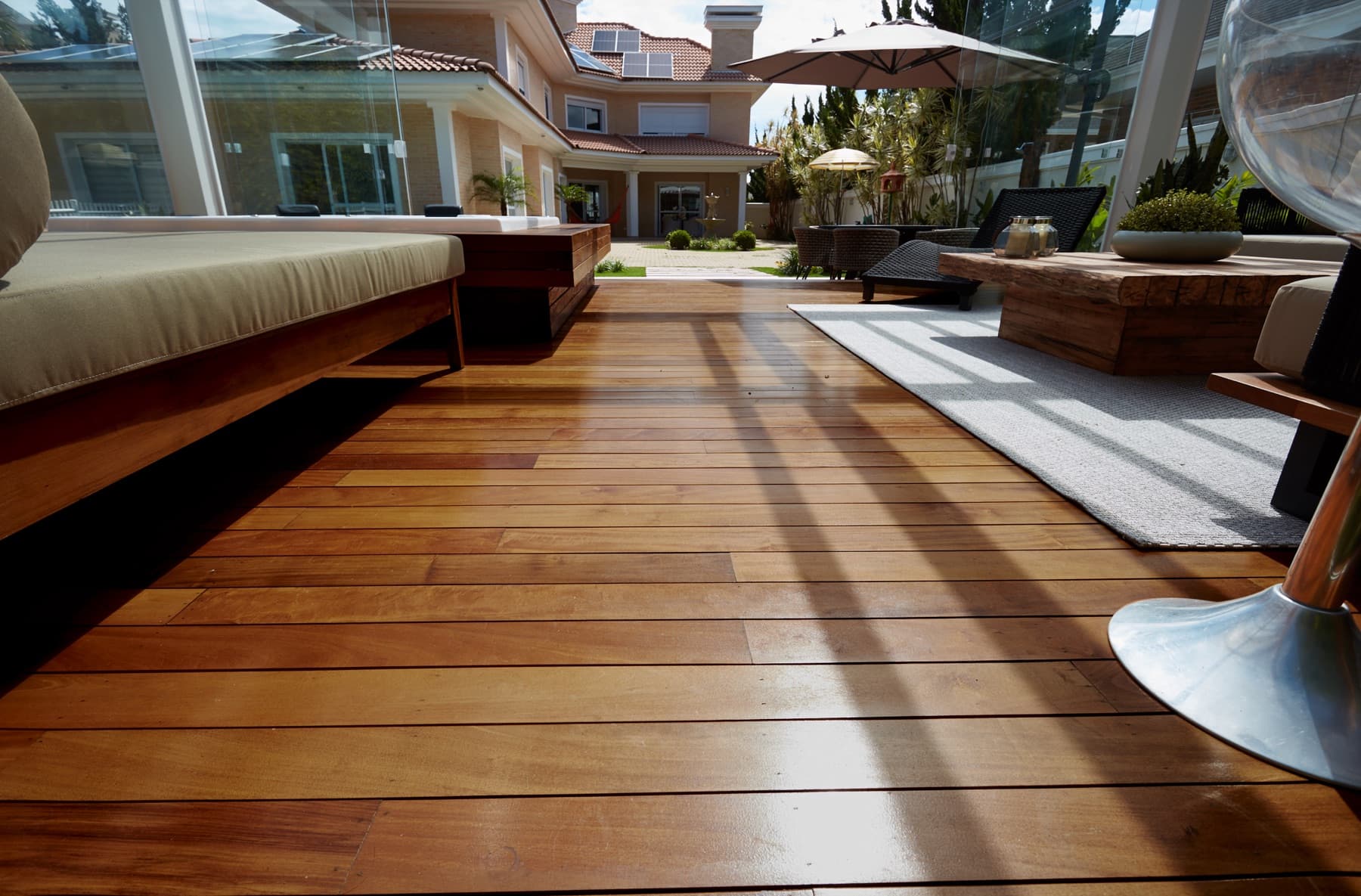
Evaluating Your Existing Deck Frame
Before selecting new hardwood decking, inspect your existing deck frame. Verify that all joists, beams, and support posts are structurally sound, free from rot, termite damage, or excessive warping. Hardwood decking, especially species like Ipe and Cumaru, is dense and heavy. The existing frame must be capable of supporting the increased load of the new decking material, along with any planned furniture, planters, or occupants.
Check joist spacing. Most hardwood decking requires specific joist spacing to ensure proper support and prevent movement. If your current joist spacing exceeds the recommendations for your chosen hardwood, additional blocking or sistering of joists may be necessary to meet structural requirements and ensure a stable deck surface. Any signs of corrosion on fasteners or connectors should also be addressed.
Choosing Hardwood Species for Fort Lauderdale Conditions
Fort Lauderdale's climate, characterized by high humidity, heat, and potential for salt air exposure, demands decking materials that can withstand these specific conditions. Tropical hardwoods such as Ipe and Cumaru are frequently specified for coastal Florida projects due to their natural resistance properties.
Ipe, also known as Brazilian Walnut, is a dense hardwood known for its exceptional durability and natural resistance to rot, insects, and mold. Its natural oils also protect it from cracking or warping, even with moisture exposure. Ipe is often considered a benchmark for demanding outdoor applications. (S1)
Cumaru is another durable tropical hardwood that offers resistance to termites and weather changes. It provides stiffness, strength, and hardness, with a lifespan that makes it a dependable choice for demanding builds. Both Ipe and Cumaru are noted for their suitability near salt water, performing well in docks, boardwalks, and seawall caps. (S1, S2)
Hardwood Decking Profiles and Dimensions
Hardwood decking is available in various profiles and dimensions. Common profiles include standard decking boards with eased edges, as well as tongue-and-groove options for specific applications. For most outdoor deck renovations, standard board profiles are typical. Ipe, for example, is available in dimensions ranging from 1"x2" to 6"x6" and lengths from 3 to 24 feet. (S1)
When planning your renovation, consider how the board width will impact the visual flow of your deck. Wider boards can create a more contemporary look, while narrower boards might offer a classic aesthetic. Always confirm the exact profiles and lengths available for your chosen species, as these can vary. Cutting boards to size on-site will be necessary for a precise fit, especially around obstacles or for creating specific patterns.
Installation Considerations for Hardwood Decking
Installing hardwood decking requires attention to detail due to the material's density and specific requirements. Professional installation is often recommended, especially for species like Ipe, which may require specialized tools and techniques. (S1)
Proper board spacing is crucial for drainage and ventilation, particularly in humid environments like Fort Lauderdale. Refer to the manufacturer's installation guidelines for exact spacing recommendations. Fastening methods, whether face-screwed or using hidden fasteners, should be selected based on the specific product and desired aesthetic. Ensure all fasteners are suitable for exterior use and compatible with the hardwood to prevent staining or corrosion.
Maintenance and Long-Term Care
Hardwood decking is known for its longevity, but a consistent maintenance routine can help preserve its appearance. For species like Ipe, occasional sealing and cleaning can help maintain its natural beauty. If left untreated, hardwoods will naturally weather to a silvery-gray patina, which does not affect their structural integrity. To retain the original color, a UV-blocking sealer can be applied. (S1, S2)
Regular cleaning, typically a wash once a year, helps remove dirt, pollen, and mildew that can accumulate in humid conditions. This simple step can significantly extend the deck's pristine appearance. Always use cleaning products compatible with your specific hardwood decking to avoid damage.
Worked Example: Deck Renovation in Fort Lauderdale
Imagine a homeowner in Fort Lauderdale is renovating a 12-foot by 20-foot deck, replacing existing composite decking with Ipe hardwood. The homeowner desires a traditional linear layout.
The total deck area is 240 square feet. If using Ipe boards that are nominally 5.5 inches wide (actual dimension) and available in 12-foot lengths, the calculation proceeds as follows:
1. **Calculate boards per linear foot of width:** A 12-foot width (144 inches) divided by 5.5-inch board width yields approximately 26.18 boards. Since boards must be full, plan for 27 boards to cover the width, assuming a small cut for the last board or a slight overhang.
2. **Calculate linear footage needed:** 27 boards * 20 feet (length of deck) = 540 linear feet.
3. **Account for waste:** A typical waste factor for decking can be 5-10%, especially with cuts. For a 10% waste factor: 540 linear feet * 1.10 = 594 linear feet. The homeowner would purchase approximately 600 linear feet of 12-foot Ipe boards.
This example simplifies for clarity; actual projects require detailed measurements, considering board spacing, end cuts, and potential for specific patterns or borders. Always measure precisely and consult with your supplier for accurate material takeoffs.
Before you order
- Assess the condition of your existing deck frame: Check for rot, insect damage, and structural integrity.
- Verify joist spacing: Ensure it meets the requirements for your chosen hardwood decking.
- Select a hardwood species suitable for coastal Florida: Consider Ipe or Cumaru for durability and weather resistance.
- Choose desired board profiles and dimensions: Factor in aesthetic preferences and structural needs.
- Plan for installation: Determine if professional installation is required due to material density.
- Understand maintenance requirements: Decide if you prefer the natural silvering patina or will apply a UV-blocking sealer.
- Review local building codes: Ensure your renovation plans comply with all applicable regulations in Fort Lauderdale.
Confirm installation details, approved uses and warranty terms in the current instructions for the exact product and profile. Your installer should verify the substrate, structure and applicable project requirements.
This is a planning guide for projects in Fort Lauderdale, FL. Ask our team to confirm availability, delivery to your ZIP code and which branch can support your order.
Questions to help you decide
What hardwood decking is best for humid, coastal climates like Fort Lauderdale?
Ipe and Cumaru are highly recommended for humid, coastal climates. Both species are naturally dense and resistant to rot, insects, mold, and warping, performing well even with salt air exposure. (S1, S2)
Can I reuse my existing deck frame for hardwood decking?
You may be able to reuse your existing deck frame, but it requires a thorough inspection. Ensure the frame is structurally sound, free from damage, and can support the heavier load of hardwood decking. Joist spacing must also meet the requirements for the new material.
How much maintenance does hardwood decking require in Fort Lauderdale?
Hardwood decking is relatively low maintenance. A yearly wash is generally sufficient. If you wish to maintain the original color, an annual application of a UV-blocking sealer is recommended. Otherwise, the wood will naturally weather to a silvery-gray patina. (S1, S2)
Ready to Plan Your Hardwood Deck Renovation?
Request a material quote with your project dimensions, desired hardwood profile, and ZIP code to confirm current availability and service options for your Fort Lauderdale project.
Request a material quote →