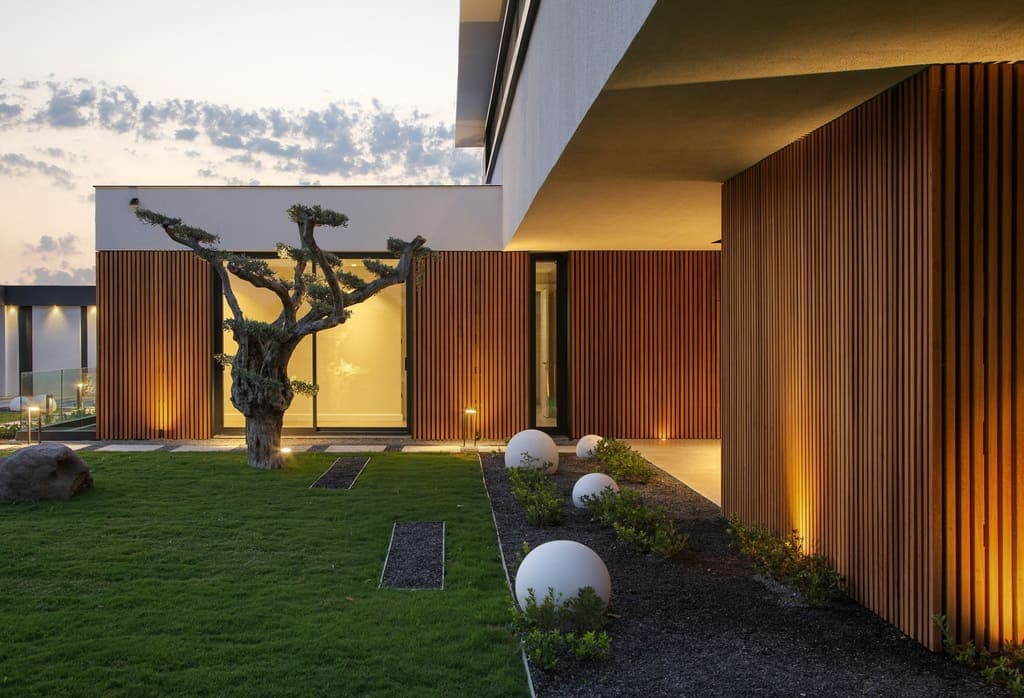
Understanding Thermally Modified Wood for Wall Applications
Thermally modified wood undergoes a process of heating in controlled environments, which alters its chemical and physical properties. This modification typically results in wood that is more stable, less absorbent, and exhibits a darker, richer tone.
For covered patio walls, these characteristics translate into several benefits. The reduced moisture absorption can help minimize warping, cupping, or checking, which are common concerns with untreated wood in exterior applications. The enhanced stability means the wood is less likely to move significantly with changes in humidity, contributing to a more consistent appearance over time.
While thermally modified wood is suitable for exterior use, its application on covered patio walls often allows for a broader range of finish options compared to fully exposed siding. It can be left to weather naturally to a silver-gray patina or protected with a finish to maintain its original color.
Selecting the Right Species and Profile for Your Patio Walls
Thermally modified wood is available in various species, each offering unique grain patterns and characteristics. Common options include Ash, Pine, and Spruce. The choice of species can influence the final aesthetic and how the wood accepts finishes.
Profiles for wall applications range from traditional tongue-and-groove boards to contemporary shiplap or rainscreen options. For covered patio walls, a tongue-and-groove profile can create a seamless, finished look, while shiplap offers distinct shadow lines. Rainscreen assemblies, while not strictly necessary for covered walls due to reduced direct exposure, can still provide an air gap for ventilation, which is beneficial in any exterior wood application.
Consider the overall design of your patio and home when selecting a profile. A narrow board with a tight gap might suit a modern aesthetic, while wider boards with more pronounced shadow lines could complement a rustic or traditional design. For example, NORX thermally modified wood offers various profiles designed for exterior cladding, which can be adapted for covered wall applications.
When planning, also consider how the chosen profile will integrate with trim, corners, and any openings like windows or doors on the patio wall.
Planning for Installation and Substructure in Charleston, WV
Even for covered patio walls, proper installation is crucial for long-term performance. The substructure must be sound, level, and capable of securely holding the thermally modified wood. This typically involves wood furring strips or a similar framework attached to the existing wall.
For a climate like Charleston, WV, where humidity levels can fluctuate, ensuring adequate air circulation behind the wood is beneficial. While a full rainscreen system might be over-engineered for a fully covered wall, incorporating furring strips to create a modest air gap can help prevent moisture accumulation and promote drying.
Fasteners should be corrosion-resistant, such as stainless steel, to prevent staining and ensure durability. The type of fastener (e.g., face-nailed, hidden clip) will depend on the chosen profile and desired aesthetic. Always follow manufacturer recommendations for fastener type, spacing, and installation method to ensure the wood is securely anchored while allowing for natural movement.
Consider the orientation of the boards. Horizontal installation can make a space feel wider, while vertical installation can add height. Diagonal patterns offer a unique, dynamic look but may involve more complex cutting and waste.
Finishing and Maintenance for Lasting Beauty
One of the advantages of thermally modified wood is its versatility in finishing. It can be left unfinished to weather to a natural silver-gray, or a stain or clear coat can be applied to preserve its original color and provide additional protection.
If choosing to leave the wood unfinished, understand that the weathering process will begin immediately, and the wood will gradually change color. The rate and shade of weathering can vary depending on exposure to indirect sunlight and ambient moisture.
For those who prefer to maintain the wood's initial appearance, a high-quality exterior finish designed for wood cladding is recommended. These finishes typically contain UV inhibitors to slow down color change. Regular cleaning and reapplication of the finish, as per manufacturer instructions, will be necessary to maintain its protective qualities and aesthetic.
Regardless of the finish choice, periodic cleaning with a mild soap and water solution can help remove dirt, pollen, and mildew, which can accumulate on covered patio surfaces.
Hypothetical Project Example: Charleston Covered Patio Accent Wall
Imagine a covered patio in a Charleston home, approximately 12 feet wide by 8 feet high, where the homeowner wants to add a thermally modified wood accent wall to define the seating area. They've chosen a NORX thermally modified Ash, 1x6 (nominal) shiplap profile for its clean lines and rich, dark brown tone. The actual coverage width of each board is 5.25 inches.
To calculate the material needed for the 12-foot wide by 8-foot high wall: The total area is 12 feet * 8 feet = 96 square feet. The homeowner decides to install the boards horizontally.
First, calculate the number of horizontal courses needed: 8 feet (height) * 12 inches/foot = 96 inches. 96 inches / 5.25 inches/board = approximately 18.28 boards. Rounding up, 19 full courses are needed. Each course will be 12 feet long.
Therefore, 19 boards, each 12 feet long, are required. Total linear footage = 19 boards * 12 feet/board = 228 linear feet. If boards are typically sold in 8-foot, 10-foot, or 12-foot lengths, purchasing 19 pieces of 12-foot boards would be the most efficient approach, minimizing cuts and waste for this specific dimension.
This would require roughly 12 feet (width) / 1.33 feet (16 inches) = 9 furring strips, each 8 feet long, totaling 72 linear feet of furring. This example assumes a perfectly rectangular wall with no openings; actual projects require precise measurement and accounting for all obstructions.
Before you order
- Confirm the specific thermally modified wood species and profile suitable for covered wall applications.
- Measure the precise dimensions of your covered patio wall(s), accounting for all openings and obstructions.
- Determine the desired orientation (horizontal, vertical, diagonal) and pattern of the wood boards.
- Plan the substructure, including furring strip dimensions, spacing, and attachment method, to ensure proper ventilation and support.
- Select appropriate corrosion-resistant fasteners compatible with the chosen wood profile and installation method.
- Decide on the desired finish: unfinished (to weather naturally) or finished (with stain/clear coat), considering maintenance implications.
- Account for waste factor (typically 10-15%) in your material calculations.
- Research local building considerations or recommendations for exterior wood installations in Charleston, WV, if any apply to covered areas.
Confirm installation details, approved uses and warranty terms in the current instructions for the exact product and profile. Your installer should verify the substrate, structure and applicable project requirements.
This is a planning guide for projects in Charleston, WV. Ask our team to confirm availability, delivery to your ZIP code and which branch can support your order.
Questions to help you decide
Can thermally modified wood be painted?
While thermally modified wood can be painted, it is more commonly stained or left unfinished to highlight its natural grain and color. If painting is desired, select a high-quality exterior primer and paint system specifically formulated for wood, ensuring proper adhesion and durability. Always follow the paint manufacturer's recommendations for surface preparation and application.
How does thermally modified wood perform in Charleston, WV's climate?
Thermally modified wood's enhanced stability and reduced moisture absorption make it well-suited for the fluctuating temperatures and humidity levels common in Charleston, WV. Its resistance to decay and insects also contributes to its long-term performance in an outdoor, albeit covered, environment. Proper installation with an air gap and appropriate finishing (if desired) will further optimize its durability.
Is thermally modified wood environmentally friendly?
The thermal modification process typically uses only heat and steam, avoiding harsh chemicals. This makes it an attractive option for those seeking a more environmentally conscious material. Furthermore, many thermally modified wood products are sourced from sustainably managed forests. Always inquire about specific product certifications and sourcing practices.
Ready to Transform Your Charleston Patio?
For your covered patio wall project in Charleston, WV, request a material quote today. Provide your project dimensions, desired thermally modified wood profile, and ZIP code to confirm current availability and service options. We're here to help you select the ideal materials for your outdoor space.
Request a material quote →