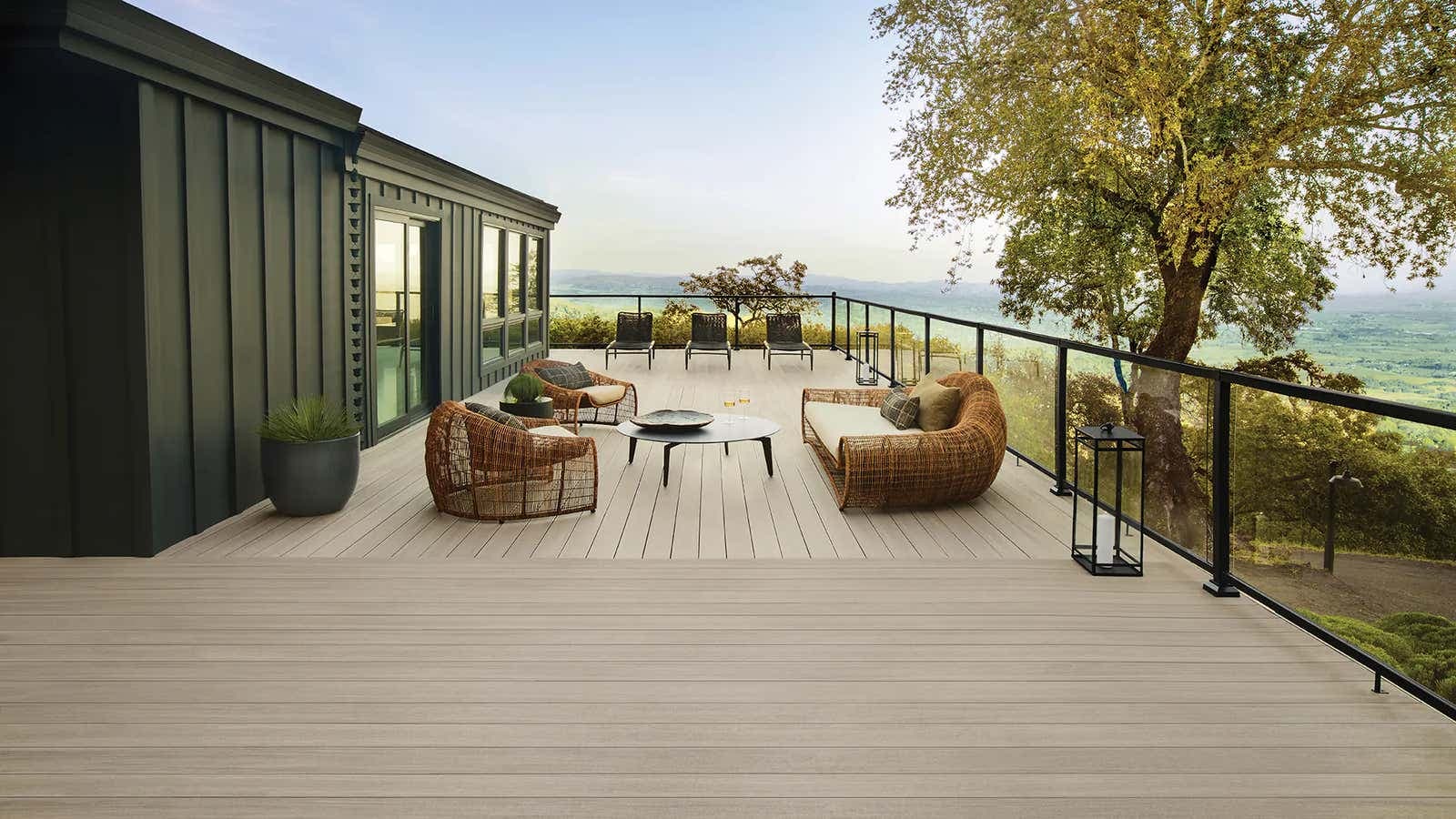
Defining Your Compact Outdoor Space
Before selecting materials, clearly define the boundaries and purpose of your compact outdoor area. Is it a small patio off a back door, a narrow balcony, or a side yard nook? Understanding the exact dimensions and how you intend to use the space (e.g., dining, relaxation, container gardening) will guide your decking choices. For instance, a balcony might require lighter materials and specific structural considerations, while a ground-level patio offers more flexibility in sub-base preparation.
Consider the existing elements: are there walls, fences, or planters that need to be incorporated into the design? Accurate measurements, including height differences and potential obstructions, are crucial for efficient material planning and to minimize waste.
Composite Decking Benefits for Small Spaces
Composite decking is well-suited for compact outdoor areas due to its consistent appearance and low maintenance requirements. Brands like Trex, TimberTech, and Fiberon offer boards with uniform dimensions and color, which can create a clean, uncluttered look essential in smaller spaces. The ability to wash with soap and water, without the need for sanding or staining, means less ongoing effort and disruption in a tight area. This consistency also helps in precise cuts and layouts, minimizing visible seams or irregularities that can be more noticeable in a confined setting.
Many composite products also offer cooler-underfoot options, which can be a significant advantage in areas that receive direct sunlight, making the space more comfortable for extended use. The durability of composite materials means the deck will maintain its appearance over time, reducing the need for repairs or replacements that can be challenging in a small, established outdoor area.
Choosing Board Profiles and Colors
For compact spaces, the choice of board profile and color significantly impacts the perceived size and ambiance. Narrower board profiles can sometimes make a small area feel larger by creating a sense of linearity and depth. Conversely, very wide boards might make the space feel cramped or disproportionate. Consider the overall scale of your home and existing outdoor features when making this decision.
Lighter colors tend to make spaces feel more open and expansive, reflecting light and creating a brighter atmosphere. Darker colors, while elegant, can sometimes make a small area feel more enclosed. However, a dark deck paired with light surrounding elements can create a striking contrast. Explore the color palettes offered by Trex, TimberTech, and Fiberon, noting how specific shades interact with natural light and the colors of your home's exterior. Consistent color and grain, board after board, ensure a cohesive look even with varied lighting.
Support Systems and Access Considerations
The type of support system for your composite deck is critical, especially in compact or elevated spaces. For ground-level patios, a properly prepared sub-base is essential. For balconies or raised decks, the underlying structure must be robust enough to support the decking and any planned furnishings or occupants. Always confirm the required joist spacing and support details for your chosen composite decking collection, as these can vary by manufacturer and board profile.
Access for installation and future maintenance is another key factor. In a tight space, consider how materials will be delivered and maneuvered. If the deck is against a wall or in a corner, ensure there is sufficient room for installers to work safely and efficiently. Planning for any necessary ventilation beneath the deck is also important, as proper airflow contributes to the longevity of the structure and decking.
Worked Example: A 6x10 Foot Balcony Deck
Imagine a compact balcony in Charleston, WV, measuring 6 feet wide by 10 feet long, where you want to install composite decking. This 60 square foot area needs careful planning.
First, you decide on a standard composite decking board, such as a 12-foot length. For the 10-foot dimension, you'll use full boards. For the 6-foot width, you'll need to cut boards. If running boards parallel to the 10-foot length, you'd need 6-foot sections. Since standard boards are often 12 feet, you could get two 6-foot pieces from one 12-foot board, minimizing waste.
Assuming a nominal board width of 5.5 inches (0.458 feet), to cover the 6-foot width, you would need approximately 6 feet / 0.458 feet/board = 13.1 boards. Rounding up, you'd need 14 boards across the 6-foot width. If using 12-foot lengths, you would need 14 boards, each cut to 6 feet, yielding 28 sections. This means purchasing 14 boards of 12-foot length. If using shorter lengths, the calculation would adjust. Always confirm the exact board dimensions and recommended spacing from the manufacturer.
Complementary Products for a Cohesive Look
To complete your compact outdoor space, consider complementary products that enhance both aesthetics and functionality. Fascia and trim boards, often available in matching or coordinating colors from composite decking manufacturers, provide a clean finished edge, especially important in a small space where every detail is visible. Railing systems, if needed for safety or aesthetics, can be chosen to blend seamlessly with the decking.
For additional visual interest and functionality, consider adding low-profile outdoor lighting or integrated planters. These elements can help define zones within the compact area without overwhelming it. Explore options for composite railing systems or even hardwood railing for a contrasting natural element. For a truly integrated design, consider how your decking connects to interior flooring or adjacent landscaping.
Before you order
- Precisely measure the dimensions of your compact outdoor space.
- Determine the primary use of the deck (e.g., dining, relaxation, pathways).
- Research composite decking brands (Trex, TimberTech, Fiberon) for suitable collections.
- Consider lighter board colors and narrower profiles to enhance perceived space.
- Verify manufacturer-specific joist spacing and support requirements.
- Plan for material delivery and installation access in confined areas.
- Select matching or complementary fascia, trim, and railing options.
- Consider integrated lighting or planters to maximize functionality without clutter.
- Confirm local building codes and any homeowner association rules for decks and balconies.
- Request a material quote with exact dimensions, preferred profile, and your project ZIP code.
Confirm installation details, approved uses and warranty terms in the current instructions for the exact product and profile. Your installer should verify the substrate, structure and applicable project requirements.
This is a planning guide for projects in Charleston, WV. Ask our team to confirm availability, delivery to your ZIP code and which branch can support your order.
Questions to help you decide
Can composite decking be installed over an existing concrete patio in a small space?
Yes, composite decking can often be installed over an existing concrete patio, provided the patio is structurally sound, level, and offers adequate drainage. A sleeper system or a low-profile deck framing system would typically be used to create the necessary ventilation space and support for the composite boards. Always consult the specific manufacturer's installation guidelines for details on sub-base requirements and ventilation.
How do I choose the right color for composite decking in a small, shaded area?
For small, shaded areas, lighter composite decking colors can help brighten the space and make it feel more open by reflecting available light. While darker colors absorb more light, they can also provide a sophisticated contrast if paired with lighter surrounding elements. Consider ordering samples to see how different colors appear in the specific lighting conditions of your compact, shaded area throughout the day.
What maintenance is required for composite decking in a compact outdoor space?
Composite decking is designed for low maintenance. Typically, an annual wash with soap and water is sufficient to keep it clean. For compact spaces, this is particularly advantageous as it minimizes the need for extensive cleaning routines that might be difficult in a confined area. Avoid using harsh chemicals or pressure washers that exceed manufacturer recommendations, as these can damage the surface. Refer to your specific product's care instructions for detailed guidance.
Ready to Plan Your Compact Composite Deck?
Start your project by requesting a material quote. Provide your project dimensions, desired composite decking profile, and project ZIP code to receive an accurate estimate and confirm current availability and service options.
Request a material quote →