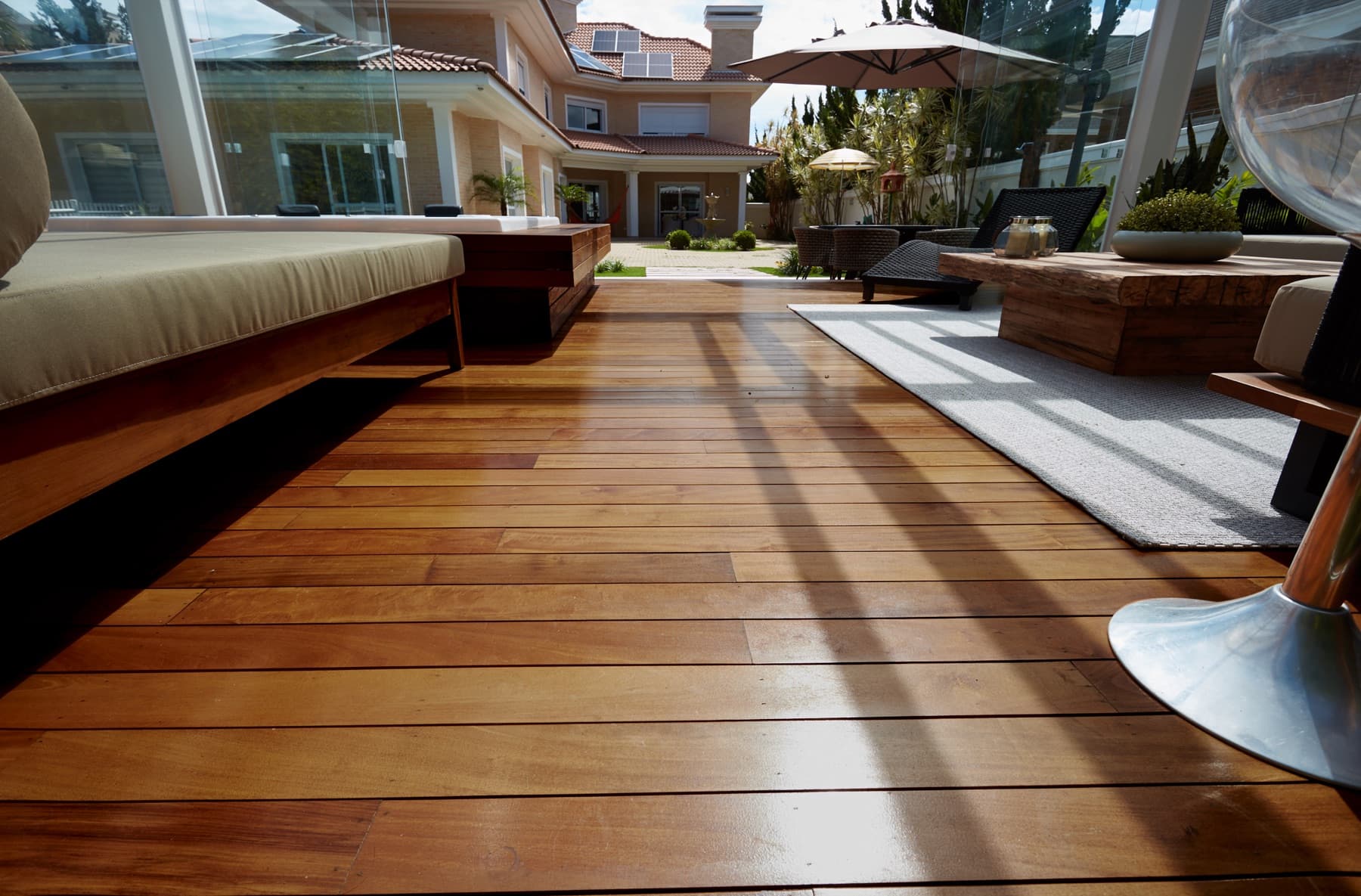
Assess Your Existing Deck Frame and Substructure
Before selecting new decking boards, a comprehensive inspection of your existing deck frame is essential. This includes checking the joists, beams, ledger board, and footings for any signs of rot, insect damage, or structural instability. Even if the surface decking is worn, the underlying structure might still be sound, potentially saving significant time and cost.
Look for consistent spacing between joists, as this will influence the type and thickness of hardwood decking you can install. Wider spacing may require thicker decking boards or additional blocking to ensure proper support and prevent deflection. Any compromised structural elements must be repaired or replaced before new decking is laid.
Consider Local Environmental Factors for Hardwood Performance
Charleston, WV, experiences a range of weather conditions, including humid summers and cold winters, which can impact decking materials. Hardwood decking, particularly dense tropical species like Ipe and Cumaru, is known for its resilience to such environmental shifts.
These hardwoods are naturally resistant to moisture absorption and temperature fluctuations, minimizing issues like warping or cracking. When planning your renovation, consider the deck's exposure to direct sunlight, shade, and precipitation. Proper ventilation beneath the deck is crucial in humid climates to prevent moisture buildup and ensure the longevity of both the decking and the substructure.
Comparing Ipe and Cumaru for Your Renovation
When choosing hardwood decking for a renovation, Ipe and Cumaru are two popular options known for their durability and aesthetic appeal. Understanding their distinct characteristics can help you make an informed decision.
Ipe, also known as Brazilian Walnut, is highly regarded for its exceptional hardness and resistance to rot, insects, and decay. Its color ranges from reddish-brown to olive-brown, offering a sophisticated look that can be maintained with a UV-blocking sealer or allowed to weather to a silvery-gray patina. Ipe's density makes it a premium choice, often specified for demanding applications due to its robust performance. It also exhibits minimal movement post-installation and natural resistance to weather changes, mold, and termites.
Cumaru, another Brazilian hardwood, offers similar benefits at a different price point. Cumaru is also resistant to termites and weather changes, making it a very durable option. It presents a warm, reddish-brown to golden-brown hue and can emit a subtle cinnamon-vanilla scent when worked. Both Ipe and Cumaru are excellent choices for outdoor decking due to their natural resistance to environmental stressors.
Ipe represents a higher upfront investment but offers a longer potential service life, while Cumaru provides a very durable alternative with a slightly different aesthetic and cost profile.
Planning for Board Dimensions and Layout
The dimensions of hardwood decking boards play a role in both aesthetics and installation. Lumber Plus offers Ipe in dimensions from 1"x2" up to 6"x6" and lengths from 3 to 24 feet. Cumaru is available in similar profiles. When renovating, consider if you want to maintain the existing board width or opt for a different look. Wider boards can create a more contemporary feel, while narrower boards might suit a traditional design.
For a renovation project, a straight-lay pattern is generally the most straightforward, especially if you are re-using an existing frame. If your joist spacing is non-standard, you might need to adjust the layout or add blocking to ensure adequate support for the new decking. Always consult product specifications for recommended fastener types and spacing to ensure a secure and lasting installation.
Hypothetical Renovation Example: Replacing a 10'x12' Deck Surface
Let's consider a hypothetical deck renovation project in Charleston, WV, where an existing 10-foot by 12-foot deck surface needs to be replaced.
For this project, we decide to use Ipe decking boards, specifically 1x6 (nominal) profile, which typically measures around 5.5 inches wide. To cover the 120 square feet, we need to calculate the number of boards. A 12-foot long board would be ideal to minimize butt joints across the 12-foot dimension.
Number of boards needed along the 10-foot width: 10 feet * 12 inches/foot = 120 inches. 120 inches / 5.5 inches/board = approximately 21.8 boards. Since you cannot purchase partial boards, you would need 22 boards for each 12-foot length. Total boards: 22 boards * 12 feet length = 264 linear feet. We recommend adding 10-15% for cuts, waste, and future repairs, bringing the total to approximately 290-300 linear feet of Ipe.
This calculation assumes a straight-lay pattern with boards running parallel to the 12-foot dimension. Always confirm exact board dimensions and required waste factors with your supplier when ordering.
Before you order
- Inspect existing deck frame for structural integrity (joists, beams, ledger, footings).
- Measure existing joist spacing and note any inconsistencies.
- Determine if the existing frame can support the weight and fastening requirements of hardwood.
- Assess deck's exposure to sun, shade, and moisture for material suitability.
- Choose between Ipe (premium, long lifespan) and Cumaru (durable, value-oriented) based on budget and aesthetic.
- Select desired board profile (width, thickness) and consider its impact on the layout.
- Calculate linear footage needed, adding 10-15% for waste and cuts.
- Plan for proper ventilation beneath the deck.
- Confirm availability of chosen hardwood profiles and lengths.
- Request a material quote with project dimensions, exact profile, and ZIP code.
Confirm installation details, approved uses and warranty terms in the current instructions for the exact product and profile. Your installer should verify the substrate, structure and applicable project requirements.
This is a planning guide for projects in Charleston, WV. Ask our team to confirm availability, delivery to your ZIP code and which branch can support your order.
Questions to help you decide
Can I reuse my existing deck frame for hardwood decking?
You can often reuse an existing deck frame if it is structurally sound and in good condition. A thorough inspection for rot, insect damage, and proper joist spacing is crucial. Any compromised elements must be repaired or replaced to ensure the new hardwood decking is adequately supported and lasts as intended.
How much maintenance does hardwood decking require in Charleston, WV?
Hardwood decking like Ipe and Cumaru requires relatively low maintenance. A wash once a year is generally sufficient. If you wish to maintain the original rich brown color, an annual application of a UV-blocking oil or sealer is recommended. If left untreated, the wood will naturally weather to a silvery-gray patina without affecting its structural integrity.
Does Lumber Plus offer different lengths and profiles of hardwood decking?
Yes, Lumber Plus offers a variety of profiles and lengths for hardwood decking, including Ipe and Cumaru. For example, Ipe is available in dimensions from 1"x2" up to 6"x6" and lengths from 3 to 24 feet. Availability can vary, so it is best to contact us with your project dimensions and desired profile to confirm current stock and custom-milling options.
Ready to Renovate Your Charleston, WV Deck?
Request a material quote with your project dimensions, exact profile, and ZIP code to confirm current availability and service options for hardwood decking.
Request a material quote →