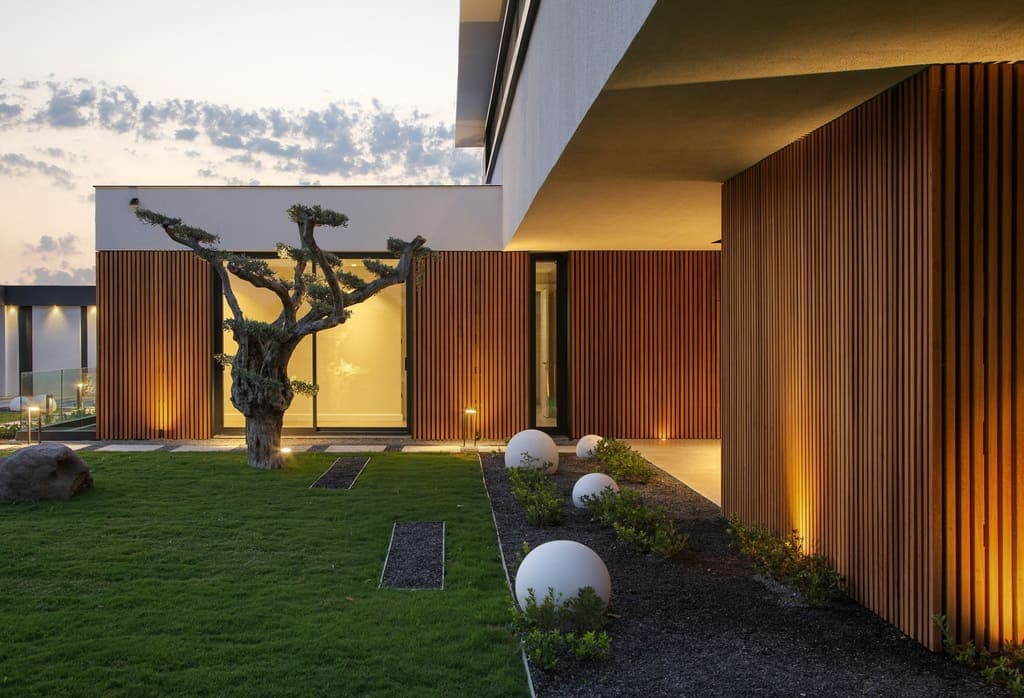
Understanding Thermally Modified Wood for Covered Walls
Thermally modified wood undergoes a high-heat treatment process that alters its cellular structure. This process aims to enhance the wood's stability and resistance to certain environmental factors. For covered patio walls, these properties translate to a material that is less prone to movement from humidity fluctuations compared to untreated wood, which can be particularly beneficial in environments with temperature swings.
While covered walls are protected from direct rain and intense sun, they still experience ambient humidity and temperature changes. The stability of thermally modified wood helps maintain the integrity of the wall assembly over time, reducing the likelihood of warping or cupping. This makes it a suitable choice for creating a lasting, attractive surface in a sheltered outdoor setting.
Common species used for thermal modification include Spruce, Pine, and Ash. Each species offers a unique grain pattern and color, which can be further enhanced or preserved with finishes.
Choosing the Right Profile and Appearance
The profile of the thermally modified wood planks significantly impacts the visual texture and shadow lines of your covered patio wall. For covered applications, a wider range of profiles can be considered compared to fully exposed siding, as moisture management is less critical.
Common profiles include Tongue & Groove (T&G), Shiplap, and Square Edge. T&G and Shiplap provide interlocking or overlapping connections that create defined shadow lines and a neat appearance. Square edge profiles, when installed with a gap, can create a more open, modern look.
Consider the overall design aesthetic of your patio. For a contemporary feel, a sleek T&G or shiplap profile with a minimal reveal might be preferred. For a more rustic or textured appearance, wider boards or a profile that creates deeper shadow lines could be chosen. The natural color of thermally modified wood often ranges from a honey brown to a darker chocolate tone, depending on the species and modification intensity. This color can be maintained with a UV-protective finish or allowed to naturally weather to a silver-gray patina if left unfinished.
Finishing and Maintenance for Covered Patios
The decision to finish thermally modified wood for covered patio walls depends on the desired aesthetic and level of maintenance. Left unfinished, thermally modified wood will gradually weather to a silver-gray. This natural patina is often sought after for a low-maintenance, organic look.
If you prefer to maintain the original brown tones, a UV-protective oil finish is recommended. These finishes help to slow the weathering process and can enhance the wood's natural grain. For covered walls, the finish may last longer than on fully exposed surfaces due to reduced direct sunlight and rain.
Maintenance for finished walls typically involves periodic cleaning and reapplication of the oil according to the manufacturer's recommendations. Unfinished walls generally require less active maintenance beyond occasional cleaning to remove dirt or debris. Always follow the specific instructions from the finish manufacturer.
Explore options such as NORX finishes, which are designed to complement thermally modified wood, or general exterior wood finishes available for various applications.
Attachment Methods and Substructure
Proper attachment is crucial for the longevity and appearance of your thermally modified wood wall. For covered patio walls, a robust substructure is essential. This typically involves vertical furring strips installed over the existing wall sheathing or framing.
Furring strips create an air gap behind the wood, allowing for ventilation and helping to prevent moisture accumulation, even in a covered environment. This air gap is a good practice for any exterior wood cladding.
Fastening methods can include face fastening or concealed fastening. Face fastening involves driving screws or nails directly through the face of the board into the furring strips. While visible, this method offers strong holding power. For a cleaner look, concealed fastening systems, often used with T&G or shiplap profiles, hide the fasteners within the joinery.
Always use corrosion-resistant fasteners, such as stainless steel screws, to prevent staining and ensure long-term durability. Consult the specific product documentation for recommended fastener types and spacing.
Worked Example: Designing a Covered Patio Wall
Consider a covered patio wall measuring 10 feet wide by 8 feet high. The homeowner desires a modern look with a subtle shadow line using thermally modified Spruce, a common species for this application. They plan to use a NORX thermally modified Spruce, 1x6 (nominal) shiplap profile, which has a 5.125-inch (5 and 1/8 inches) exposed face width.
First, calculate the total area: 10 ft * 8 ft = 80 square feet. Next, determine the number of boards needed for the width. A 10-foot width is 120 inches. Dividing by the 5.125-inch exposed face width: 120 inches / 5.125 inches/board = 23.41 boards. Since partial boards are used for cuts, we'd round up to 24 boards to cover the full width, assuming some offcuts might be reusable.
For the 8-foot height, if using 8-foot long boards, each board would cover 5.125 inches in width and 8 feet in height. Therefore, 24 boards of 8-foot length would be a starting point for material calculation. It's always advisable to add a waste factor, typically 5-10%, to account for cuts, defects, or future repairs. For this project, purchasing 26-27 boards of 8-foot length would provide a reasonable buffer.
Before you order
- Confirm thermally modified wood species and profile are suitable for wall application.
- Decide on desired finish: unfinished (silver-gray patina) or finished (color retention with UV-protective oil).
- Plan for a substructure with furring strips to create a ventilation gap.
- Select appropriate corrosion-resistant fasteners (face-fastened or concealed).
- Calculate material quantities with a waste factor.
- Consider the aesthetic integration with other patio materials and design elements.
Confirm installation details, approved uses and warranty terms in the current instructions for the exact product and profile. Your installer should verify the substrate, structure and applicable project requirements.
This is a planning guide for projects in Bend, OR. Ask our team to confirm availability, delivery to your ZIP code and which branch can support your order.
Questions to help you decide
Can thermally modified wood be painted for covered patio walls?
While thermally modified wood can accept paint, it is generally recommended to use breathable, film-forming finishes like stains or oils if you wish to change its color. The stability of thermally modified wood makes it less prone to paint cracking compared to untreated wood, but a film-forming paint may still obscure its natural grain and require more rigorous maintenance over time. Many prefer to enhance the natural wood tones or allow it to weather.
Does thermally modified wood require a rainscreen system on a covered patio wall?
While covered patio walls are protected from direct rain, installing thermally modified wood over furring strips to create a ventilation gap (often called a rainscreen gap) is still a recommended practice. This gap allows for air circulation behind the cladding, helping to manage any ambient moisture, prevent condensation, and ensure the long-term health of the wall assembly. It contributes to the overall durability of the installation.
How does the climate in Bend, OR, affect the choice of thermally modified wood for covered patios?
Bend, OR, experiences distinct seasonal temperature fluctuations and relatively low humidity, though winter snow and summer heat are factors. The enhanced stability of thermally modified wood helps it perform well in such conditions, as it is less susceptible to expansion and contraction caused by changes in temperature and moisture compared to untreated wood. This stability helps maintain the aesthetic integrity of the covered patio walls over time, reducing concerns about warping or gapping.
Ready to Plan Your Thermally Modified Wood Patio Walls?
Request a material quote with your project dimensions, exact profile preferences, and ZIP code to confirm current availability and service options. Our team can assist with specific product details and material takeoffs.
Request a material quote →