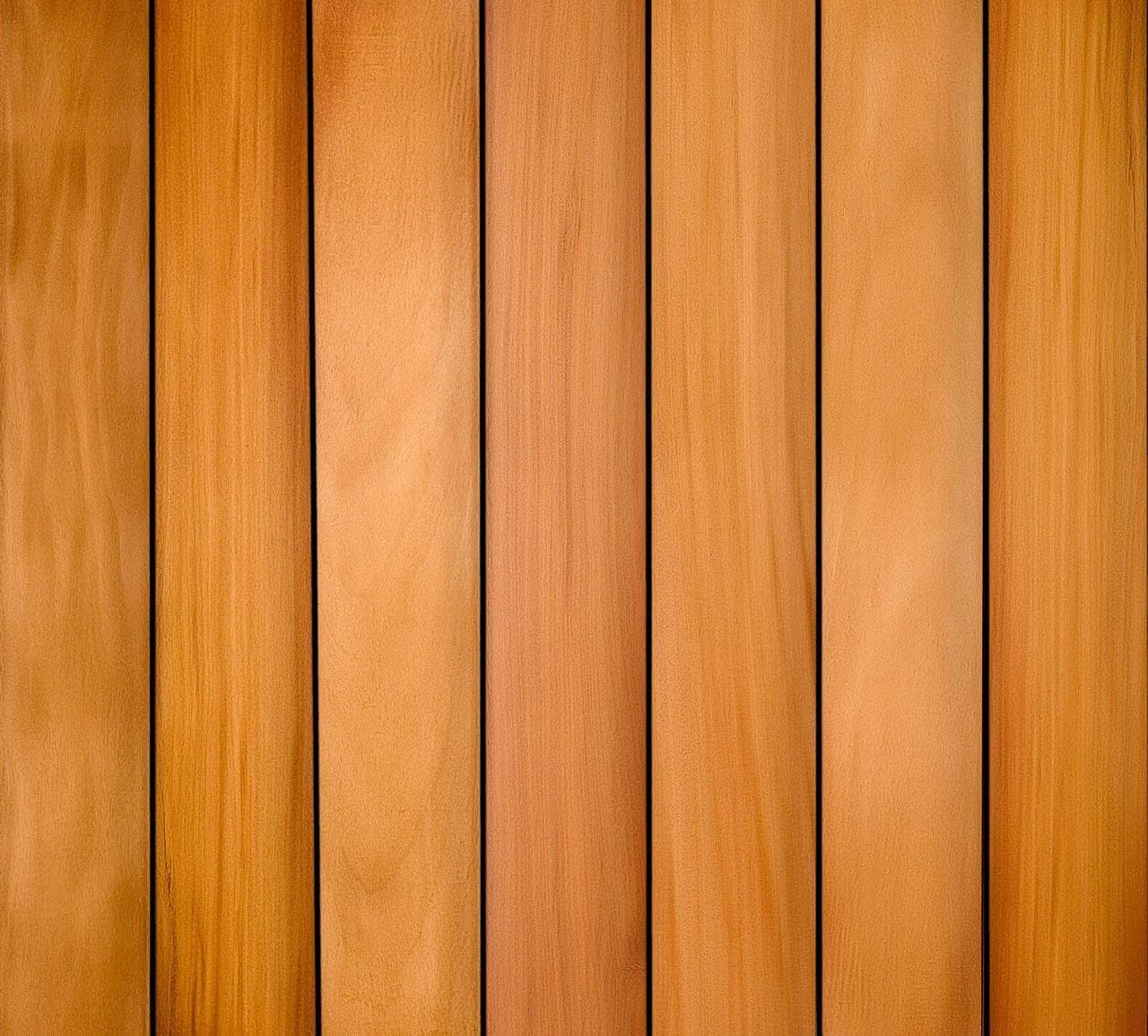
The Distinctive Golden Tone of Garapa
Garapa hardwood is recognized for its clear, golden color, a characteristic that has made it popular in modern architecture. This natural hue can brighten a terrace space, creating a welcoming atmosphere. Unlike some woods that require staining to achieve a specific color, Garapa's inherent golden appearance offers a natural warmth that can complement both traditional and contemporary home exteriors. Over time, like many hardwoods, Garapa can gracefully weather to a silver-gray patina if left untreated, or its original golden color can be maintained with appropriate UV-inhibiting finishes.
When planning a terrace, consider how the golden tone will interact with surrounding materials such as stone, stucco, or landscaping. Physical samples are invaluable for evaluating the color in various lighting conditions and against your home's existing palette. This ensures the finished terrace harmonizes with its surroundings and achieves your desired aesthetic outcome.
Durability and Natural Resistance for Outdoor Terraces
Terraces are exposed to the elements, making material durability a primary concern. Garapa is a very durable hardwood, resistant to termites and weather changes. This natural resilience means it does not typically require constant chemical treatments to withstand mold and decay, simplifying long-term maintenance. Its air dry density of 4.11 lbs/bf contributes to its robustness, making it a practical choice for outdoor applications.
This durability is particularly beneficial for terraces, where the decking is continuously exposed to moisture, temperature fluctuations, and potential pest activity. Choosing a naturally resistant material can reduce the need for frequent repairs or replacements, offering peace of mind for homeowners in Bend, OR.
Planning Your Terrace Layout with Garapa Decking
Designing a terrace layout with Garapa decking involves careful consideration of board dimensions, orientation, and potential cutting plans. Garapa decking is available in profiles such as 5/4"x6" (actual 1" x 5.5"), with a grooved option also available, and lengths ranging from 3 to 24 feet. These dimensions provide flexibility for various design approaches, from simple linear patterns to more intricate designs.
For a typical terrace, you might consider running boards perpendicular to the house for a classic look, or diagonally to add visual interest. When planning, measure the exact dimensions of your terrace area. For example, an 8-foot by 10-foot terrace would require 80 square feet of decking. However, simply dividing the total area by the board's surface area will not yield the exact purchase quantity due to cuts and waste. Always account for waste factor, typically 10-15%, especially with non-standard layouts or when working with fixed board lengths. Aim to minimize seams and offcuts where possible to optimize material use.
Worked Example: Calculating Garapa for a 12'x15' Terrace
Let's consider a hypothetical terrace project in Bend, OR, measuring 12 feet by 15 feet. We'll use 5/4"x6" (actual 1" x 5.5") Garapa decking boards. The total area is 12 ft * 15 ft = 180 square feet.
Each 5/4"x6" board has a width of 5.5 inches (0.4583 feet). If we assume a typical board length of 12 feet, each board covers 0.4583 ft * 12 ft = 5.5 square feet. To cover 180 square feet, you would theoretically need 180 / 5.5 = 32.7 boards. However, this doesn't account for cuts, waste, or specific layout requirements.
For a linear installation, running the 12-foot boards along the 15-foot dimension would mean 15 ft / 12 ft = 1.25 boards per run. This means some boards will need to be cut, and the offcut may or may not be reusable depending on the next section's length. Running the boards along the 12-foot dimension means 12 ft / 12 ft = 1 full board per run. You would need 15 ft / 0.4583 ft = 32.7 rows of boards. Therefore, you would need 33 full 12-foot boards to cover the width, resulting in 33 boards * 12 ft = 396 linear feet. With an approximate 10% waste factor, you should plan to purchase around 396 * 1.10 = 435.6 linear feet of material. This translates to roughly 37 boards if purchasing solely 12-foot lengths. Always confirm exact board availability and cutting plans with your supplier.
Maintenance and Appearance Options for Garapa
Garapa's natural resistance minimizes the need for extensive chemical treatments. For those who appreciate the natural aging process of wood, Garapa can be left to weather to a soft silver-gray patina over time. This process is a natural characteristic of many hardwoods when exposed to UV light and moisture.
If you prefer to maintain Garapa's original golden color, periodic application of a UV-inhibiting oil or sealer is recommended. This helps protect the wood from the sun's rays, slowing the weathering process. Regular cleaning to remove dirt and debris will also contribute to the deck's appearance and longevity. Always consult product-specific guidelines for cleaning and finishing products to ensure compatibility and optimal results.
Before you order
- Confirm desired aesthetic: Do you prefer Garapa's natural golden tone or will you allow it to weather to silver-gray?
- Measure terrace dimensions accurately: Obtain precise length, width, and any irregular shape measurements.
- Consider board orientation: Decide if boards will run parallel, perpendicular, or diagonally to the house.
- Account for waste: Plan for a 10-15% waste factor in your material calculations.
- Review available profiles and lengths: Match product availability (e.g., 5/4"x6", 3-24 ft lengths) to your layout.
- Budget for fasteners and accessories: Include hidden fasteners or screws, and any trim or fascia boards.
- Plan for maintenance: Decide on your approach to cleaning and finishing to maintain desired appearance.
- Request physical samples: Evaluate Garapa's color and texture in your specific lighting and environment.
Confirm installation details, approved uses and warranty terms in the current instructions for the exact product and profile. Your installer should verify the substrate, structure and applicable project requirements.
This is a planning guide for projects in Bend, OR. Ask our team to confirm availability, delivery to your ZIP code and which branch can support your order.
Questions to help you decide
What is the typical color of Garapa decking?
Garapa is known for its distinctive golden color. This natural hue can bring warmth and a modern aesthetic to outdoor spaces. If left untreated and exposed to the elements, it will gradually weather to a silver-gray patina.
Does Garapa decking require special treatments for outdoor use?
Garapa boasts natural resistance to rot, decay, and insects, which means it generally does not require constant chemical treatments. While it's naturally durable, applying a UV-inhibiting oil can help maintain its golden color and provide additional protection from weathering.
How do I calculate the amount of Garapa decking I need for my terrace?
Start by measuring the total square footage of your terrace. Then, consider the dimensions of the Garapa boards you plan to use (e.g., 5/4"x6"). It's crucial to account for a waste factor, typically 10-15%, especially for cuts and potential board defects. For a precise estimate, it's best to create a detailed layout plan or consult with a supplier.
Ready to Plan Your Garapa Terrace in Bend, OR?
Request a material quote for your project. Provide your project dimensions, desired Garapa profile (e.g., 5/4"x6" grooved or smooth), and your ZIP code to confirm current availability and service options. Our team can assist you in selecting the right quantities and profiles for your terrace design.
Request a material quote →