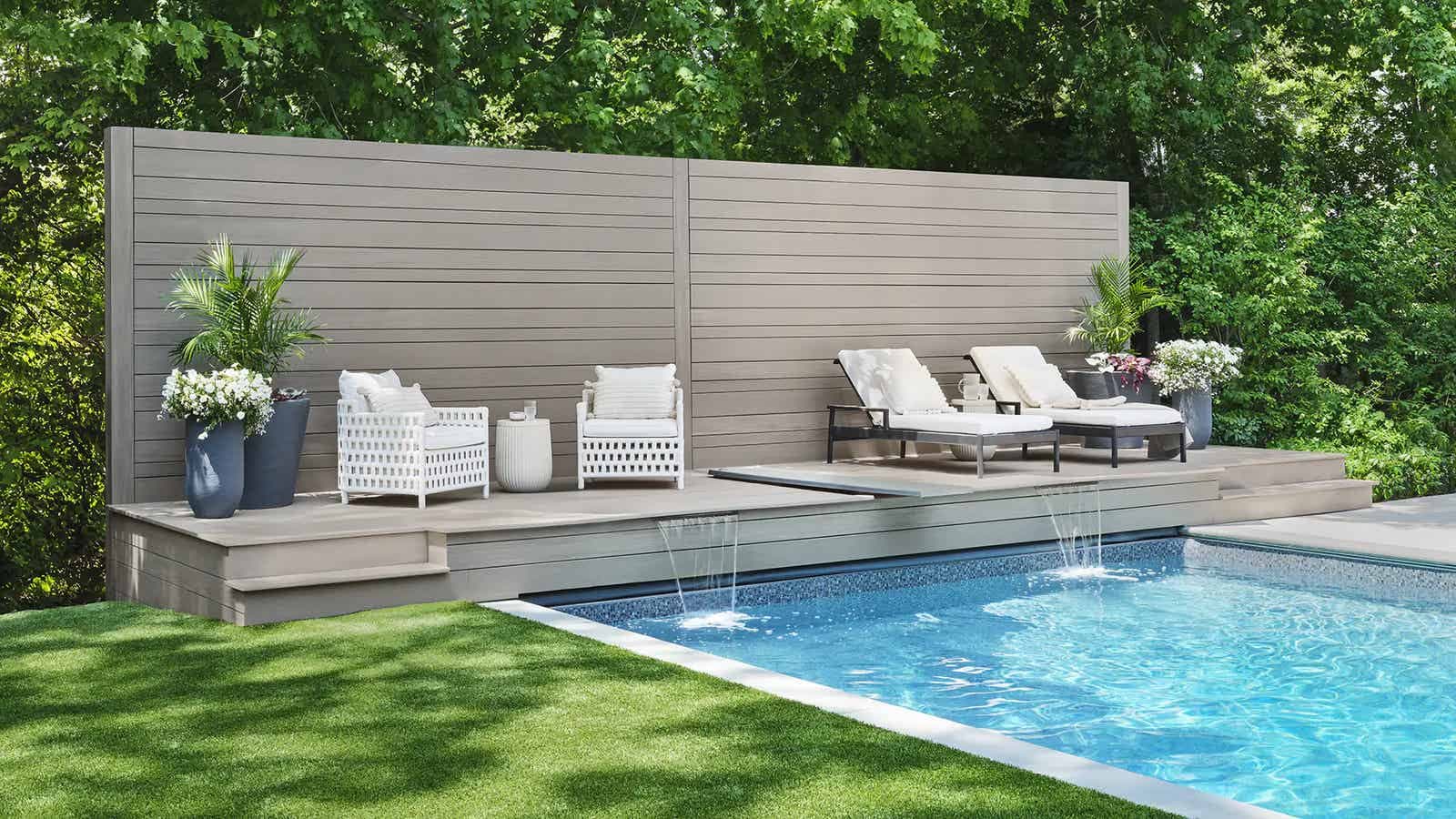
Why PVC Decking for Pool Terraces?
The primary advantage of PVC decking for a pool terrace is its composition. It is 100% synthetic, meaning it contains no wood fibers. This characteristic makes it waterproof to the core, preventing swelling, staining, or rotting that can occur with traditional wood or even some composite materials when exposed to continuous moisture.
For pool surrounds, splash zones, and areas prone to standing water, this inherent water resistance is crucial for the longevity and stability of the deck. PVC decking is often considered a standard for applications where boards are consistently wet, such as docks and pool decks. Its advanced capping further contributes to its resistance against grease and wine, allowing for easy cleaning with soap and water.
Additionally, PVC decking can be lighter than some hardwood or composite options, potentially simplifying handling and installation, which can be an advantage for certain project types or site conditions.
Understanding PVC Decking Profiles and Appearance
PVC decking is available in various collections, offering different aesthetics. For instance, some lines feature deep wood looks, designed to mimic the appearance of natural timber. These collections often include a range of colors and finishes, allowing homeowners to select a style that complements their outdoor design scheme. The advanced capping on these boards helps maintain their appearance over time, resisting fading and staining.
When planning your pool terrace, consider how the decking's color and texture will integrate with the pool coping, surrounding landscaping, and the overall architectural style of your home. Lighter color options may also contribute to a cooler surface underfoot, which can be a comfort factor around a pool in sunny conditions.
Planning for Water Management and Drainage
While PVC decking is waterproof, proper substructure planning and drainage are still essential for any deck, especially around a pool. Ensure that the deck substructure is designed to allow water to drain away from the house and the pool area efficiently. This prevents water from pooling underneath the deck, which can lead to other issues, even if the PVC boards themselves are unaffected.
Adequate spacing between deck boards is important for drainage and ventilation. Always follow the manufacturer's specific guidelines for board spacing to ensure optimal performance and to accommodate any thermal expansion or contraction. This also helps prevent debris from accumulating and allows for easier cleaning of the deck surface.
Maintenance and Cleaning for Poolside PVC
One of the benefits of PVC decking is its relatively low maintenance. The capped polymer surface is designed to shed common stains like grease and wine, making it easy to clean. Regular cleaning typically involves soap and water, which is convenient for pool areas where splashes and spills are frequent.
For specific cleaning instructions, always refer to the manufacturer's recommendations. This ensures that you use compatible cleaning products and methods that will not damage the decking surface or void any coverage. Promptly addressing spills and routine cleaning will help maintain the appearance of your pool terrace over time.
While PVC is highly resistant to water, it is still advisable to clear any standing water on the surface, especially after heavy rain or extensive pool use, to keep the deck looking its best.
A Hypothetical Pool Terrace Project Example
Consider a hypothetical pool terrace project in Bend, OR, measuring 15 feet by 20 feet, designed to surround a rectangular pool. The homeowner desires a durable, low-maintenance surface that complements their modern home and withstands the local climate, including sun exposure and occasional freezing temperatures. They opt for PVC decking with a light, wood-grain finish to minimize heat absorption and provide a slip-resistant feel.
The total area to be decked is 300 square feet. If the chosen PVC deck boards are 5.5 inches wide and available in 16-foot lengths, we can estimate the material needed. Each 16-foot board covers approximately (5.5 / 12) * 16 = 7.33 square feet. To cover 300 square feet, approximately 300 / 7.33 = 40.9 boards would be needed. Accounting for cuts, waste, and a potential picture frame border, an order of 45-50 boards might be a reasonable starting point. This estimate assumes a straightforward layout; more complex designs or diagonal patterns would require additional material.
The design includes a slight slope away from the pool for drainage, and the substructure is built with appropriate joist spacing to support the PVC boards. Fasteners are hidden, contributing to a clean, seamless look. A border is planned around the entire deck perimeter for a finished appearance. This example highlights the importance of detailed measurements and considering product dimensions for accurate material estimation.
Before you order
- Confirm the exact dimensions of your pool terrace area.
- Evaluate the desired aesthetic (color, texture, board width) for your PVC decking.
- Verify manufacturer-specific installation requirements, including joist spacing and board gaps.
- Plan for proper drainage and ventilation beneath the deck.
- Research compatible fastening systems (hidden or face-fastened).
- Understand the recommended cleaning and maintenance procedures for your chosen PVC product.
- Consider edge finishing options, such as fascia boards or picture framing.
- Request a material quote with your project dimensions and desired profile.
Confirm installation details, approved uses and warranty terms in the current instructions for the exact product and profile. Your installer should verify the substrate, structure and applicable project requirements.
This is a planning guide for projects in Bend, OR. Ask our team to confirm availability, delivery to your ZIP code and which branch can support your order.
Questions to help you decide
Is PVC decking suitable for all climates?
PVC decking is engineered to perform across a wide range of climates. Its synthetic composition makes it highly resistant to moisture, rot, and insect damage, which are concerns in many environments. It also generally handles temperature fluctuations well, though specific product lines may have recommendations for extreme conditions. Always check the manufacturer's specifications for suitability in your local climate.
How do I clean PVC decking around a pool?
For most PVC decking, routine cleaning involves a simple mixture of soap and water. Use a soft-bristle brush or a pressure washer on a low setting, following the manufacturer's guidelines for pressure and distance. Promptly clean spills, especially those from pool chemicals or food, to prevent potential staining. Always consult the specific care instructions provided by the decking manufacturer for compatible cleaning agents.
Does PVC decking get hot in direct sunlight?
Like many outdoor materials, PVC decking can absorb heat when exposed to direct sunlight. However, many PVC decking lines offer 'heat-mitigating' color options, which are designed to stay cooler underfoot compared to darker colors. Lighter shades generally reflect more sunlight and can be a more comfortable choice for pool terraces in sunny locations. It's always advisable to consider color choice in relation to sun exposure.
Ready to Plan Your Pool Terrace with PVC Decking?
For your Bend, OR, pool terrace project, request a material quote with your exact project dimensions, desired PVC decking profile, and ZIP code. Confirm current availability and service options to get started.
Request a material quote →