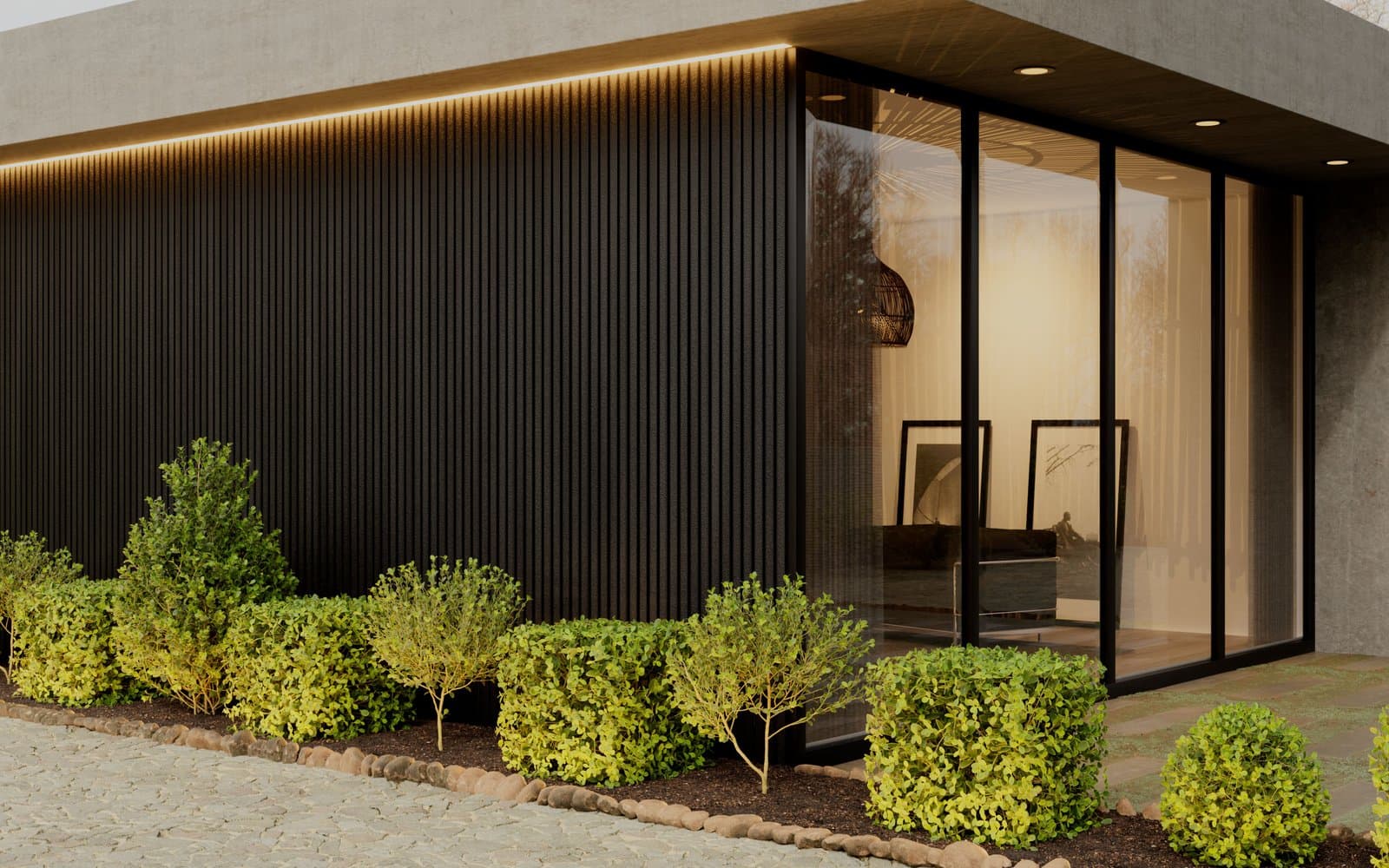
Defining 'Natural Look' in Siding and Cladding
A "natural look" in siding and cladding typically refers to materials that mimic the appearance and texture of real wood. This can manifest in several ways: the unique grain patterns, knots, and color variations inherent in natural timber, or the carefully engineered surface textures of composite materials designed to replicate these characteristics.
The perception of a natural look also extends to how a material ages. Natural wood will typically weather and develop a patina over time, while many manufactured materials are designed for consistent appearance with minimal change. Your preference for how a facade evolves is a key consideration.
Authentic Wood Grain: Thermally Modified Wood
Thermally modified wood offers an authentic natural look with enhanced stability. The modification process uses heat to alter the wood's cellular structure, resulting in material that is less prone to expansion and contraction.
Species like thermally modified Ayous and Ash exhibit clean, appealing grain patterns suitable for contemporary facades. Thermally modified Clear Radiata Pine provides a distinct appearance. These woods retain their natural character while gaining properties that make them suitable for exterior cladding. Scandinavian thermally modified wood is also available, engineered for various climates.
While they offer a natural aesthetic, thermally modified woods require proper installation to allow for natural movement and ensure long-term performance.
Richness and Character: Brazilian Hardwoods
Brazilian hardwoods such as Ipe, Cumaru, Garapa, Angelim, Jatoba, and Tigerwood provide a bold, natural look with deep colors and dramatic grain figures. Each species offers a unique visual profile, from the golden tones of Cumaru and Garapa to the deep reds of Jatoba, often referred to as Brazilian Cherry.
These hardwoods are known for their inherent density and strength, making them suitable for impactful statement walls. Their natural variations in color and grain ensure each installation is unique. Over time, Brazilian hardwoods can develop a silver-gray patina if left untreated, a natural process that many find appealing for an aged, natural aesthetic.
Engineered Consistency: Composite Cladding
For projects requiring a consistent natural look without the variations inherent in real wood, composite cladding offers a compelling alternative. Brands like Norx provide composite options designed to emulate wood's appearance.
Composite cladding is manufactured to specific profiles and finishes, providing uniformity across an entire facade. This material can be suitable for applications where a predictable aesthetic is desired, such as commercial entrances or hospitality walls, where consistent appearance is often a priority.
The manufacturing process allows for specific colors and textures to be maintained, which can simplify planning for large-scale projects or those with strict design continuity requirements. While not natural wood, quality composites aim to replicate its visual appeal.
Maximo Accoya: Acetylated Wood for Stability
Maximo Accoya is an acetylated wood product, distinct from thermally modified wood, that offers significant stability and durability for siding and cladding applications. The acetylation process enhances the wood's properties, making it highly resistant to rot and dimensional changes.
Accoya retains the natural beauty and workability of wood while providing performance characteristics comparable to some synthetic materials. It can be milled into various profiles, allowing for design flexibility while maintaining a natural wood appearance. This material is suitable for projects where both an authentic look and long-term performance in challenging conditions are critical.
Before you order
- Consider the desired level of grain variation: Do you prefer the unique, unrepeatable patterns of natural wood or the consistent appearance of a manufactured finish?
- Evaluate long-term appearance: Is a natural weathering process (patina) acceptable, or is a stable, consistent color desired over time?
- Assess project scale and complexity: Does the project benefit from the uniformity of composite materials or the distinct character of natural wood?
- Review specific material properties: Understand the stability, density, and maintenance requirements for each natural-look option.
- Check available profiles and dimensions: Ensure the chosen material can be milled or is available in the specific profiles needed for your design.
- Factor in the overall architectural style: How does the chosen natural look complement the existing or planned design elements of the building?
Confirm installation details, approved uses and warranty terms in the current instructions for the exact product and profile. Your installer should verify the substrate, structure and applicable project requirements.
Questions to help you decide
What is the difference between thermally modified wood and acetylated wood?
Thermally modified wood undergoes a high-temperature heat treatment to alter its properties, increasing stability and resistance to decay. Acetylated wood, such as Accoya, is treated with acetic anhydride, which chemically modifies the wood cells to enhance durability and dimensional stability. Both processes improve wood performance, but through different methods. Thermally modified wood is heat-treated, while acetylated wood is chemically modified.
Do natural wood sidings require more maintenance than composite options?
Generally, natural wood sidings may require more routine maintenance, such as cleaning and periodic reapplication of finishes, if you wish to maintain their original color. If left untreated, natural wood will typically weather to a silver-gray patina. Composite options are often designed for lower maintenance, aiming to retain their manufactured appearance with minimal intervention, though cleaning is still recommended.
Can I get custom profiles for natural wood siding?
Yes, many natural wood siding materials, including thermally modified woods and hardwoods, can be milled in-house to custom profiles and dimensions. This allows for specific design details and shadow lines to be achieved, providing flexibility for architects and builders to create unique facades. It is important to confirm the feasibility of custom milling for your chosen species and desired profile.
Request a Material Quote for Your Natural-Look Siding Project
Ready to bring a natural aesthetic to your next project? Provide your project dimensions, exact profile, and ZIP code to request a material quote. We can help confirm current availability and service options for thermally modified wood, Brazilian hardwood, Maximo Accoya, and Norx composite cladding.
Request a material quote →