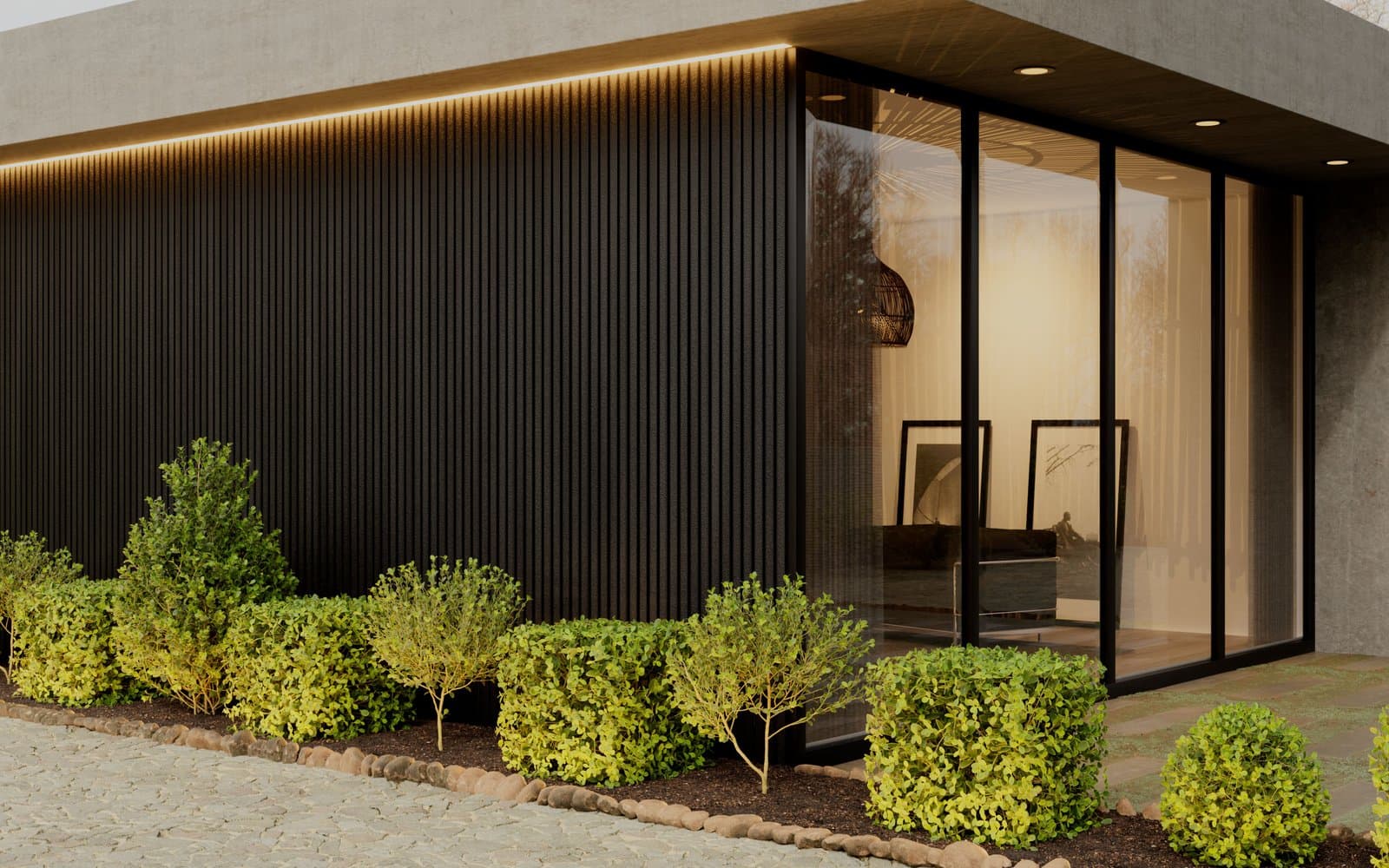
Understanding Siding and Cladding Materials
Siding and cladding materials vary significantly in cost, appearance, and performance. Lumber Plus offers a range of options including thermally modified wood, Maximo Accoya, Brazilian hardwoods, and Norx composite cladding. Each material has distinct characteristics that influence its price point and installation requirements. For example, thermally modified wood such as Ayous or Ash offers dimensional stability and a refined aesthetic, while Brazilian hardwoods like Ipe or Cumaru provide exceptional density and natural resistance.
When budgeting, consider not just the primary cladding boards, but also any specialized profiles, corner pieces, trim, and starter strips that are part of the system. These components are critical for a finished look and proper installation, and their costs should be itemized separately from the main board quantity.
Explore our full range of options at our main Siding and Cladding page: https://lumberplus.com/siding-and-cladding
Calculating Material Quantities: A Worked Example
Accurately calculating the quantity of siding or cladding material is the foundation of your budget. This involves measuring the area to be covered and accounting for waste, cuts, and specific profile dimensions.
Let's consider a hypothetical project: cladding a single exterior wall section measuring 20 feet wide and 10 feet high. The chosen material is a thermally modified pine cladding board with an exposed face width of 5.5 inches (0.458 feet) and available in 16-foot lengths.
First, calculate the total wall area: 20 feet * 10 feet = 200 square feet. Next, determine the linear feet of cladding needed per square foot of wall. For a 5.5-inch (0.458 ft) exposed board, you need 1 / 0.458 = approximately 2.18 linear feet of board per square foot of wall. So, for 200 square feet, you need 200 * 2.18 = 436 linear feet of cladding.
Now, factor in waste. A typical waste factor for siding and cladding projects can range from 10% to 15%, depending on the complexity of cuts and the layout. For this example, let's use a 10% waste factor: 436 linear feet * 1.10 = 479.6 linear feet. Since boards are sold in 16-foot lengths, you would need to purchase 479.6 / 16 = 29.975 boards. Round up to the nearest whole board, so 30 boards.
This calculation provides the quantity for the main cladding. Remember to perform similar calculations for any trim, corner pieces, or other specific profiles required for your project, considering their individual dimensions and waste factors.
Essential Accessories and System Components
Beyond the primary cladding boards, a complete siding or cladding system requires various accessories and components. These items ensure proper installation, longevity, and a finished appearance. Failing to budget for them can lead to unexpected costs.
Common accessories include fasteners (screws or clips specific to the cladding material), furring strips or a rainscreen system for ventilation and drainage, insect screens, and flashing for windows, doors, and corners. If you are using a rainscreen system, consider materials like thermally modified wood furring strips, which can be found here: https://lumberplus.com/thermally-modified-wood. For Maximo Accoya, specific fastening systems may be recommended: https://lumberplus.com/products/maximo-accoya.
Additionally, specialized sealants, vapor barriers, and weather-resistant barriers might be necessary depending on your local building practices and the wall assembly design. Always refer to manufacturer guidelines and consult with your contractor about the full list of required components.
Labor Costs and Professional Installation
Labor is a significant portion of any siding and cladding project budget. Installation costs vary based on the complexity of the chosen profile, the material (some materials are more labor-intensive to install), the height and accessibility of the wall, and local labor rates. A professional contractor will typically provide an estimate that includes preparation, installation, and site cleanup.
When obtaining quotes, ask for a breakdown of labor costs. This can help you understand what is included and compare bids effectively. Factors that can increase labor costs include intricate patterns, cutting around numerous windows or doors, working on multi-story structures, or projects requiring specialized equipment.
While some experienced DIY enthusiasts might consider installing certain types of cladding, professional installation often ensures proper execution, adherence to building best practices, and can be crucial for warranty validity. Discuss the scope of work and expected timelines with your chosen installer.
Contingency and Other Indirect Costs
Even with meticulous planning, unexpected issues can arise during a construction project. A contingency fund, typically 10-15% of your total estimated project cost, is crucial for covering unforeseen expenses. This could include slight material miscalculations, damaged boards, unexpected structural repairs behind the existing facade, or minor design adjustments.
Other indirect costs to consider include delivery charges for materials, potential equipment rental (scaffolding, lifts), waste disposal fees, and permit costs if required by your local municipality. While these might seem minor individually, they can add up and impact your overall budget if not accounted for.
For composite cladding options like Norx, specific handling and cutting tools might be recommended by the manufacturer, which could factor into equipment costs: https://lumberplus.com/brands/norx.
Before you order
- Have I measured all wall surfaces accurately, accounting for openings?
- Have I selected a specific siding or cladding profile and material?
- Have I calculated the linear footage or square footage needed for the main cladding, including a waste factor?
- Have I identified all necessary trim, corner pieces, and starter strips, and calculated their quantities?
- Have I listed all required fasteners, clips, and any rainscreen system components?
- Have I budgeted for flashing, sealants, and weather-resistant barriers?
- Have I obtained quotes from multiple contractors for labor costs?
- Have I included a contingency fund (10-15%) for unexpected expenses?
- Have I considered delivery fees, equipment rental, waste disposal, and permit costs?
- Have I confirmed the availability of my chosen materials and accessories?
Confirm installation details, approved uses and warranty terms in the current instructions for the exact product and profile. Your installer should verify the substrate, structure and applicable project requirements.
Questions to help you decide
How much waste should I budget for siding and cladding materials?
A typical waste factor for siding and cladding projects ranges from 10% to 15%. This accounts for cuts, miscuts, and potential damage during handling. For complex layouts or intricate patterns, it might be prudent to budget slightly higher, up to 20%.
Do I need a rainscreen system for my cladding project?
A rainscreen system creates a ventilated air gap between the cladding and the wall structure, allowing moisture to drain and promoting drying. While not always strictly mandated by code for all applications, it is widely recommended for enhancing durability, managing moisture, and improving the performance of the wall assembly, especially with wood-based cladding. Always consult local building codes and your contractor.
What is the difference in cost between thermally modified wood and Brazilian hardwood?
Generally, thermally modified woods like Ayous or Ash offer a balance of stability and aesthetic appeal, often at a mid-range price point. Brazilian hardwoods such as Ipe, Cumaru, or Garapa are known for their exceptional density, natural resistance to decay, and strength, which can sometimes place them at a higher price point, reflecting their durability and performance characteristics. The specific profile and current market conditions will also influence pricing.
Ready to Budget Your Siding and Cladding Project?
Request a material quote today. Provide your project dimensions, desired profile, and ZIP code to confirm current availability and service options for your area. Our team can help you identify the materials and accessories you'll need.
Request a material quote →