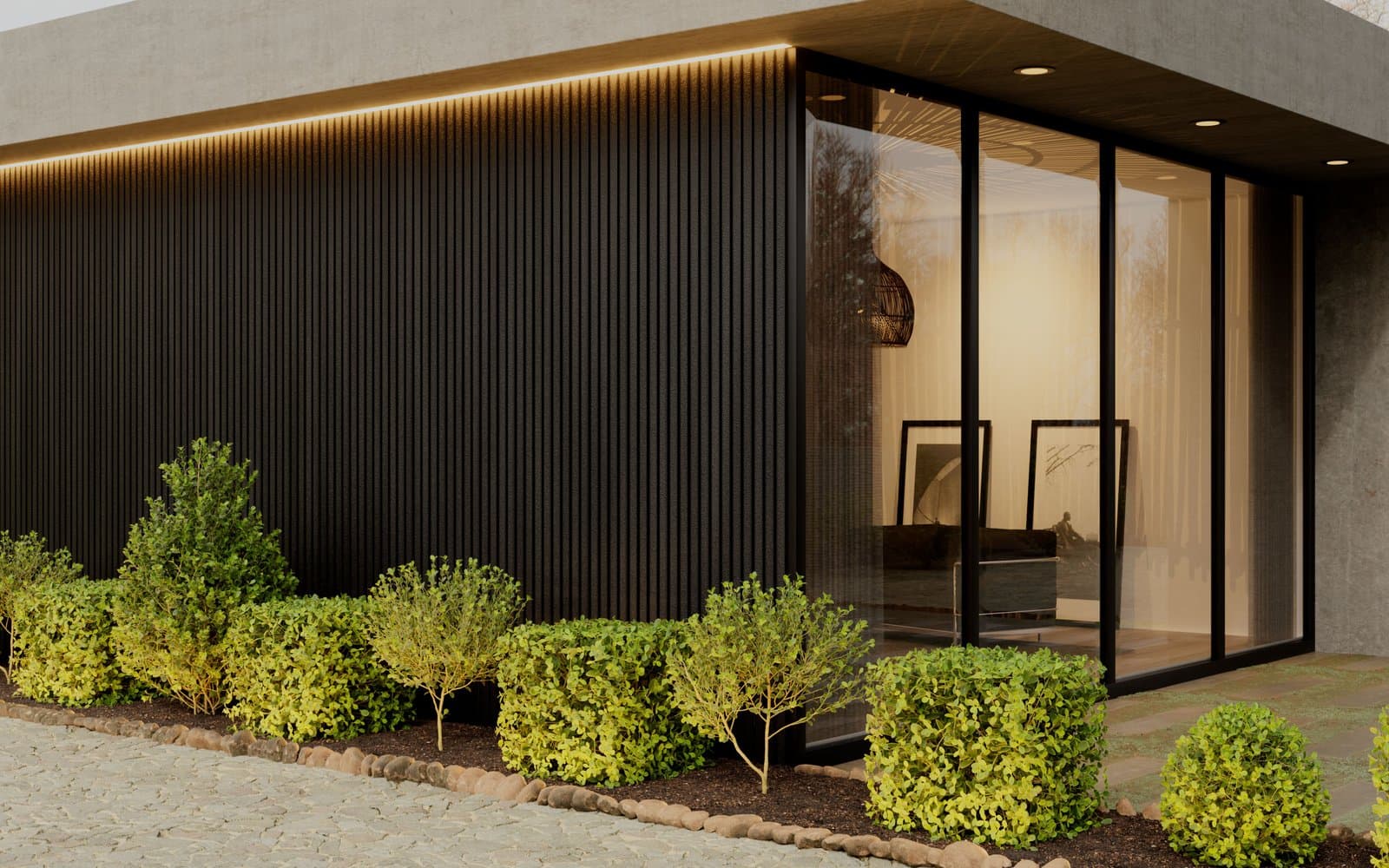
Understanding Maintenance Categories
Siding and cladding materials generally fall into different maintenance categories, each with distinct requirements. These range from minimal intervention for materials designed to weather naturally, to regular cleaning and refinishing for those intended to retain a specific aesthetic.
It's important to differentiate between routine cleaning, which addresses surface dirt and environmental buildup, and more intensive maintenance like re-sealing or re-staining, which protects the material and restores its appearance. Your project's exposure to sun, rain, and local environmental factors will also influence the frequency and type of maintenance needed.
Thermally Modified Wood: Balanced Care for Lasting Beauty
Thermally modified wood, such as thermally modified Ayous or Ash, offers enhanced stability and durability due to its heat treatment process. This modification makes the wood less susceptible to moisture absorption, reducing issues like warping and decay. While thermally modified wood can be left unfinished to develop a silver-gray patina over time, applying a finish can help preserve its original color.
For those who prefer to maintain the initial color, periodic reapplication of a UV-protective oil or stain is recommended. The frequency depends on sun exposure; facades with significant sun exposure may require reapplication every 1-3 years, while shaded areas might extend this to 3-5 years. Regular cleaning with a mild detergent and water helps remove surface dirt and mildew, preventing it from embedding in the wood grain.
Maximo Accoya, another modified wood product, is acetylated rather than thermally modified. It shares similar maintenance considerations regarding finishes and natural weathering.
Brazilian Hardwoods: Robustness with Aesthetic Choices
Brazilian hardwoods like Ipe, Cumaru, Garapa, Angelim, Jatoba, and Tigerwood are renowned for their natural density and resistance to rot and insects. These characteristics contribute to their low structural maintenance needs. However, their appearance will change over time if left untreated.
If left exposed to UV light and weather, Brazilian hardwoods will naturally weather to a silvery-gray patina. Many homeowners appreciate this natural aging process and choose minimal maintenance, limited to occasional cleaning to remove dirt or mildew. To preserve the original rich color, a penetrating oil finish with UV inhibitors should be applied shortly after installation and then reapplied annually or biennially, depending on exposure and desired appearance. Cleaning should precede any reapplication of finish.
Composite Cladding: Low Maintenance for Modern Facades
Norx composite cladding offers a distinct advantage in terms of maintenance. Made from a blend of wood fibers and plastic, composite materials are engineered for durability and color retention, often requiring less intensive care compared to natural wood.
Routine cleaning with soap and water is generally sufficient to keep composite cladding looking fresh. This helps remove dirt, dust, and pollen. Unlike wood, composite cladding does not require staining, sealing, or painting to maintain its color or structural integrity. While resistant to fading, prolonged exposure to harsh elements may still necessitate occasional deeper cleaning to remove stubborn stains or mildew, particularly in humid environments. Always consult the manufacturer's cleaning guidelines for specific products.
Planning Your Maintenance Schedule: A Hypothetical Example
Consider a hypothetical residential project with a total cladding area of 1,000 square feet, using thermally modified Ayous. The homeowner prefers to maintain the original warm tone of the wood. The facade has moderate sun exposure on the south-facing wall and shaded conditions on the north-facing wall.
For the south-facing wall (approximately 400 sq ft), a UV-protective oil finish would be recommended every 2 years. For the north-facing wall (approximately 600 sq ft), reapplication might be extended to every 4 years. Annually, both walls would benefit from a gentle wash with a soft brush and mild soap to remove accumulated dirt and pollen. This proactive approach helps prevent dirt buildup and ensures the finish adheres well when reapplied.
The project would require an initial estimate of finish product for application. For example, if a specific oil finish covers 250 square feet per gallon, the south-facing wall would need about 2 gallons every two years, and the north-facing wall about 2.4 gallons every four years. These are approximations; actual coverage rates can vary by product and application method. Planning for these material costs and labor time (whether DIY or professional) is part of a comprehensive budget.
Before you order
- What is my preferred aesthetic: natural weathering or consistent color?
- How much time and effort am I willing to dedicate to ongoing maintenance tasks?
- What are the specific environmental conditions of my project (sun exposure, humidity, local pollutants)?
- Have I researched the manufacturer's recommended cleaning and finishing products?
- Do I have access to the necessary tools and equipment for maintenance (ladders, brushes, pressure washer)?
- Have I factored the cost of maintenance materials (finishes, cleaners) and potential labor into my overall budget?
- Am I prepared for the possibility of different maintenance schedules for different elevations of my building?
- What are the long-term implications of deferred maintenance for my chosen material?
Confirm installation details, approved uses and warranty terms in the current instructions for the exact product and profile. Your installer should verify the substrate, structure and applicable project requirements.
Questions to help you decide
Does 'low maintenance' mean 'no maintenance' for siding and cladding?
No material is truly 'no maintenance.' Low maintenance typically means less frequent or less intensive care compared to other options. For example, composite cladding requires routine cleaning but doesn't need staining or sealing like many natural wood products. Even naturally weathering woods benefit from occasional cleaning to prevent mildew or heavy dirt buildup.
Can I change my mind about maintaining the color of my wood siding later?
Yes, but with caveats. If you initially let wood siding weather naturally to a gray patina, and later decide you want to restore some of its original color, you may need to use a wood brightener or cleaner to remove the weathered layer before applying a penetrating oil or stain. The results may not fully match the original appearance, and the process can be more labor-intensive than continuous maintenance from the start. For thermally modified woods or hardwoods, consult product-specific guidance.
What happens if I neglect maintenance for my siding or cladding?
Neglecting maintenance can lead to several issues depending on the material. For wood, it can result in premature graying, mildew growth, surface checking, and potentially reduced lifespan if protective finishes are not reapplied. For composites, neglect might lead to stubborn stains, mildew, or a dull appearance. While structural integrity might not be immediately compromised, the aesthetic appeal and long-term performance could be affected, potentially requiring more costly restoration efforts later.
Request a Material Quote for Your Siding and Cladding Project
Ready to plan your facade? Request a material quote today. Provide your project dimensions, desired profile, and ZIP code to confirm current availability and service options for thermally modified wood, Brazilian hardwoods, or Norx composite cladding. Explore our related products: Thermally Modified Wood, Norx, and Maximo Accoya.
Request a material quote →